
Senegal had always been on my list and with The Gambia right next door, I figured I would make it a 2-for-1 trip!
There is a direct flight to Dakar on Delta (only on certain days) so although it was a bit more expensive than the Royal Air Maroc flight with a layover in Morocco, I preferred not to waste any time.
After extensive research, I found a travel guide (Senegal Odyssey Tours aka Sen Travel Services) to take us around Senegal as well as to The Gambia. While they were a tad bit more expensive than others I found, they received great reviews on TripAdvisor and I’d rather spend a little extra to guarantee the itinerary I had in mind.
Our flight on Friday evening left at 9:30pm and I decided to splurge on Delta Comfort so we had a bit more room. Despite a very hectic boarding process with unclear instructions on who was boarding when and in what lanes, we made it on the plane, put our carry-ons away in our designated overhead space, and prepared ourselves for take-off. They served drinks and dinner of butter chicken with rice which was actually pretty tasty. I passed out off and on and woke up just in time for breakfast of an egg and cheese calzone.

Thankfully, getting through immigration was pretty quick and smooth. Also, a visa is NOT needed for Senegal so that was one less thing to worry about. We retrieved our bags from baggage claim, sailed through customs, and looked for the sign with our name on it. Once we found it, our driver drove us about an hour and a half (would’ve been an hour if there wasn’t any traffic) to our hotel named L’Adresse.
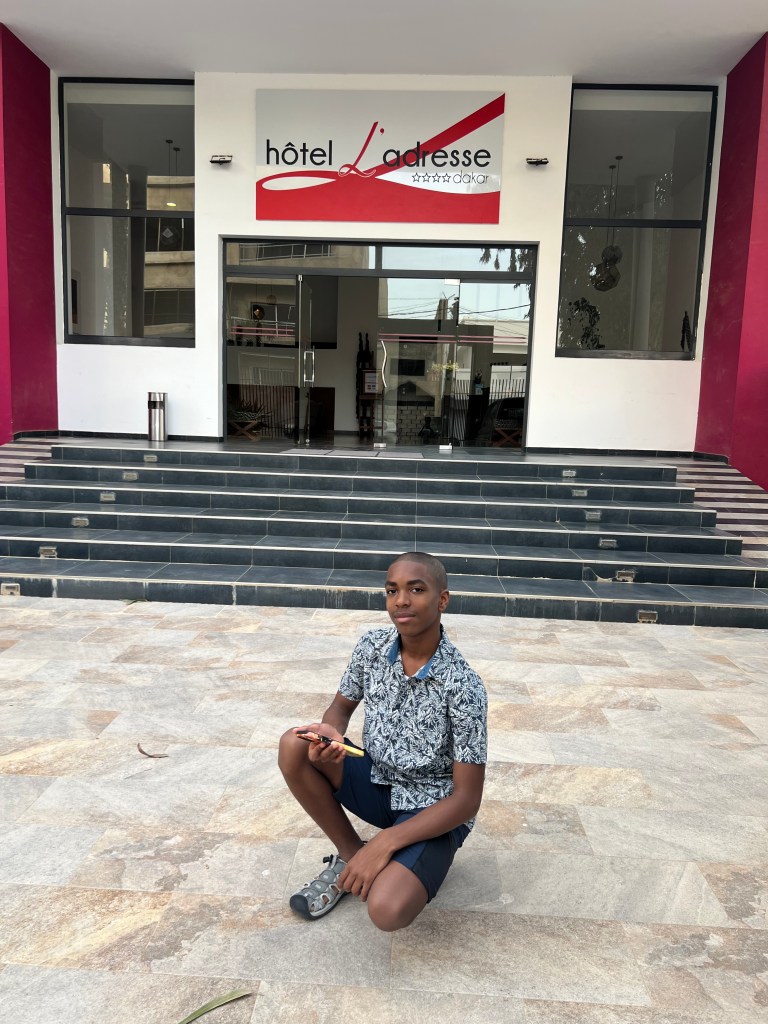
Although the room wasn’t ready right away, we were able to check in and quickly freshen up before the day’s adventure (I always hit the ground running!). Before arriving in Senegal, I downloaded a ride sharing app called Heetch (similar to Lyft and Uber) so we used it to get a taxi to take us to the meeting point in Ngor for our Street Food Tour by Relish Africa. After finding our guide Pape, we walked to the first stop which was a dibiterie, a hole in the wall type “restaurant” with giant wood fires and more flies than seats. If you are even remotely worried about hygiene, this isn’t the place for you. Our guide ordered dibi, which is roasted meat, usually sheep, that’s covered with spices and served on grease-stained paper accompanied by mustard and pepper sauce. Since seating was limited in the dibiterie, we walked to another location to sit and enjoy our dibi. It was flavorful, fatty, and filling.

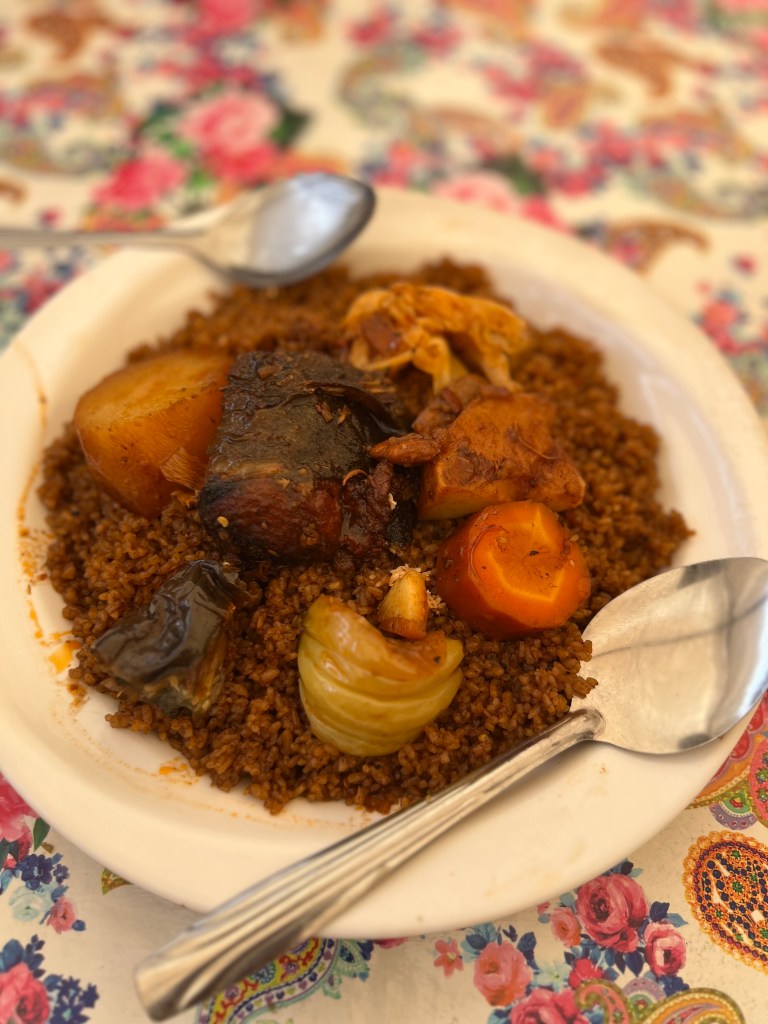
While we were there, we also had the opportunity to sample thieboudienne, Senegal’s national dish. It is a one pot dish (similar to jollof) that consists of fish and vegetables like cassava, pumpkin, cabbage, carrot, turnip, and eggplants served over rice. Perhaps it is because I’m not a big fan of rice or because I was getting full from the dibi, but I did not enjoy the dish and only ate a couple of bites.
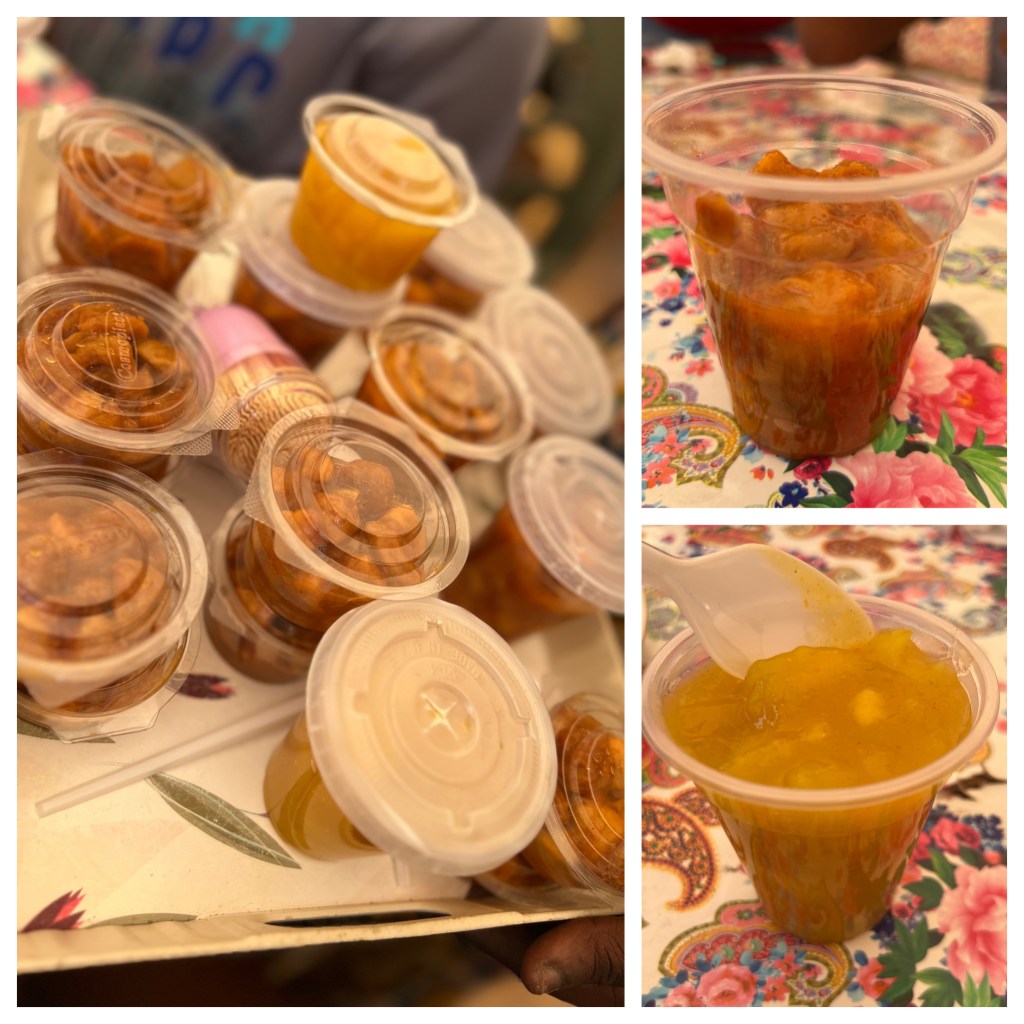
We also sampled a couple of snacks from a woman passing by: one was called maad, a brownish fruit that had an odd flavor. Visually, it reminded me of tamarind but unfortunately, the flavor was nothing like that and none of us enjoyed it. The other snack was mango but boiled with pepper, sugar, and salt. This too had an odd taste and consistency, and made me realize that I prefer my mangoes cold and/or plucked straight from a tree!
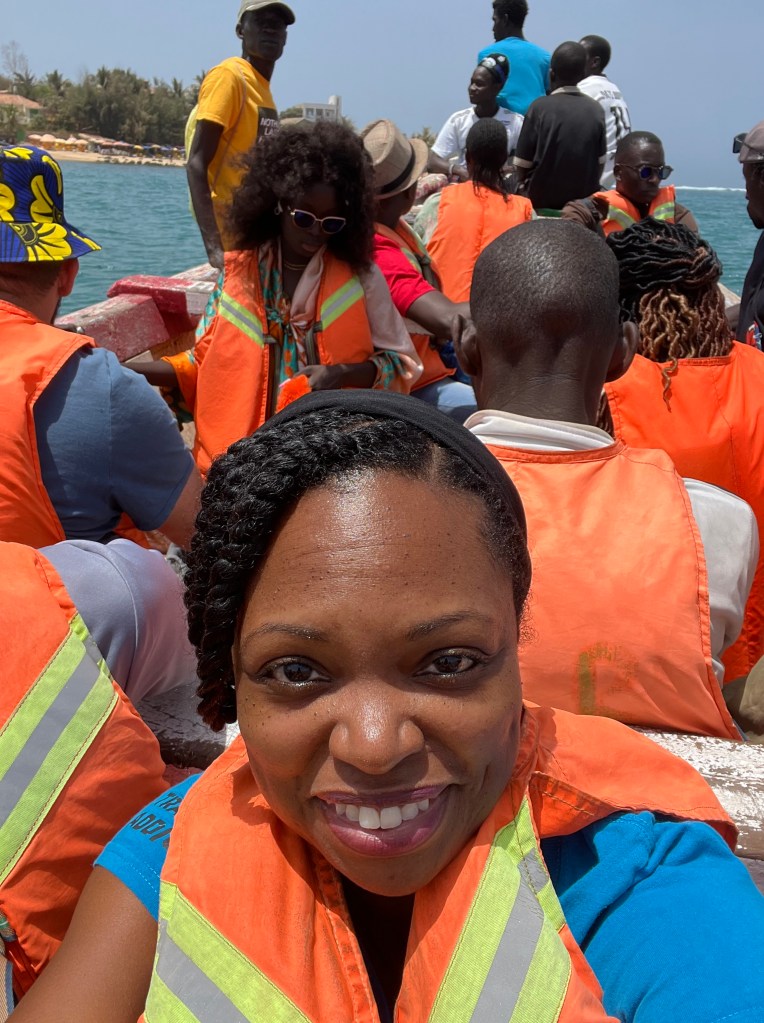
The final stop on the street food tour was Ngor Island. A 10-minute pirogue ride away, there are two options to get there: a private boat for 2000 CFA roundtrip (~$4 US) or the regular one for 1000 CFA roundtrip. Since we are always up for an adventure, we decided to travel like the locals and boy was that interesting! We were packed in there like sardines and it was a very uncomfortable ride but we made it.
We walked around Ngor Island for a bit and saw lots of restaurants and folks enjoying the beach. Since it was a Saturday, there was lots of activity as many Senegalese flock to Ngor for a weekend getaway.
We found our way to another restaurant and sampled three different juices there: one was a ginger juice, the other was bouye (a drink from the baobab tree), and the last one was called bissap (which is made from hibiscus and reminded us of sorrel).

We walked around the island a bit more, went to an “art gallery” (which also doubled as a hotel) that had some beautiful pieces, and then made our way back to the shore to catch the boat.

The private boat was available so our guide talked to the driver and we got on that one…it was SOOOO much more comfortable than the one going to Ngor island. The 2 1/2 hour street food tour went by incredibly quickly, and honestly, we were very underwhelmed. I’ve been on tons of food tours and they were all better than this one so would definitely NOT recommend. The guide was on his phone while we were eating instead of engaging in small talk with us and we stayed in each spot for way too long. The only upside was that the guide was nice enough to stop at an ATM where we were able to get some local currency and then take us back to the hotel. The tour was $75/person but overall, I did not feel like it was worth it.
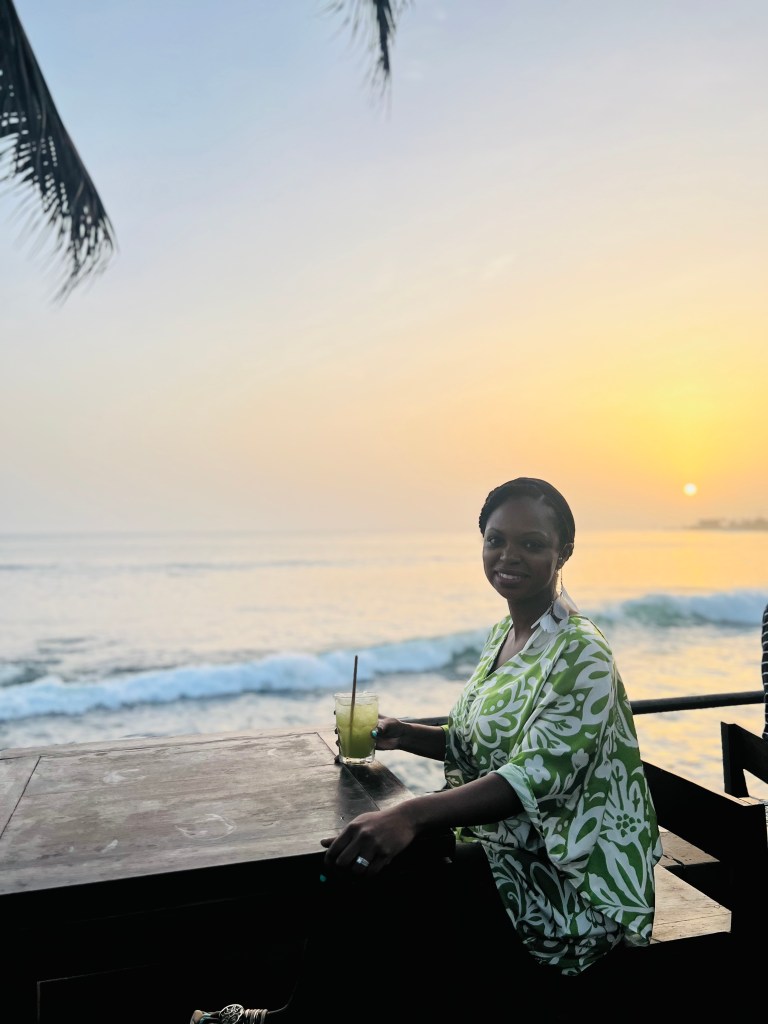
After unpacking and getting organized at the hotel, we headed out to Le Cabanon for dinner. Even though it was walking distance from the hotel, the hotel receptionist advised us that it wasn’t safe to walk at night so we ordered a ride through Heetch for only 1300 CFA (~$2 US). When we arrived for our 6:30pm reservation, the place only had a few people but by the time we left, it was getting pretty full. The restaurant offered spectacular views of the ocean, island vibe decor, and a warm breeze that I could have enjoyed for hours.
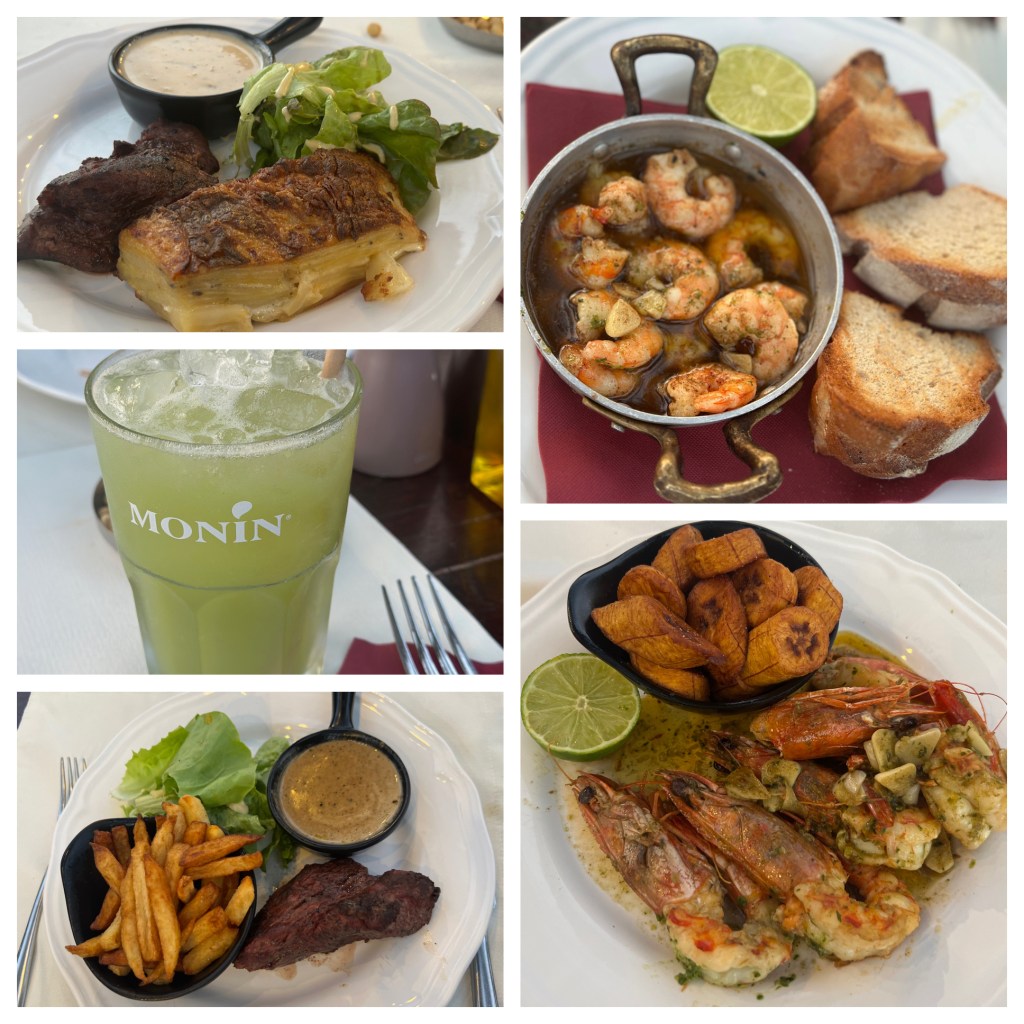
They brought out complimentary bread (I’m always a sucker for that). We also had an appetizer of garlic shrimp which was really good. Candra and Avery both ordered the beef filet while I had the garlic prawns which were absolutely divine. Unfortunately, their beef was a bit on the tougher side but with the sauces that accompanied it, they said it was edible. We had a drink called the “Green Gordon” which included gin, grapefruit, kiwi, lemon, basil, and ginger. It was so refreshing that we ended up ordering another 😉 We ended the night with a dessert of cheesecake and nutella crepes which were both delicious. The bill for everything was ~$160US which didn’t seem bad for everything that we received! We were tempted to stop next door as we heard music playing but decided to call it a night since we had a full day ahead.
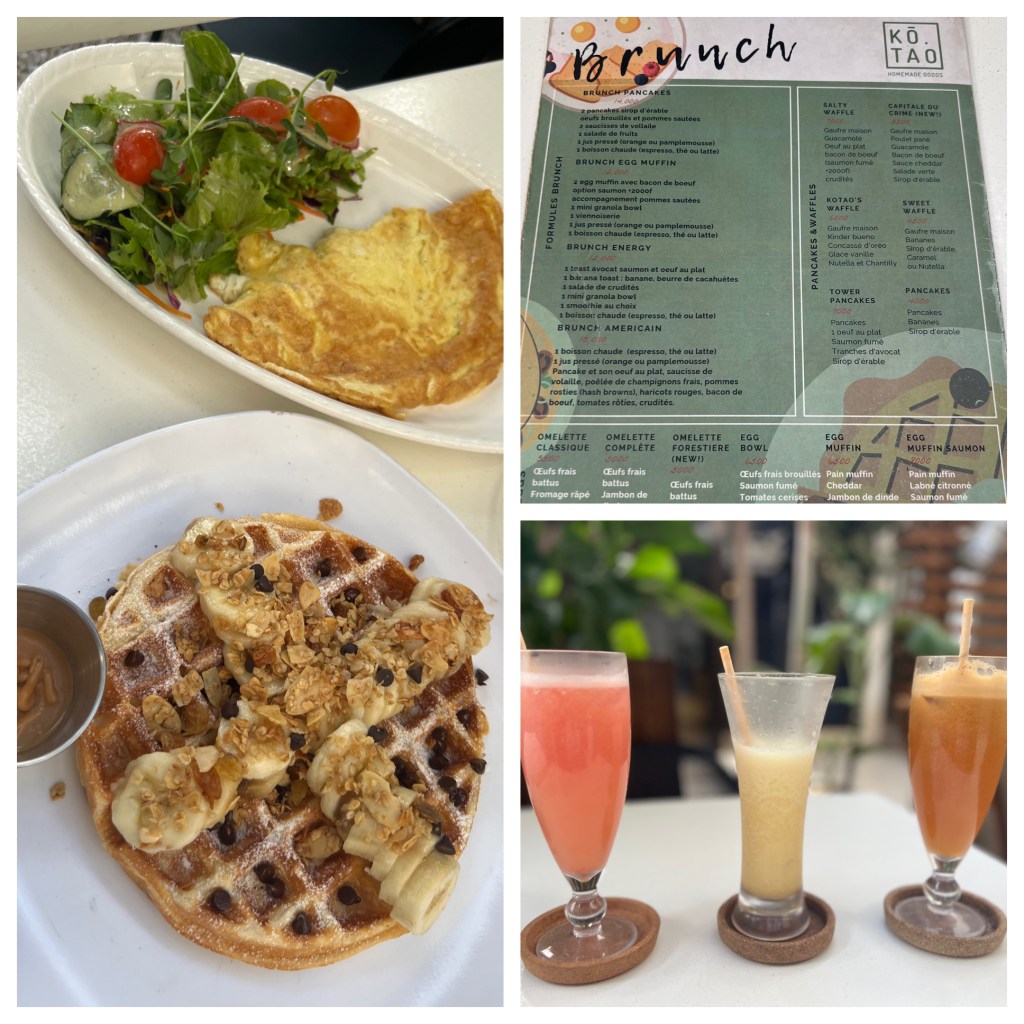
For breakfast the next day, we ate at Katao Coffee (a short 10-minute walk from the hotel). It was a very cute cafe adorned with greenery and had indoor and outdoor seating. The menu was filled with scrumptious sounding goodies! After ordering some delicious, freshly-pressed juices (one apple juice, one pamplemousse aka grapefruit, and one tropical mix), we had waffles with bananas and an omelet on the side. The waffle was extremely filling and perfectly crisp on the outside yet fluffy on the inside.
We actually ended up walking back to our hotel because when we called the hotel to tell our tour guide to pick us up from the restaurant, our instructions were lost in translation and our driver didn’t get the right message (you win some, you lose some!).
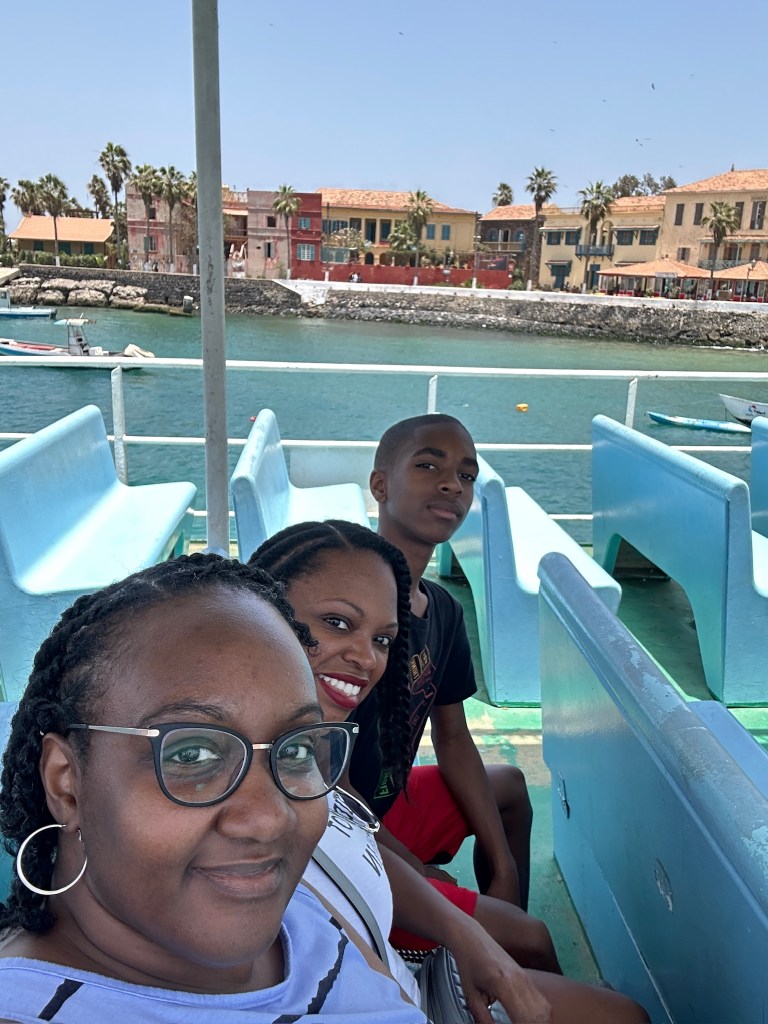
Thankfully, we were all ready when we arrived back at the hotel so we drove to downtown Dakar to catch the 10am boat for Gorée Island. The line was extremely long but our guide was able to purchase tickets with plenty of time to spare. We then entered the waiting area until it was time to board the boat. While we were waiting, we noticed a guy selling a maracas-type musical instrument/toy. We had no idea what it was called but had so much fun trying it that of course we had to purchase a couple. Update: I actually saw it a few days later at the Crocodile Museum and believe it is called Kaw Kawo and is a toy for children.
There was a mad rush to board the boat, presumably to get seating. Tip: sit downstairs or in the middle section upstairs to minimize exposure to the sun. After a quick 30-minute ride, we arrived at Gorée Island.
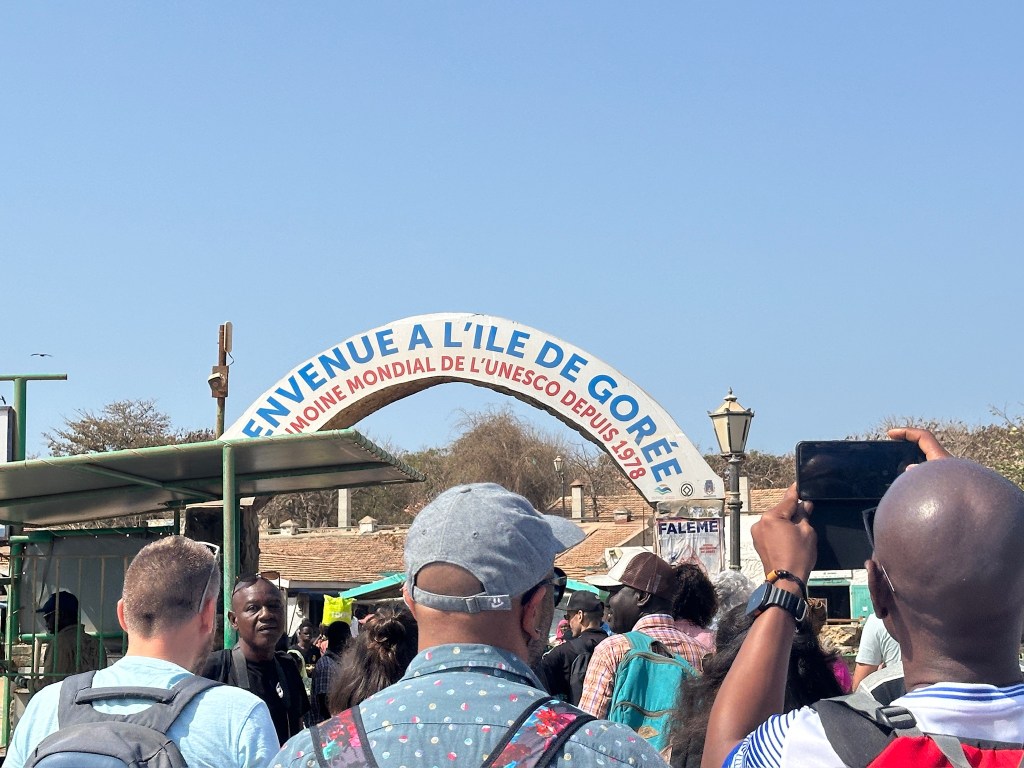
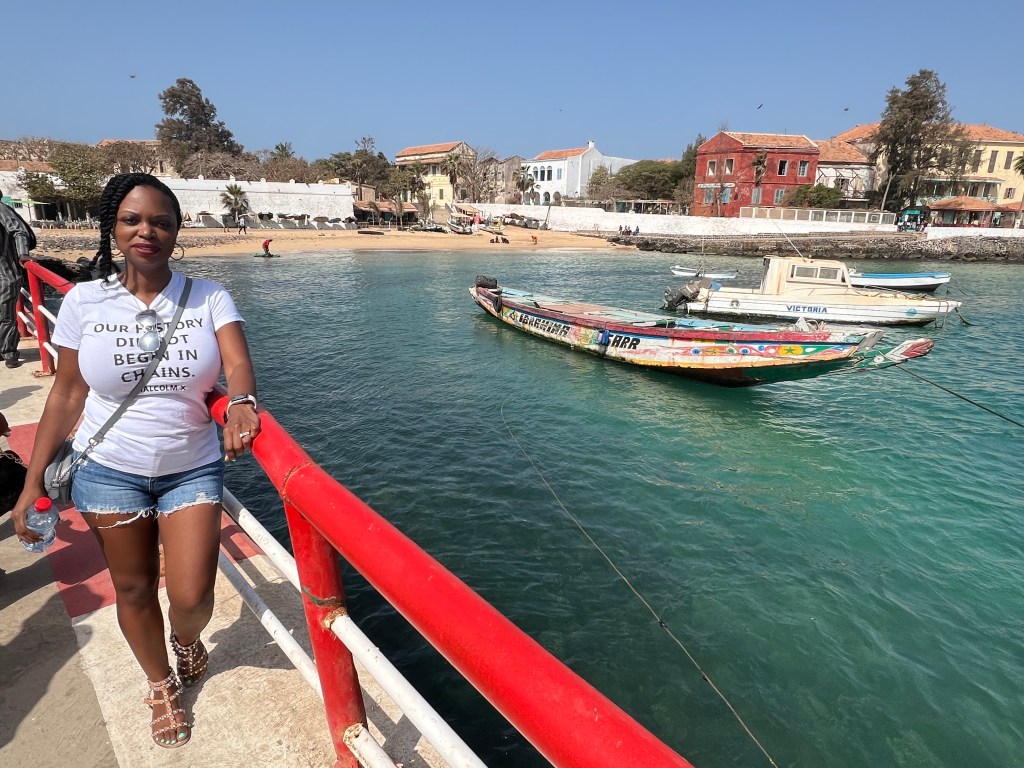
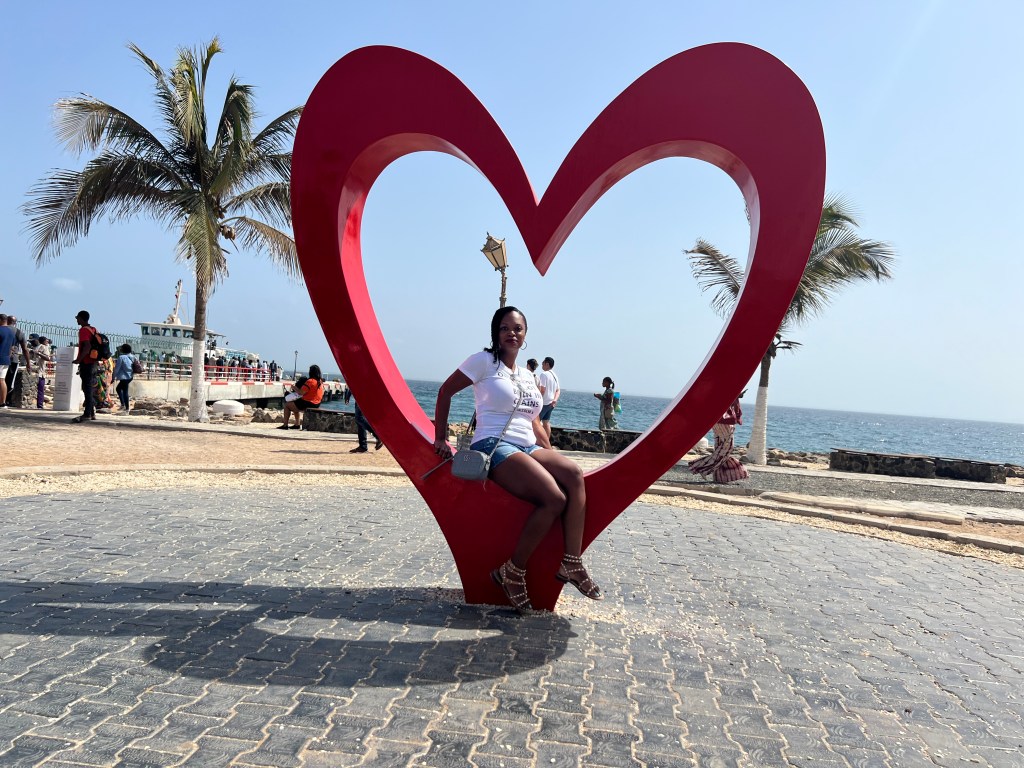
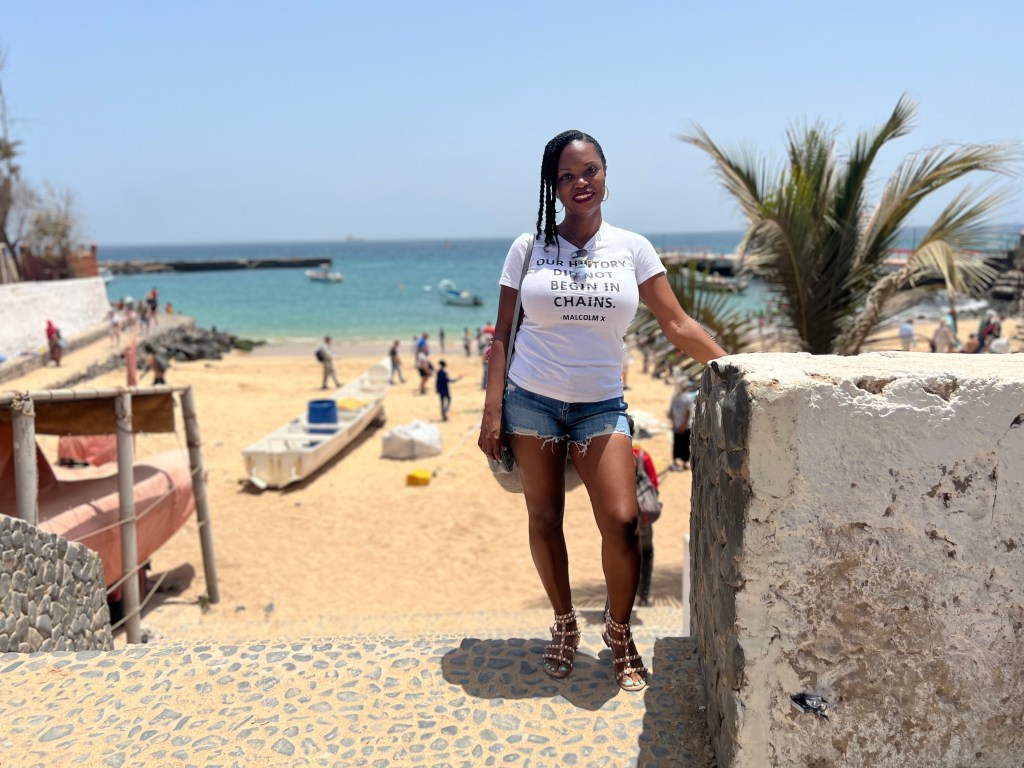
Our first stop was Maison des Esclaves (House of Slaves) which included a door of no return, a museum, and memorial to the victims of the Atlantic slave trade.
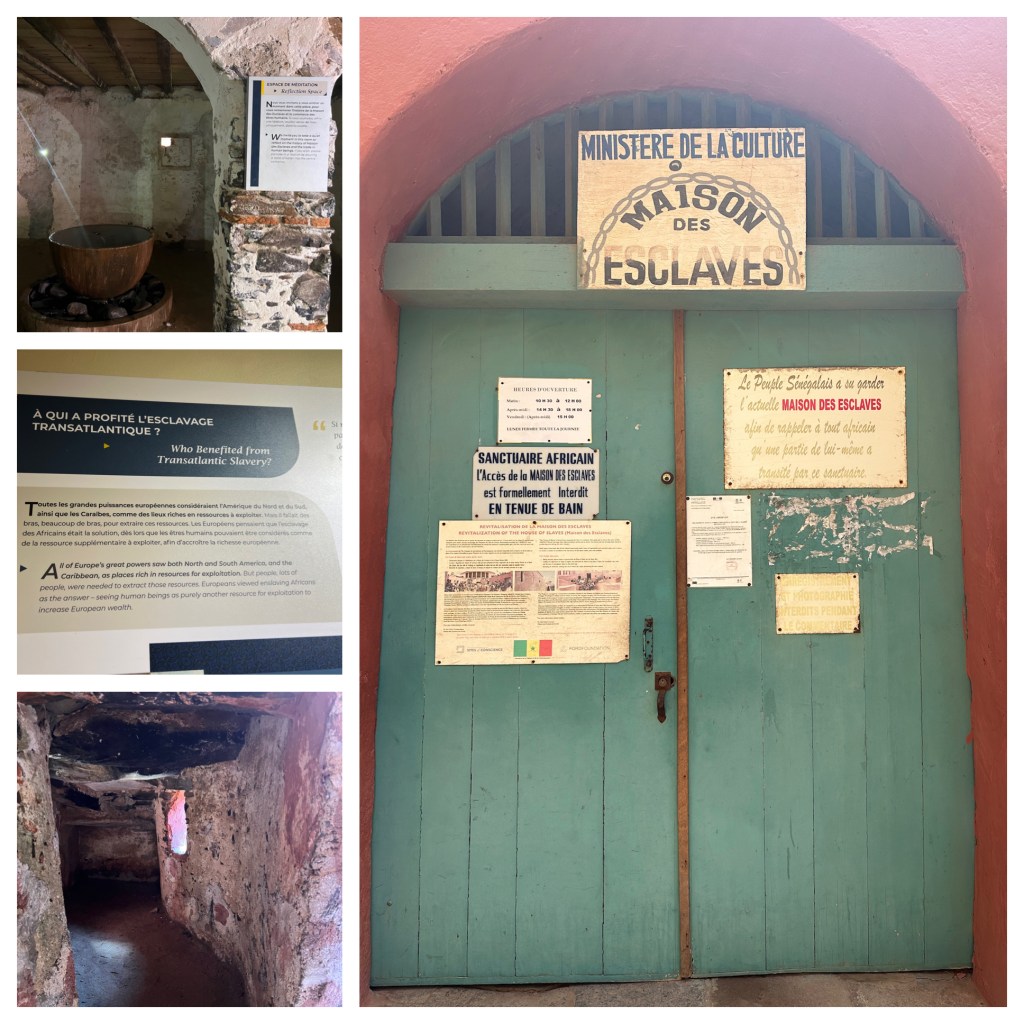
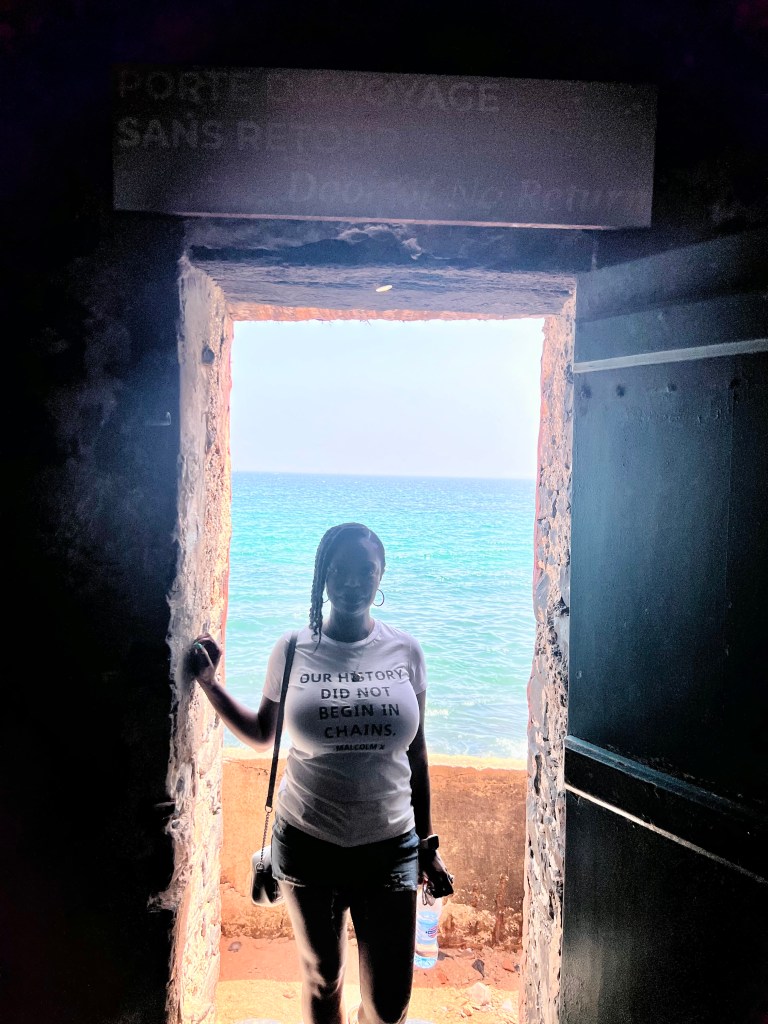
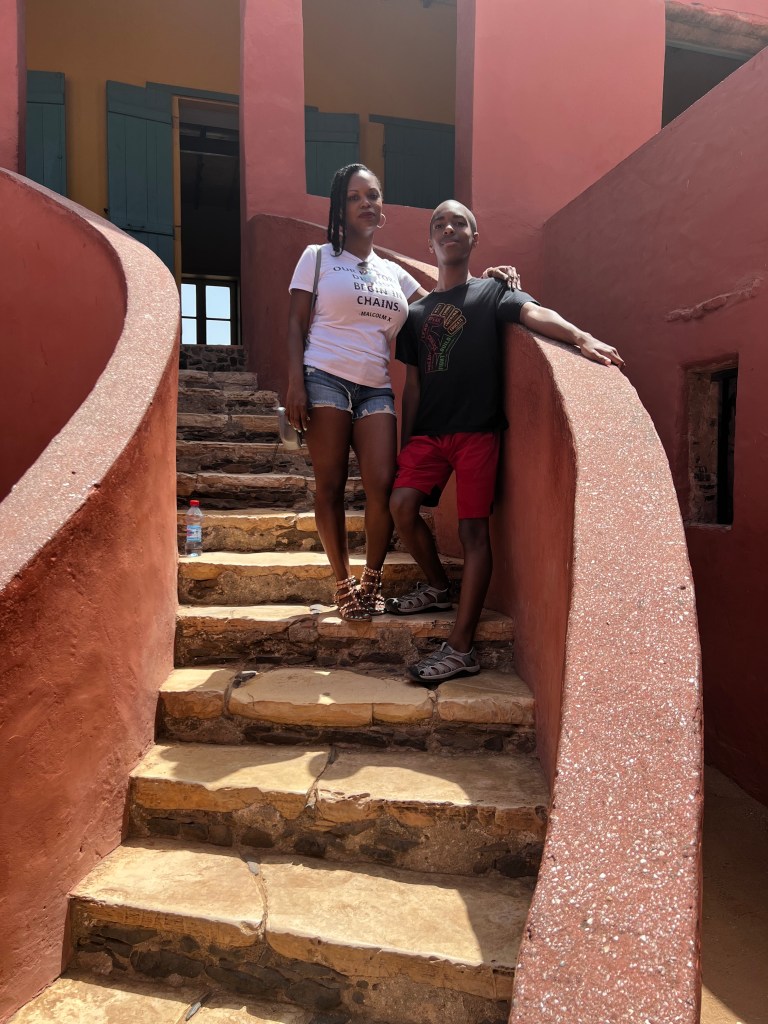
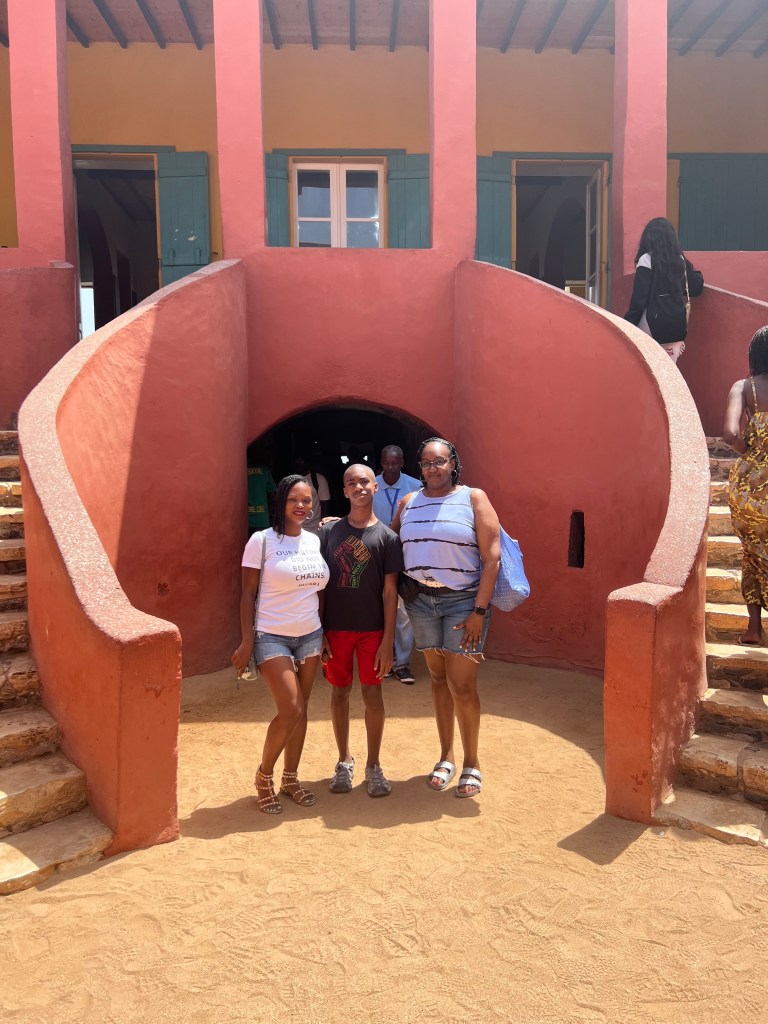
After leaving there, we continued walking around the island and passed by some little shops where women were selling their crafts. They were quite aggressive which is a turn off for me when looking around (by the way, we originally saw them when we first boarded the boat and they hounded us even then to come by their shops but didn’t realize they would be so demanding when we actually got there!). We caught the 12:30pm boat back to Dakar and was able to sit in the coveted shade upstairs in the middle (the seats on the edge of both sides were in the sun with no shade). Note: While we only stayed on Goree Island for a couple of hours (which I think is more than enough), my son Avery’s school (who was also in Senegal for the 8th grade senior trip) spent the entire day and said when it was time to catch the last boat back, there was a mad dash by the locals and it was so crowded and chaotic that they almost didn’t make it!
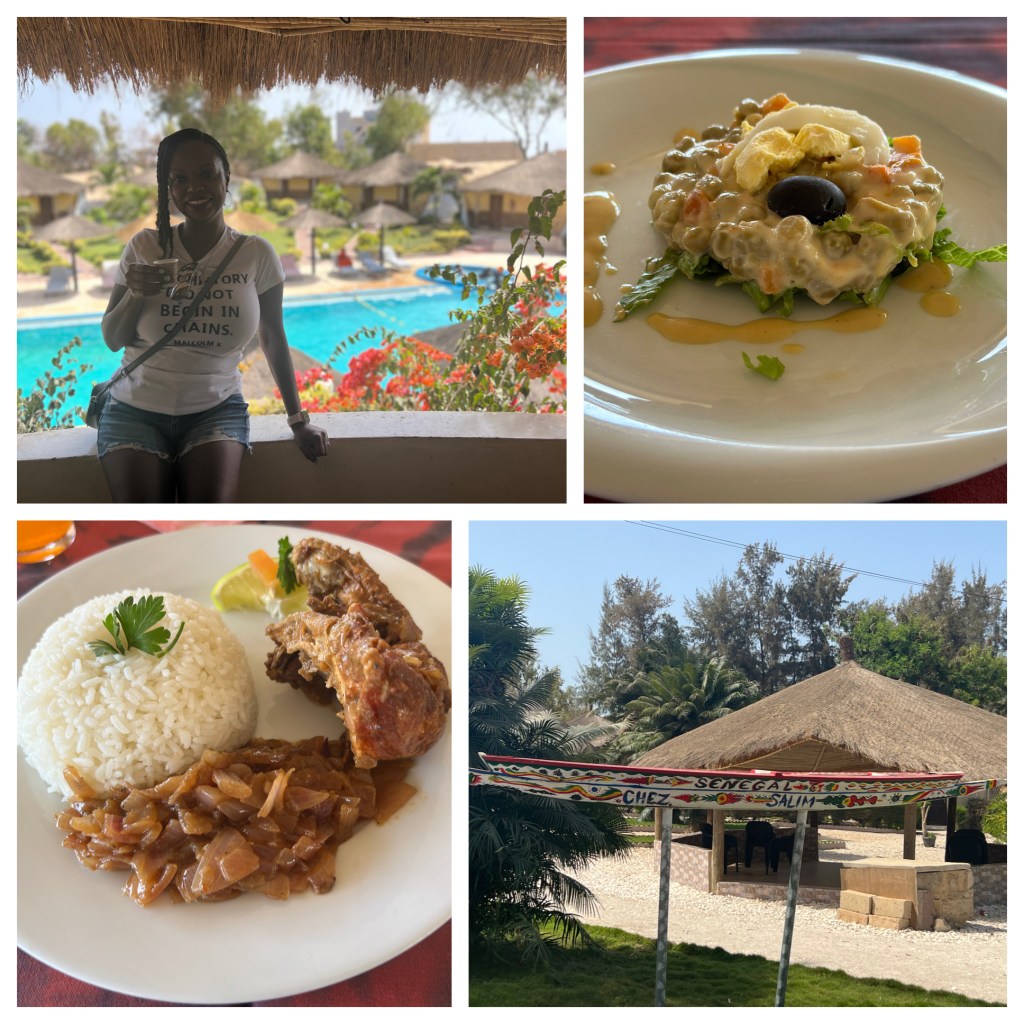
Since we still had the entire afternoon ahead of us, we drove an hour to the Lake Retba area. We were famished at this point so we ate lunch at Chez Salim. Nicely put, it was very subpar; not so nicely put, it was disgusting. Between the dry bread and appetizer of mayo salad with peas and carrots, the lunch started off poorly and didn’t get any better with the entree of chicken and rice with onions or the “dessert” of a banana. I was able to try Senegalese tea which tasted very sweet but smelled a little like coffee.
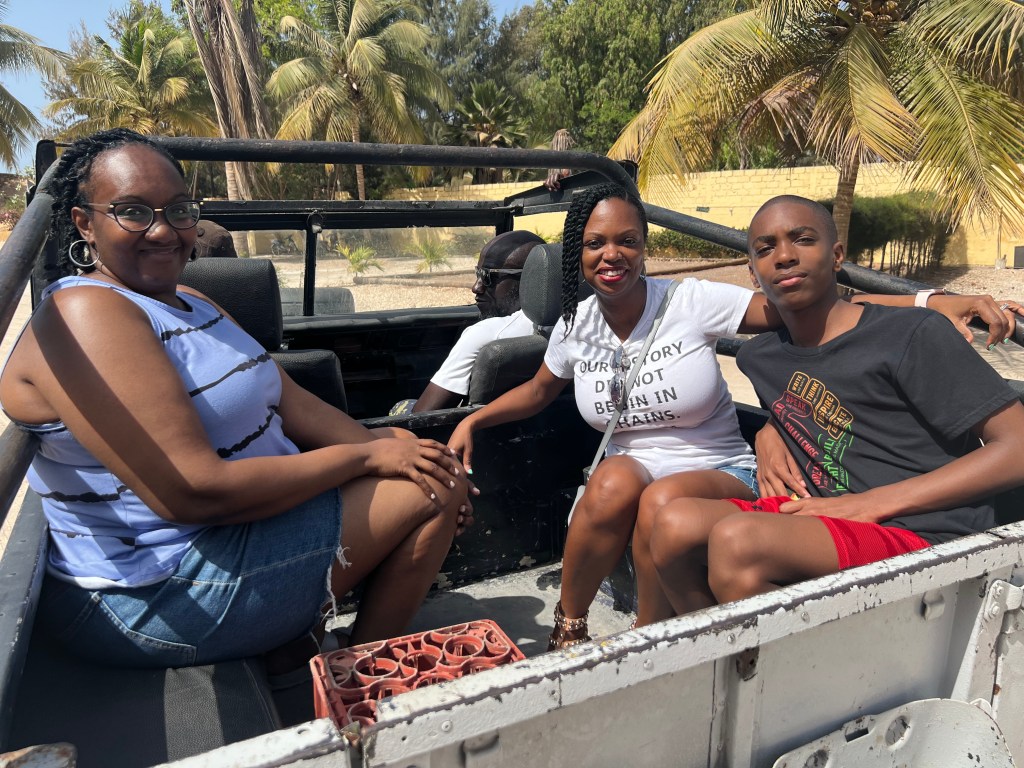
The next activity was somewhat unexpected. Our guide motioned for us to get in the back of an old, rusty, barely working pick-up truck and since I’m always up for an adventure, I happily jumped in! Little did I know, we were about to go dune bashing, with our driver expertly navigating various hills of sand with a number of quick twists and turns. I did this in Dubai and Peru and had never been a fan so needless to say, I didn’t love this experience either.
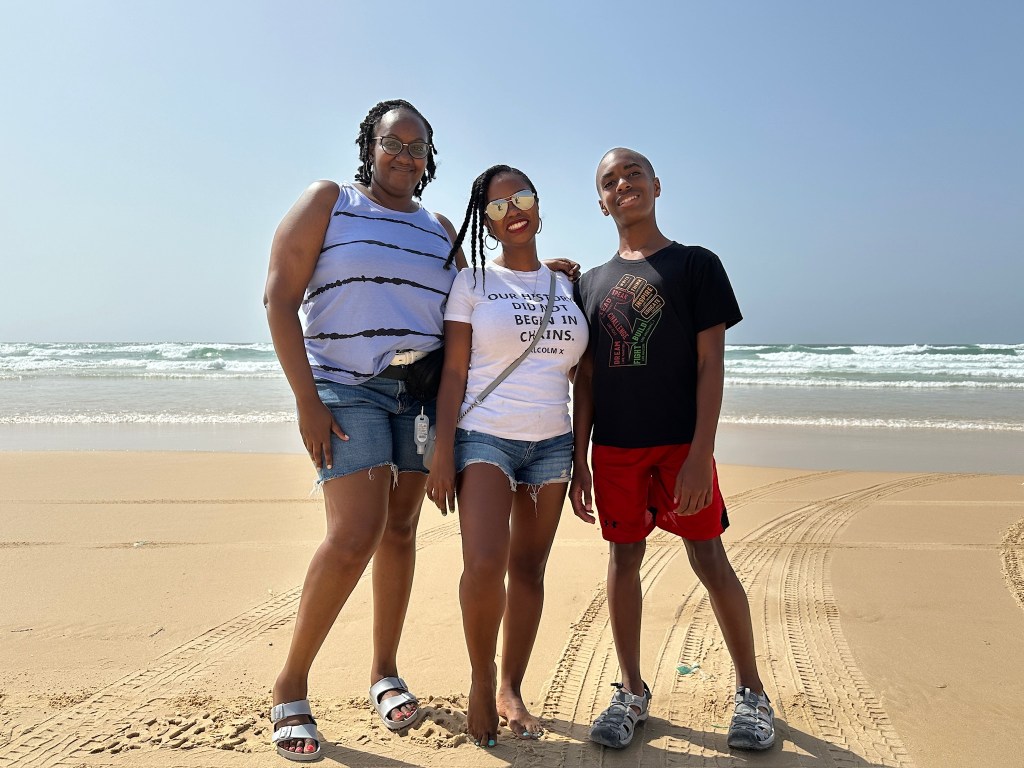
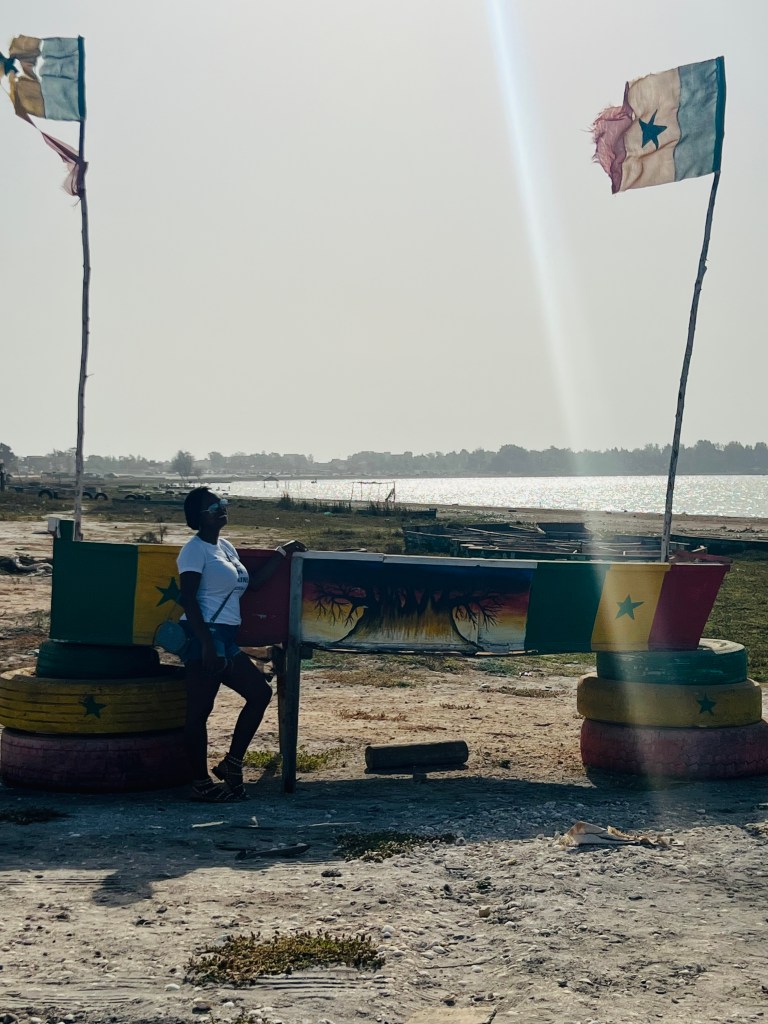
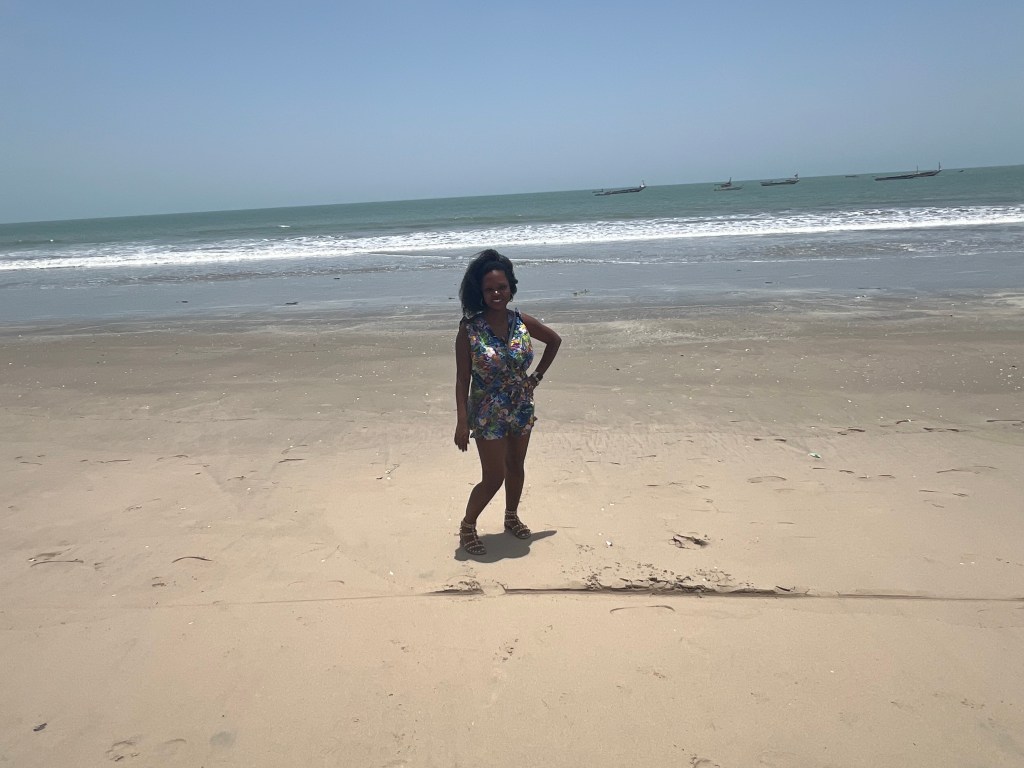
After the dune bashing, we had a quick pitstop at a gorgeous beach. Not even 1 minute after we hopped out of the jeep for a picture, there were at least 4 different vendors setting up around us trying to sell their crafts. The hustle is real out here!
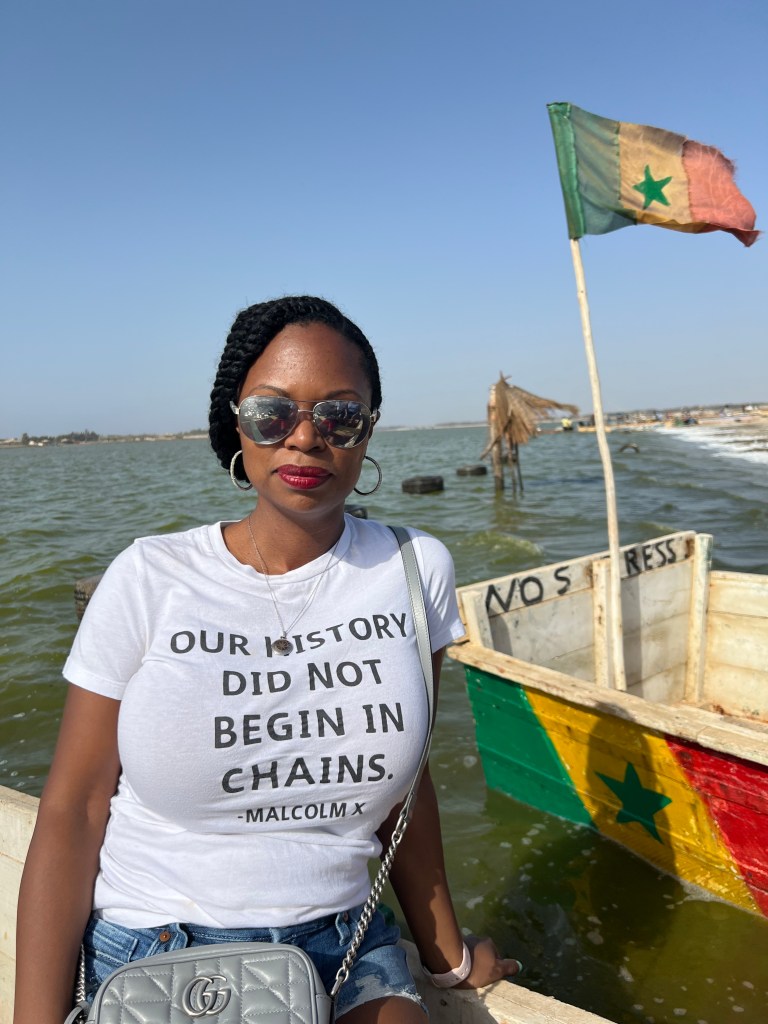
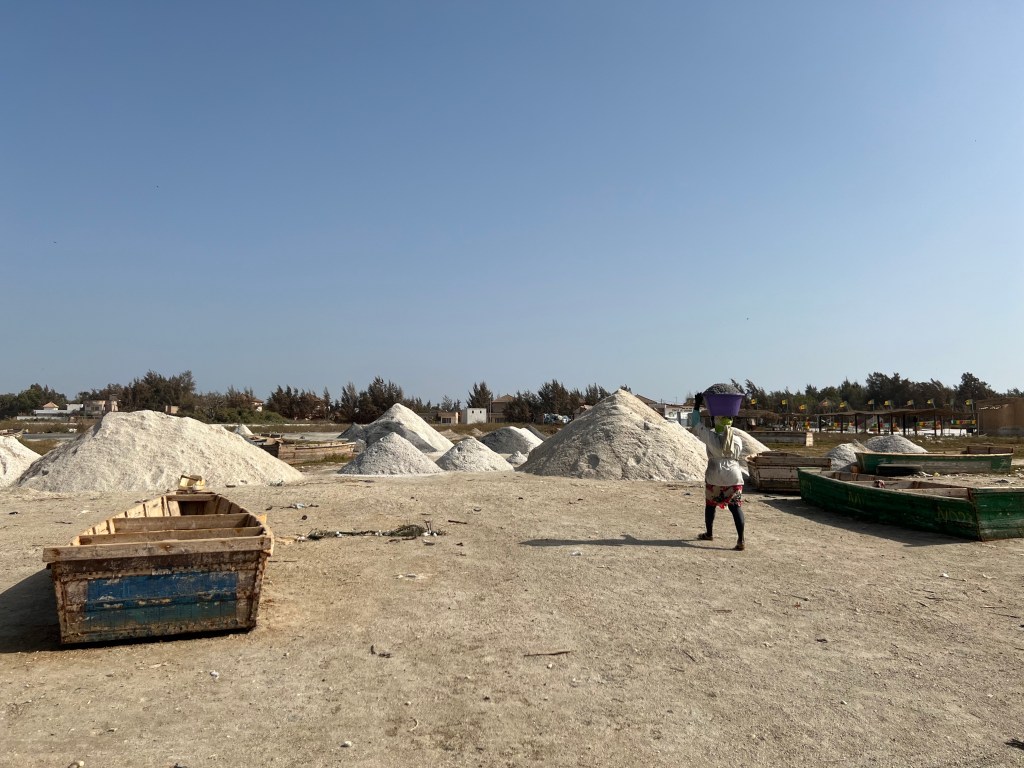
After our beach stop, we finally headed to the actual Lake Retba, also known as Lac Rose. The lake used to be pink due to a microorganism Dunaliella salina, combined with high mineral concentration and the intensity of the summer sun. However, due to severe flooding that occurred in September 2022, the lake lost its pink hue and tourism took a big hit. While I knew that the lake wouldn’t be pink when we visited, I still wanted to support the declining tourism in that area. We took a boat out on the lake and watched the salt being harvested.
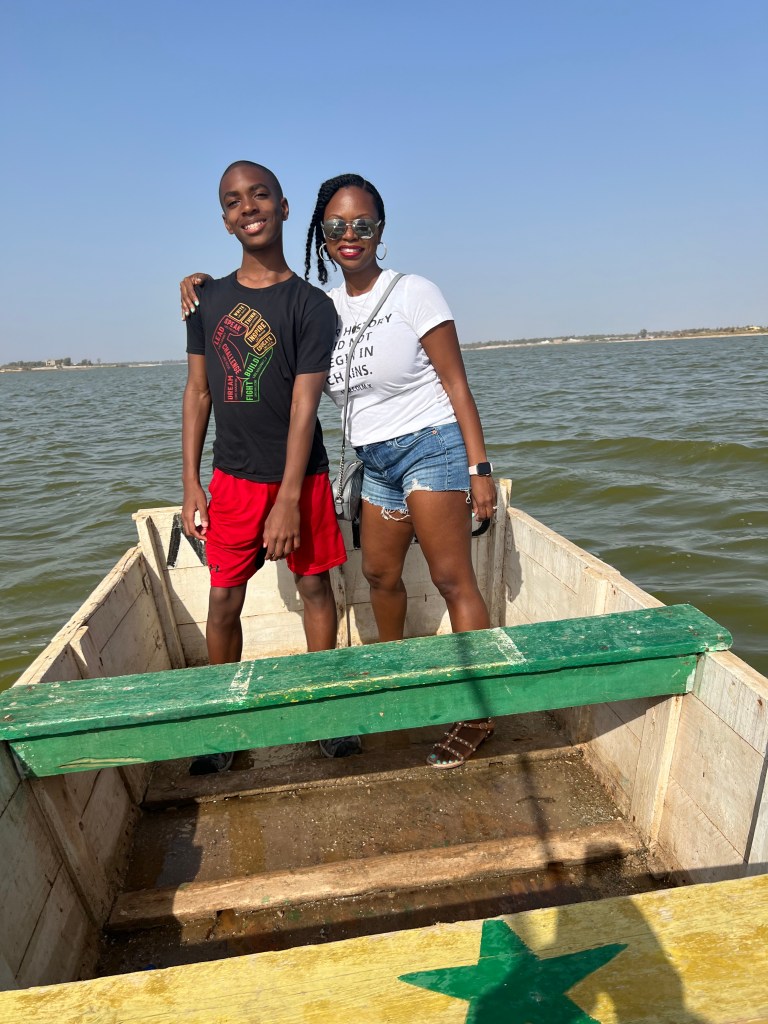
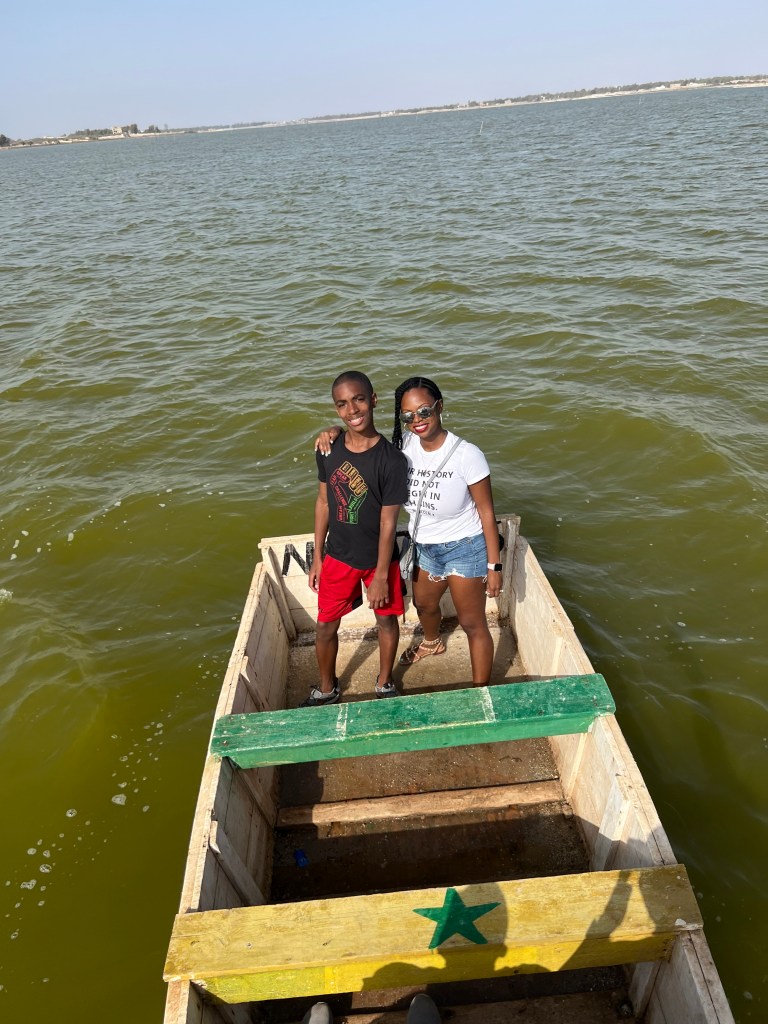
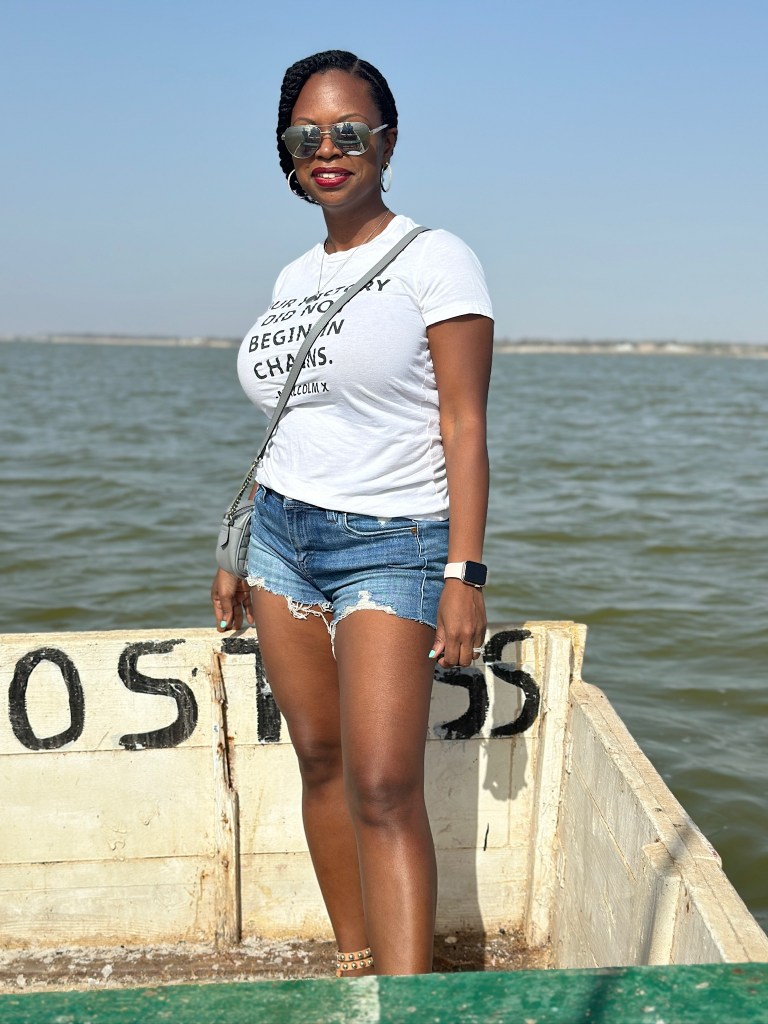
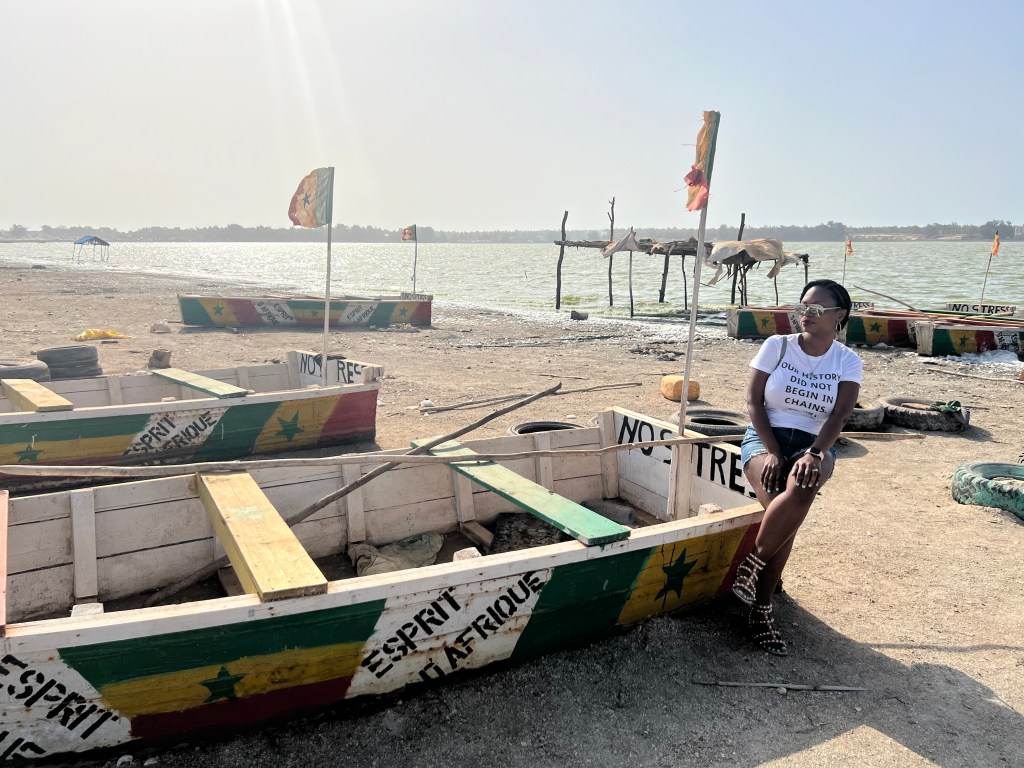
It had been an incredibly long day so we arrived back to our hotel around 6:30pm. We were starving (especially since we didn’t enjoy our lunch earlier) so we had a quick shower, changed, and called a ride via Heetch for 1300 CFA to Le N’gor restaurant. Our driver was SO nice and wanted to practice his English so asked a ton of questions and was extremely personable (which of course was rewarded with a nice sized tip!). As soon as I left the taxi, I was drawn into the restaurant’s chic ambiance. Located right by the water, it had an upscale feel to it with a unique decor and attentive staff. I had the tuna puff pastry as an appetizer, a very strong passion mojito, and the seafood tagliatelle with monkfish, shrimp, and squid in a cream and basil sauce for my entree…OMG, it was SO delicious. Literally everything melted in my mouth and lit up my tastebuds. We forced ourselves to save some room for dessert and thoroughly enjoyed the profiteroles filled with raspberry sorbet. Our Heetch ride back to the hotel was 2100 CFA (more than we’d ever paid although the place was only a few blocks away) but it was later at night so figured there was a surcharge.


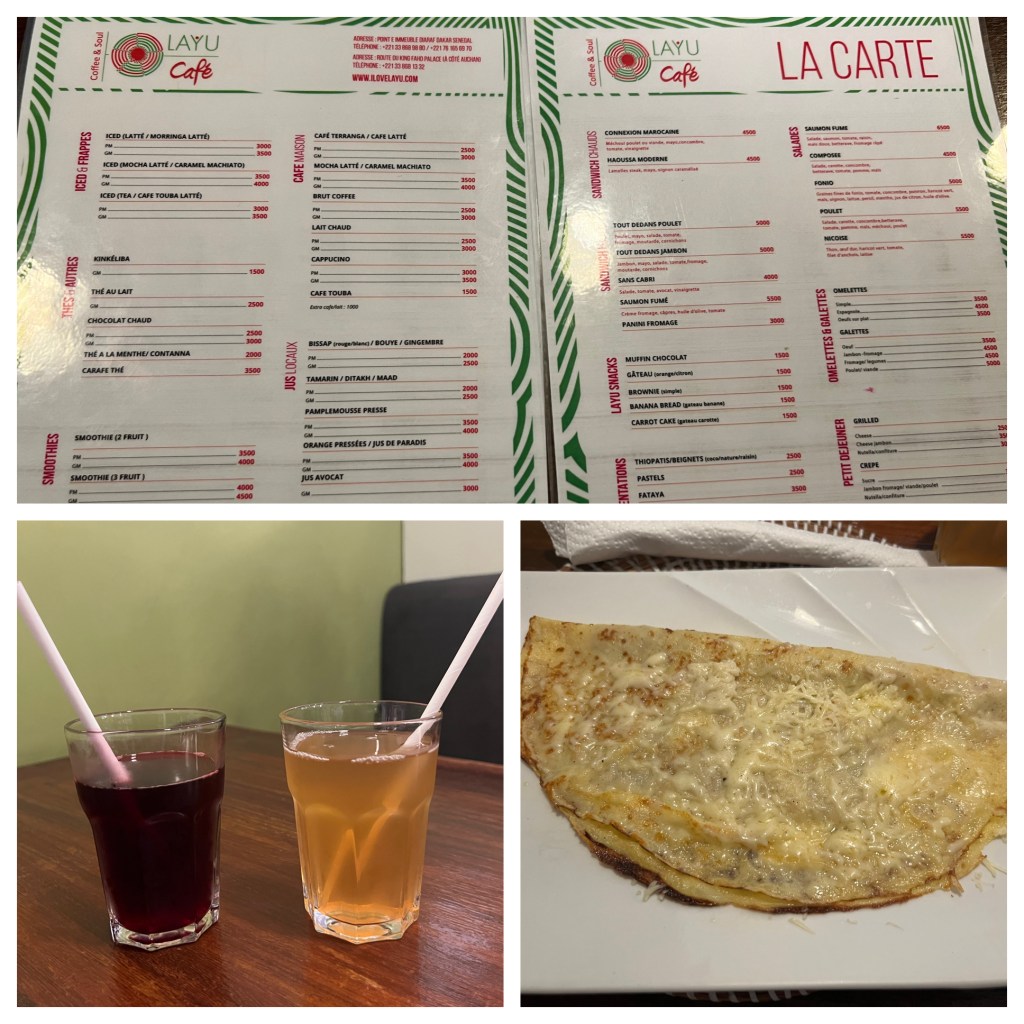
The next morning, we went to Layu Cafe (close to the hotel) for breakfast. It was pretty empty but had a quaint, homey vibe so we stayed. We all ordered ham and cheese crepes washed down with bissap (I had the white one which tasted like mint and Avery had the red one) and they were both delicious.
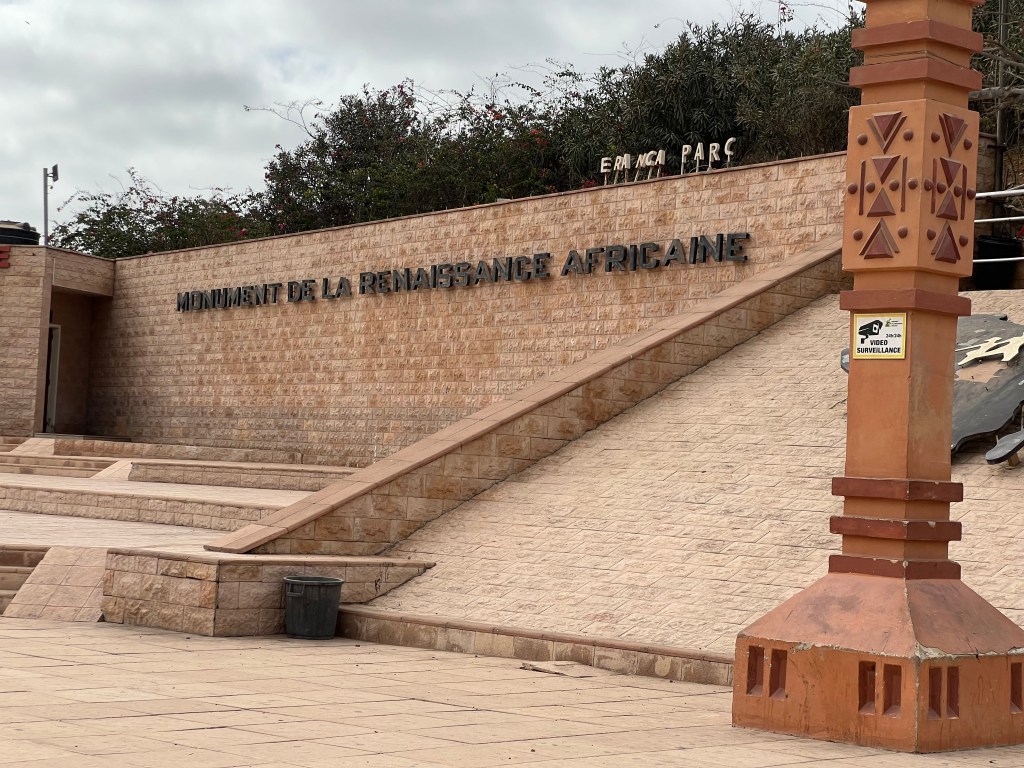
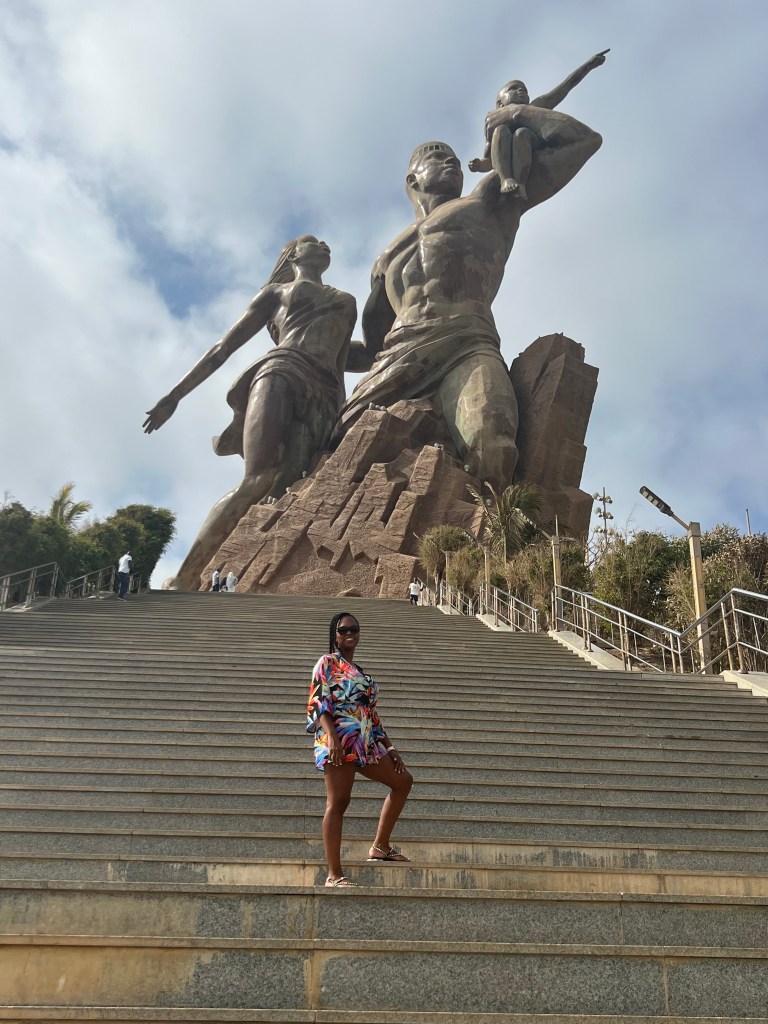
After breakfast, we began our city tour. The first stop was a visit to the African Renaissance Monument, a ~170-foot tall statue that was opened in 2010 and is the tallest statue on the African continent. It serves to commemorate the ‘African Renaissance’ with a goal of growth and prosperity for the African continent in the 21st century and is a powerful symbol of resilience, strength, and unity. Despite these good intentions, the building of the structure was (and remains) controversial. With over half the population in Senegal living below the national poverty line, the estimated $27 million cost of the monument seemed to be an unnecessary expense.
Although you can walk around the base of the statue for free (though you’ll need to climb ~200 steps to get to the base!), there is a cost of around 15 euros to go inside. I didn’t think it was worth it so decide against going inside to the very top.
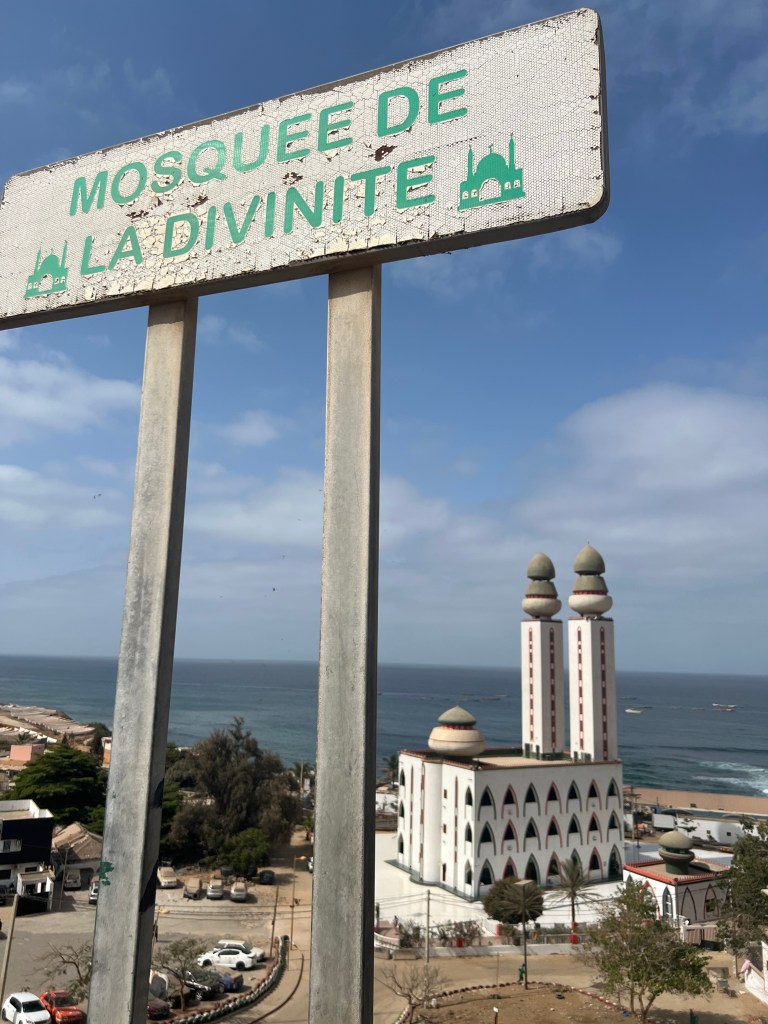
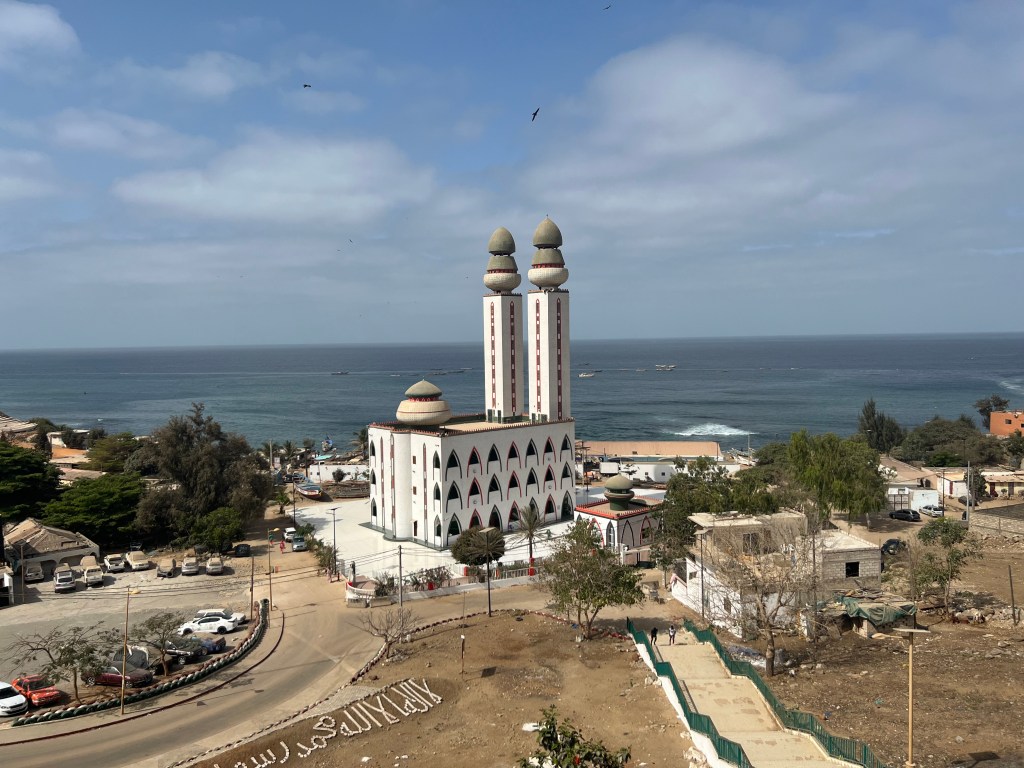
Our next stop was the Mosque of the Divinity, a religious structure with two towering minarets. Note that inside is not open to non-Muslim visitors.
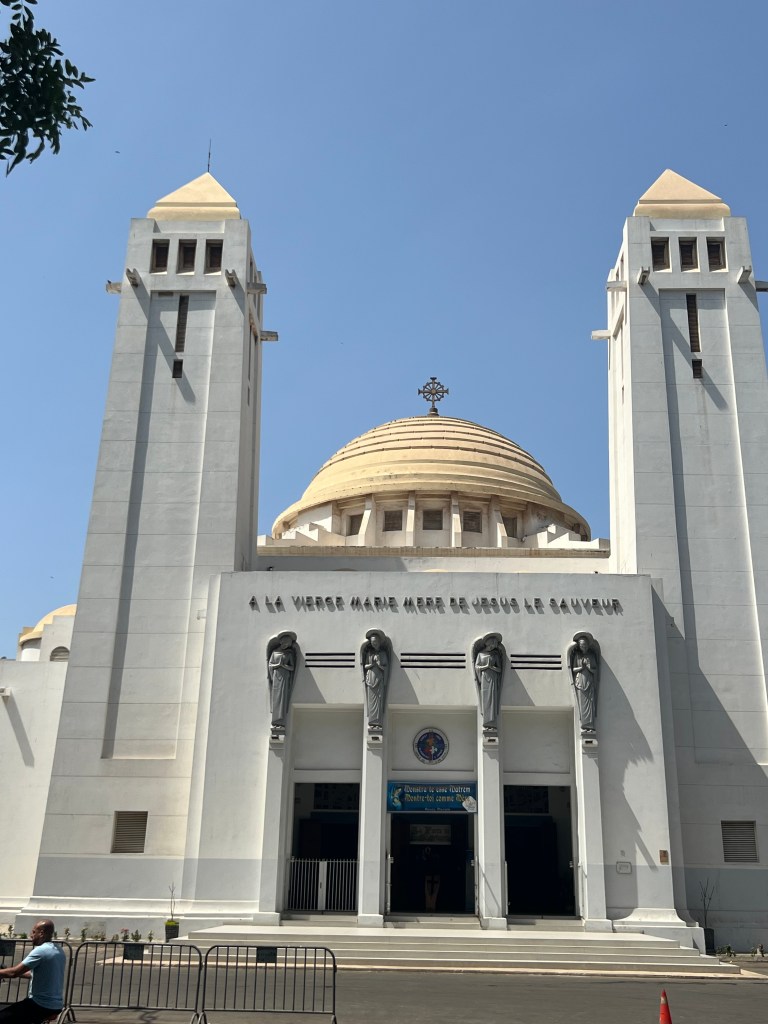
We then continued walking around Dakar, stopping at a cathedral, the presidential palace, and then Marche Kermel (a historic market where only European used to be able to shop back in the day) but now they sell produce, fresh meat, and seafood.
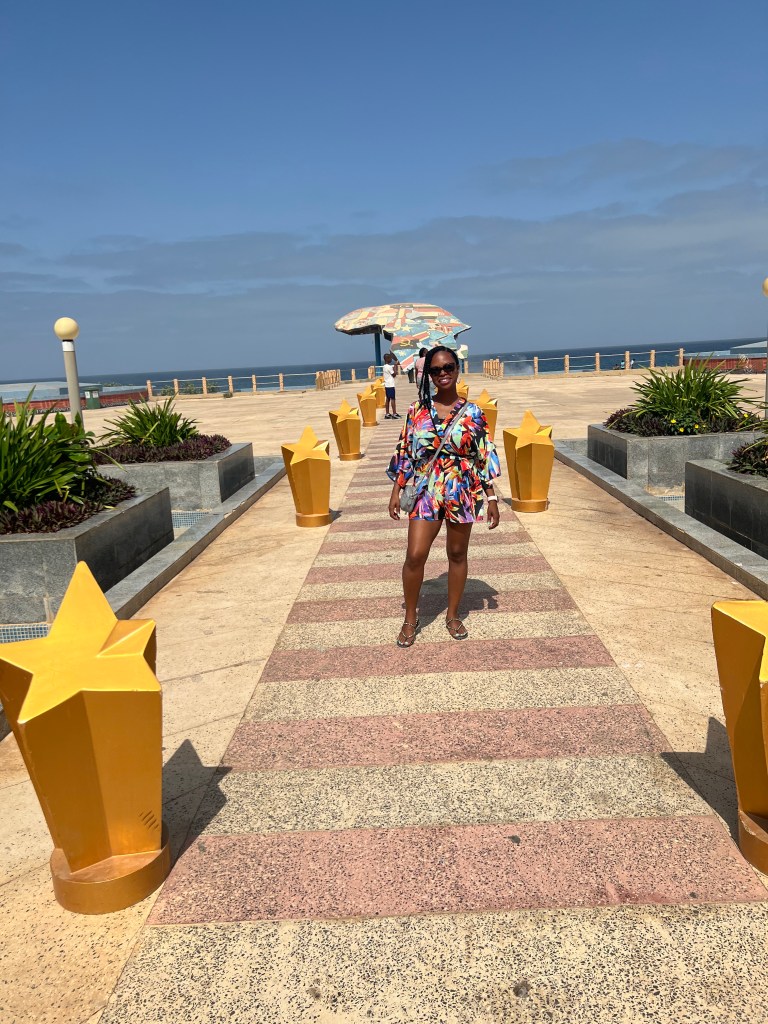
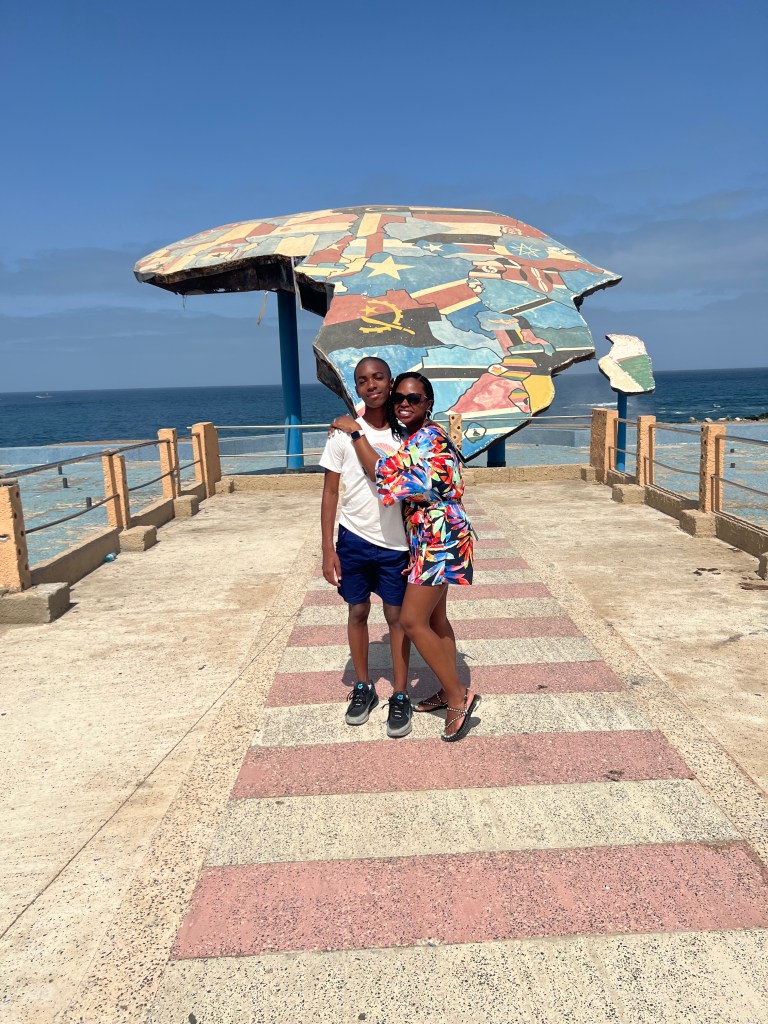
We then headed to African Remembrance Square which (according to their website) “represents a receptacle of the memory of black peoples, their martyrs, but also activists and symbols of African dignity”.
Next up was some haggling for souvenirs at Sandaga market. The owner started SUPER high on his prices so of course I did the opposite and went really low 😉 After some back and forth (and me threatening to leave empty-handed), we ended up meeting somewhat in the middle (but closer to my original price). I always try to be fair but also know when I’m being overcharged (e.g., he wanted $20 for a souvenir shot glass that I normally pay $5 at most for).
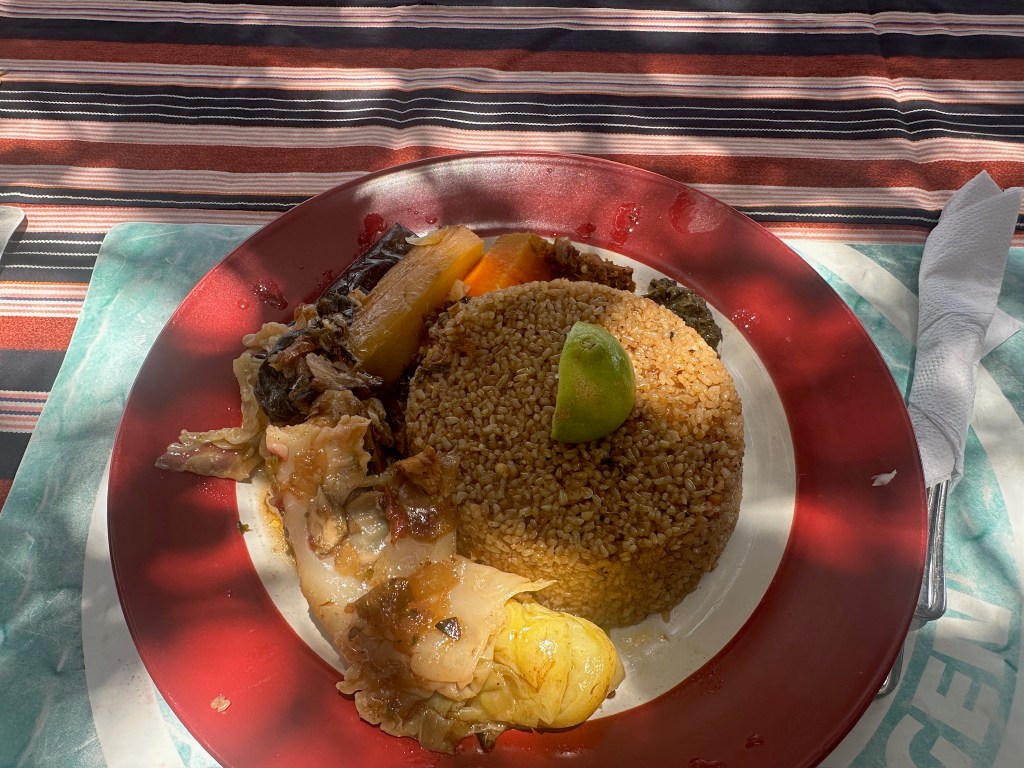
Our guide took us to eat some random local restaurant since lunch was included in the day’s tour. It was the national dish (again) but this time, the rice had more of a couscous texture. We received a separate bill for the Fanta and tea that we ordered (and didn’t realized it wasn’t included) which was a bit of a turn off because it felt like we were being nickel and dimed for everything.
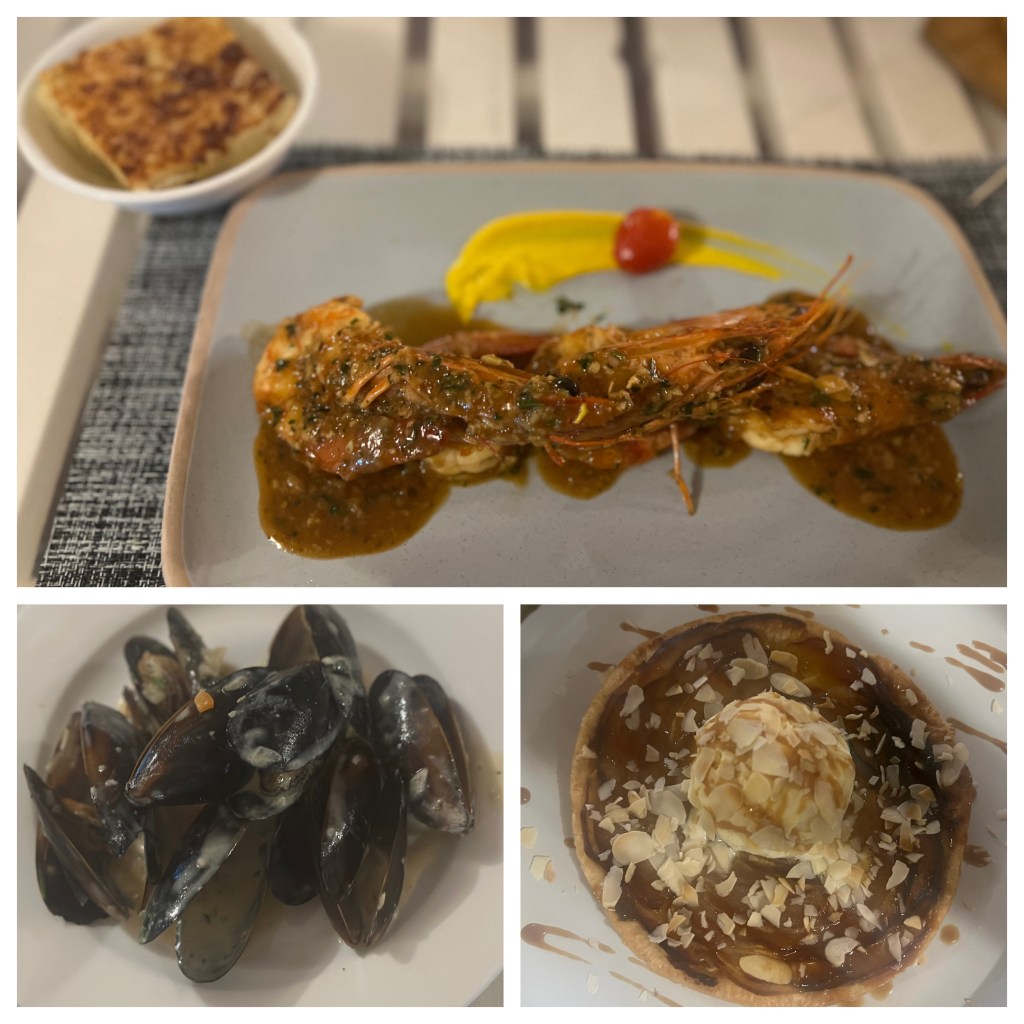
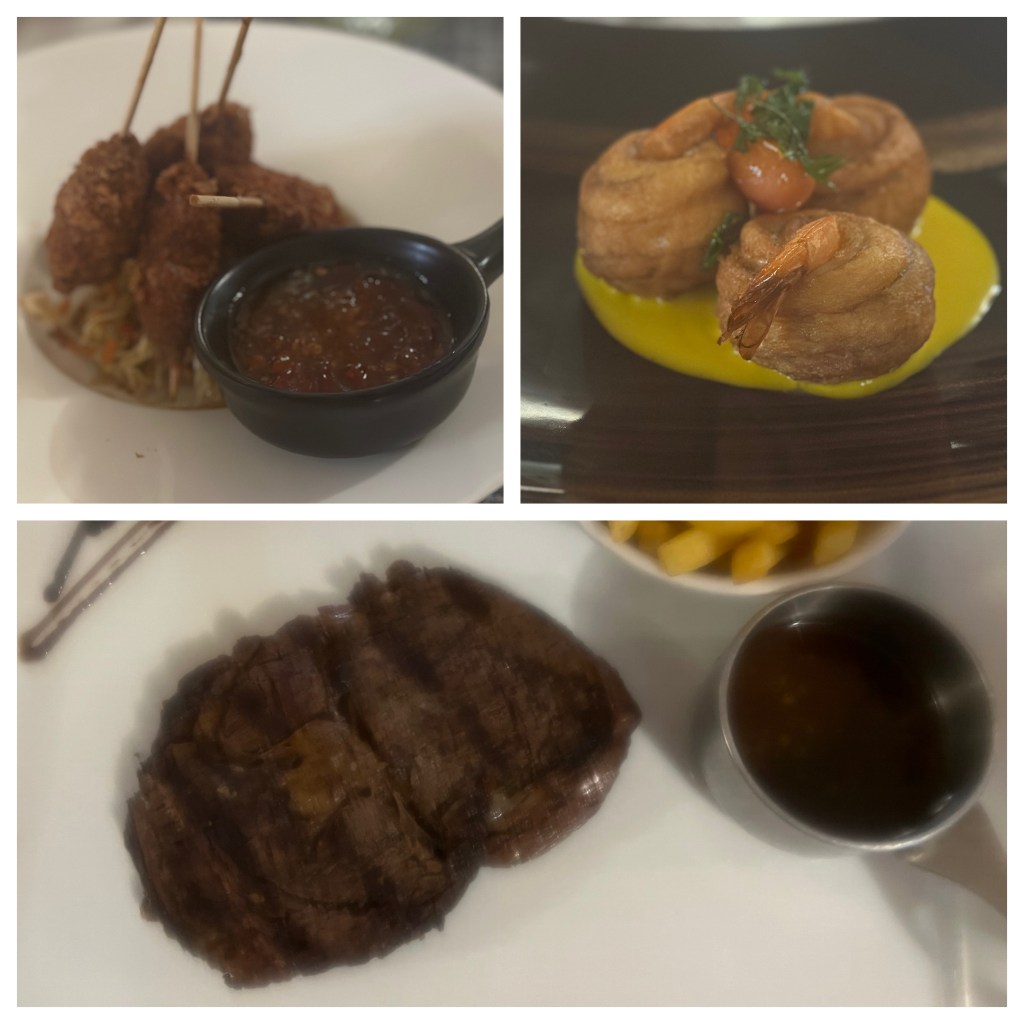
After resting at the hotel, it was time for dinner at La Pointe des Almadies. Since I research all of my trips so thoroughly, I’m pretty good at picking restaurants but unfortunately, this one was a miss. Mostly everything we consumed was disappointing. From the caipirinha (which was terrible and too limey with no taste of alcohol) to the prawns that were overdone to the steak that Avery ordered that looked like mystery meat…we were not impressed. The two items that we enjoyed was the bread that came out soft and warm, and the mussels in a cream sauce. I almost forgot…the dessert! We had an apple tart with ice cream which was delicious.
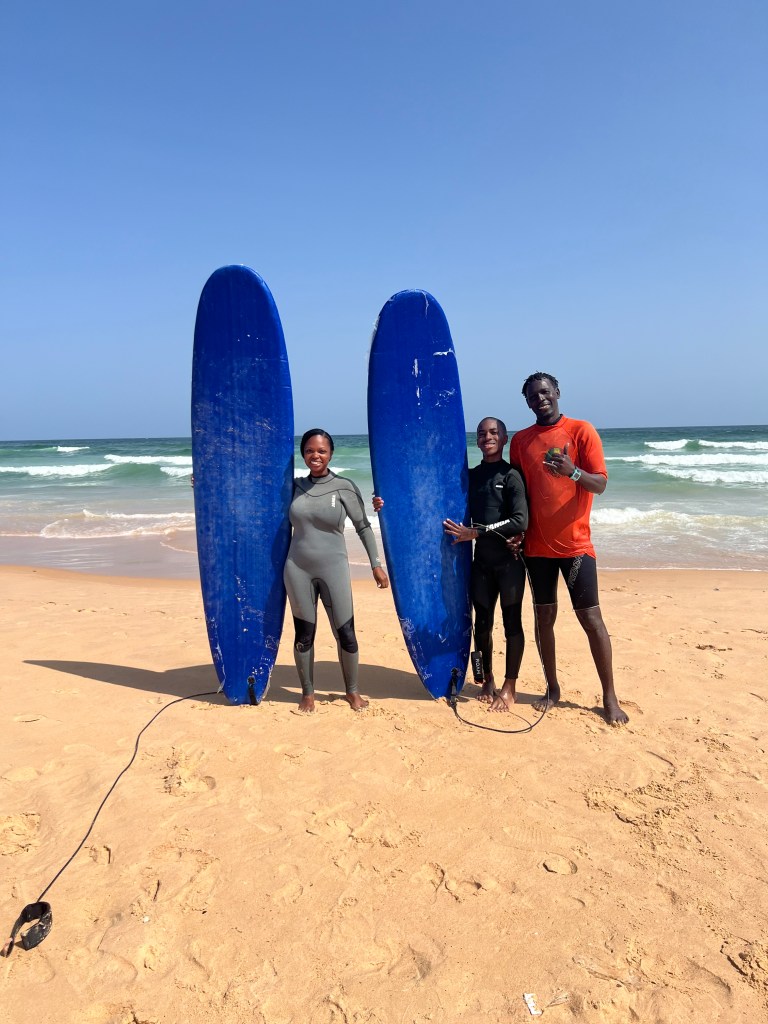
I was very excited for the next morning because it was surf day! There were a couple of different surf camps to choose from but ultimately decided on Malika Surf Camp due to its proximity to our hotel. After a 25-minute ride to Yoff beach, we arrived for our 9am reservation…unfortunately, there was no one around.
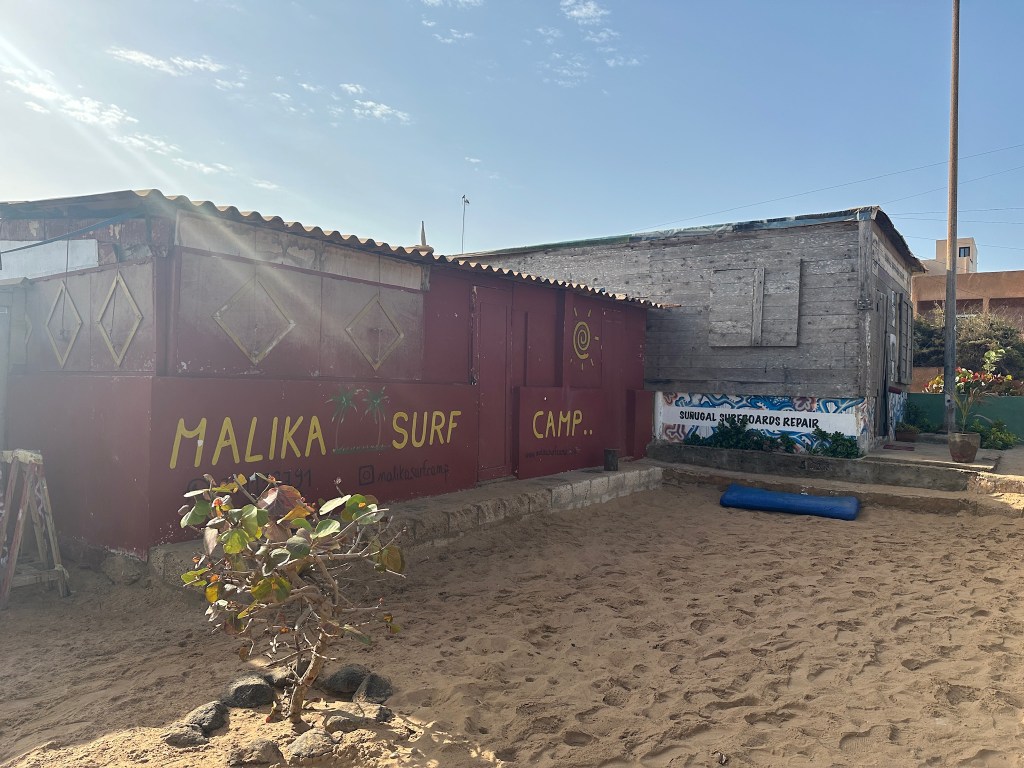
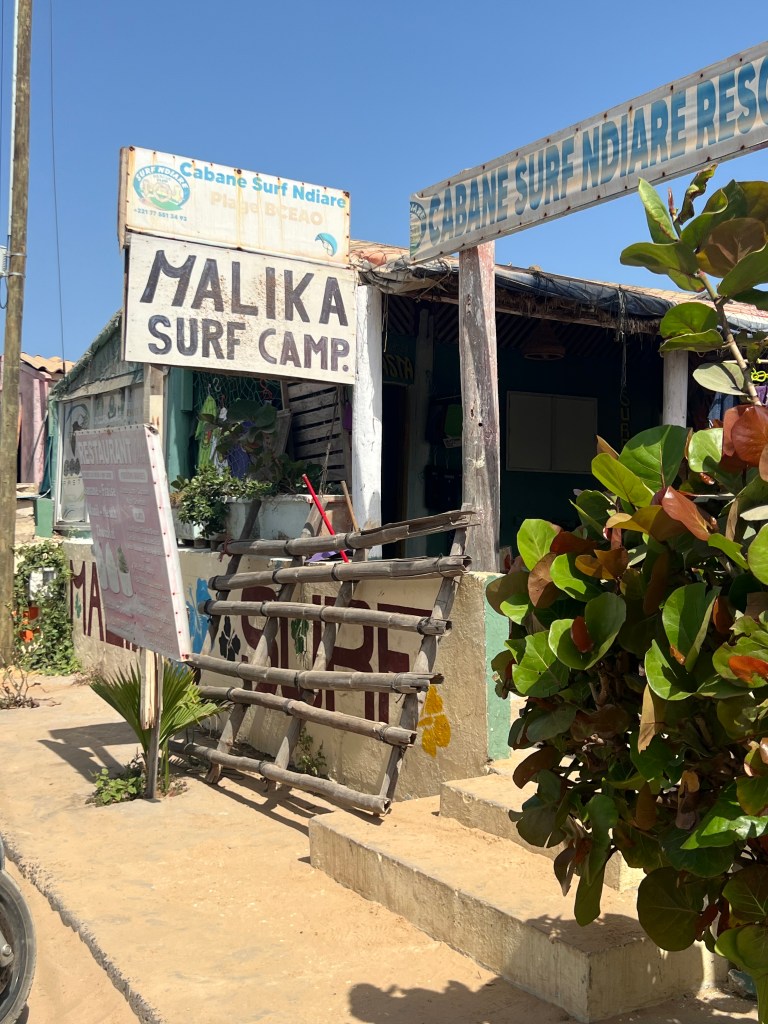
One of the instructors by the name of Aziz arrived about 10 minutes later but knew nothing about the reservation! It ended up being totally fine though (when in Africa, go with the flow!). He gave us our wetsuits and surfboards and in no time, we were heading down to the beach. Surprisingly, there was ALOT of activity on the beach for so early in the morning: locals wrestling, doing workouts, playing soccer, etc.
Aziz gave us a quick lesson on the sand on how to ride a wave laying down and then we headed right to the water.
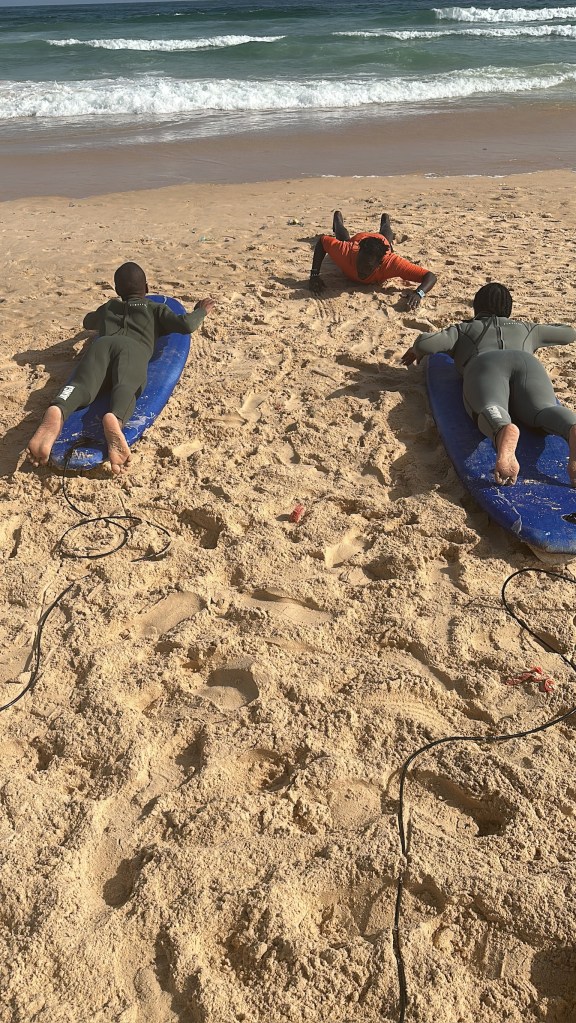
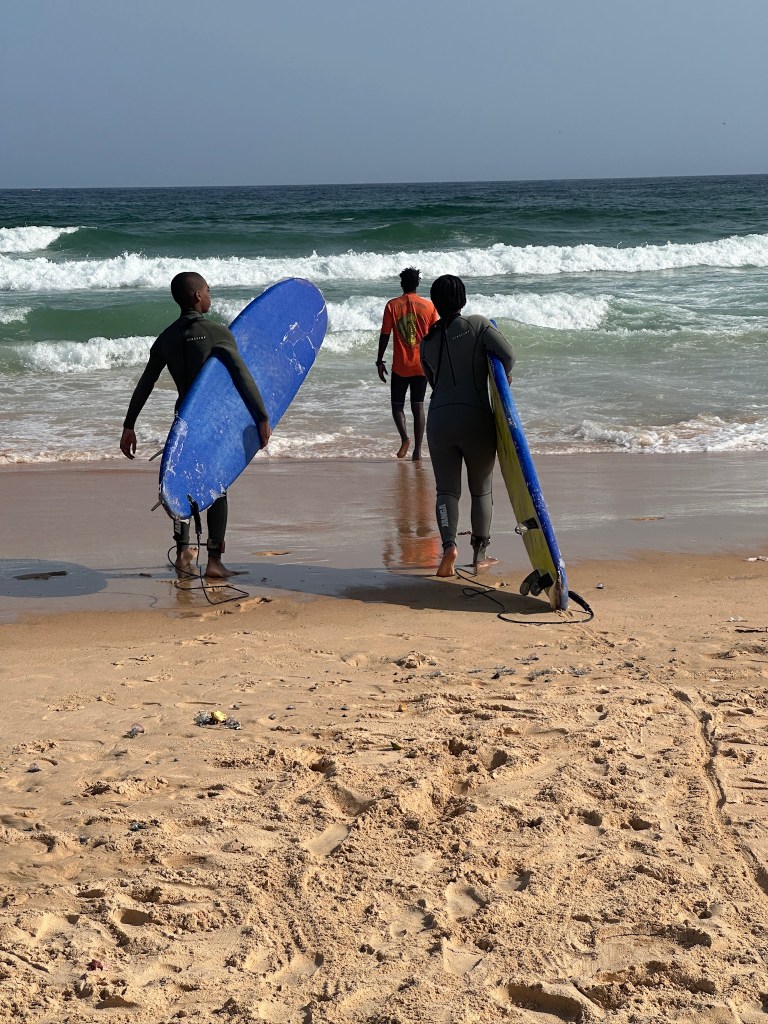
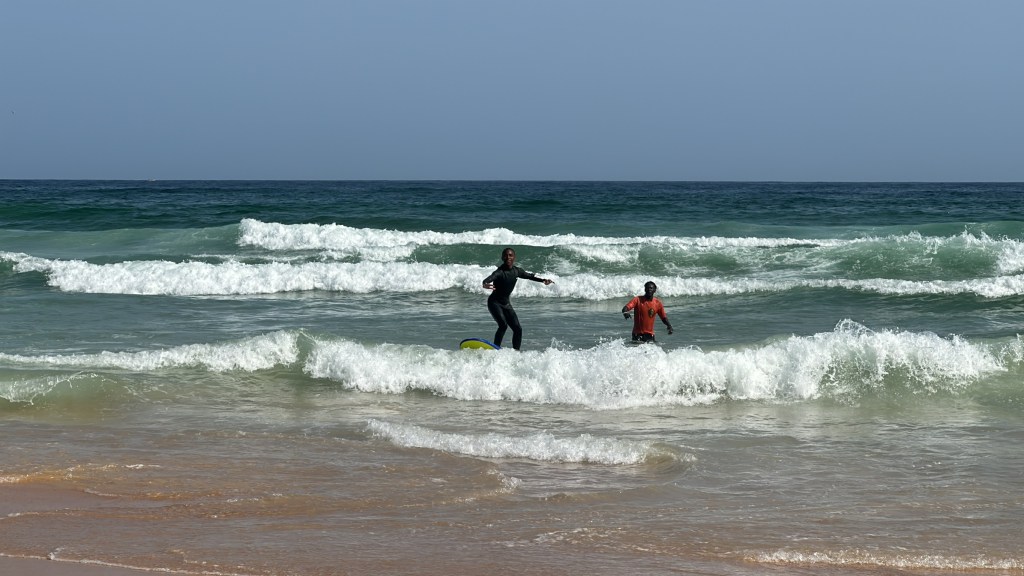
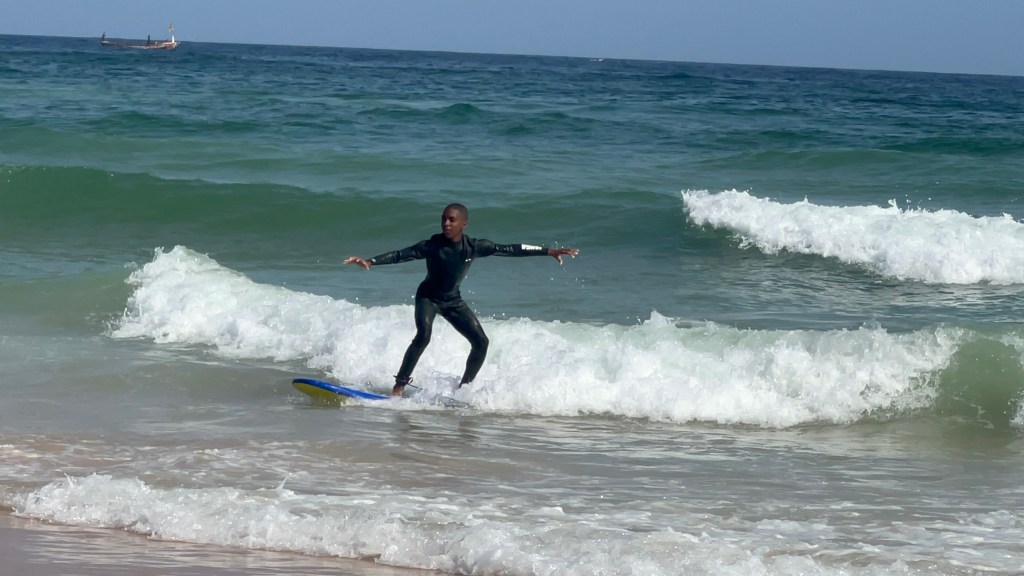
Although that was just the first step, I promptly failed on each attempt. On the other hand, Avery did great. He moved on to the second step of “popping up” and was able to do it after a few unsuccessful attempts. By that time, I had tapped out and was proudly admiring from the sidelines. Who knew surfing was so hard?!?!

The entire private lesson was about an hour and a half and was supposed to be 36000 CfA (20000 for adult and 16000 for child). Surprisingly, Aziz only charged us 25000 total (not sure if that was because they were late, forgot about my reservation, or because I only did some of the lesson). Either way, that was extremely generous of him!
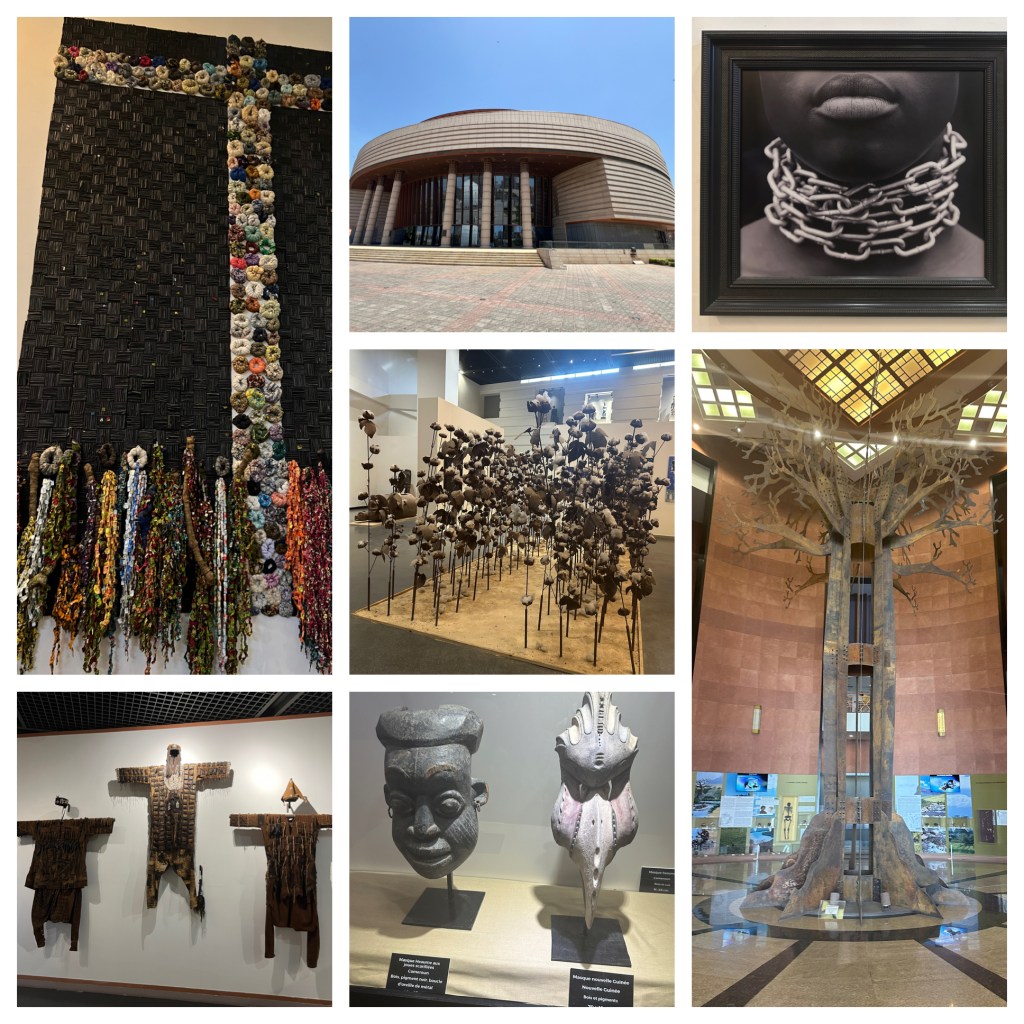
After a quick shower back at the hotel, we checked out and made our way to the Museum of Black Civilizations. Note: it is closed on Mondays so don’t make the mistake that we did and try to visit on a Monday! Thankfully, they were open when we tried the next day. The museum celebrates black civilizations’ contributions across the world and is filled with artifacts, artwork, and exhibits. We could’ve spent all day there but were eager to get to our next destination.
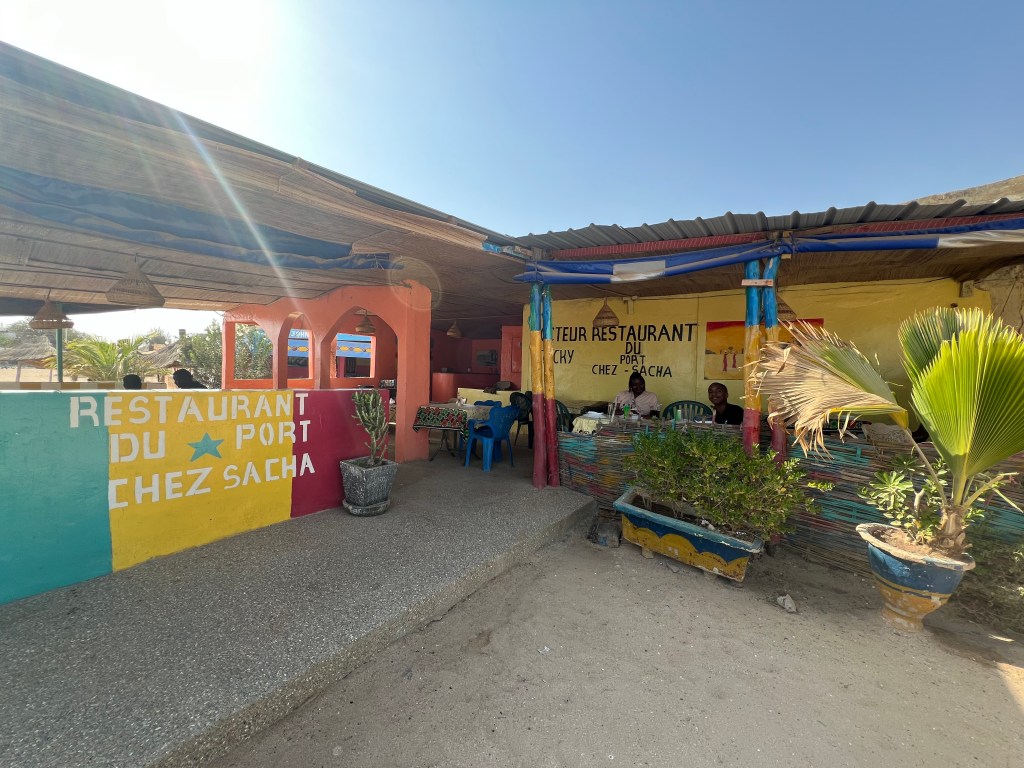
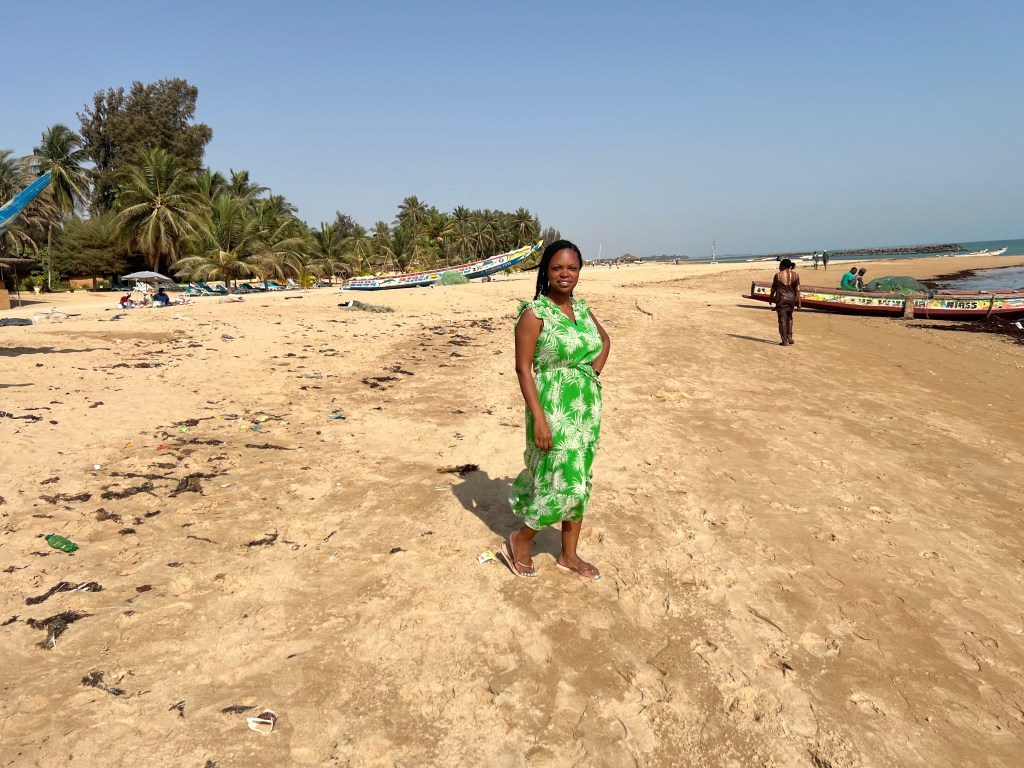
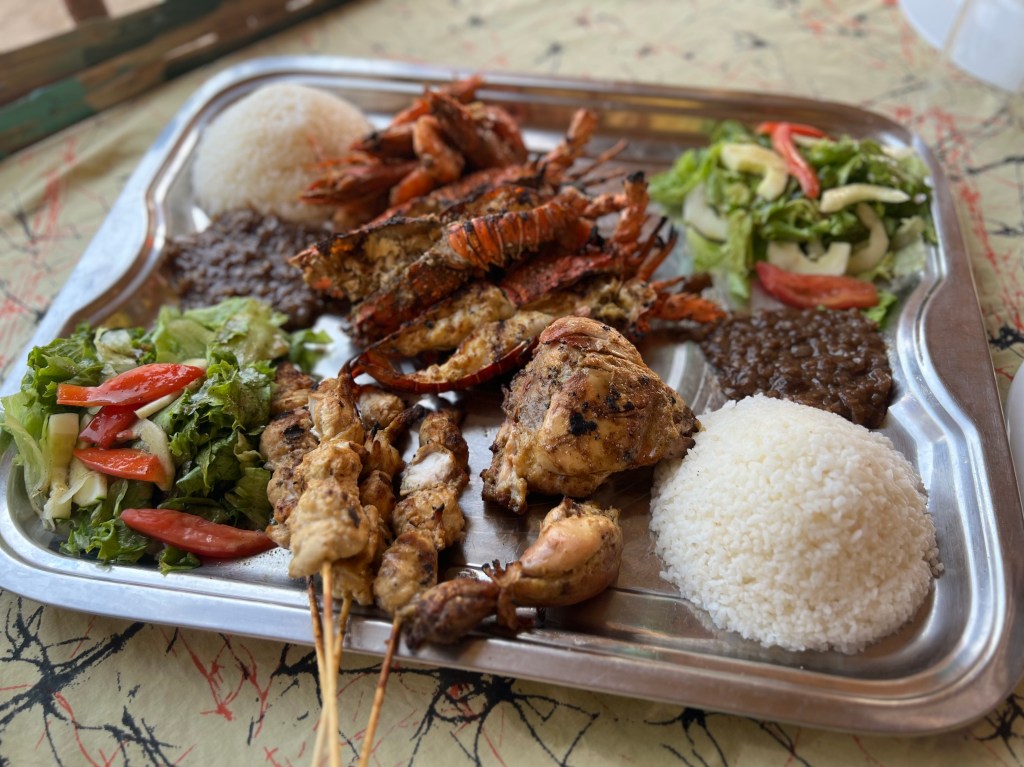
The drive to Saly was about an hour and a half so we arrived at Rhino Resort Hotel and Spa close to 4pm. We were starving at that point so after putting down our bags, we walked about 7 minutes to Chez Sacha located on the beach. It was a little shack (blink and you’ll miss it!) where the owner seated us. We ordered the platter of lobster, shrimp, chicken kebab, rice with grilled onions, salad, and yassa poulet (grilled chicken). It was a HUGE platter (more than enough to feed the 3 of us) and only came to $56US. Note: they do not accept credit cards but do accept US dollars.
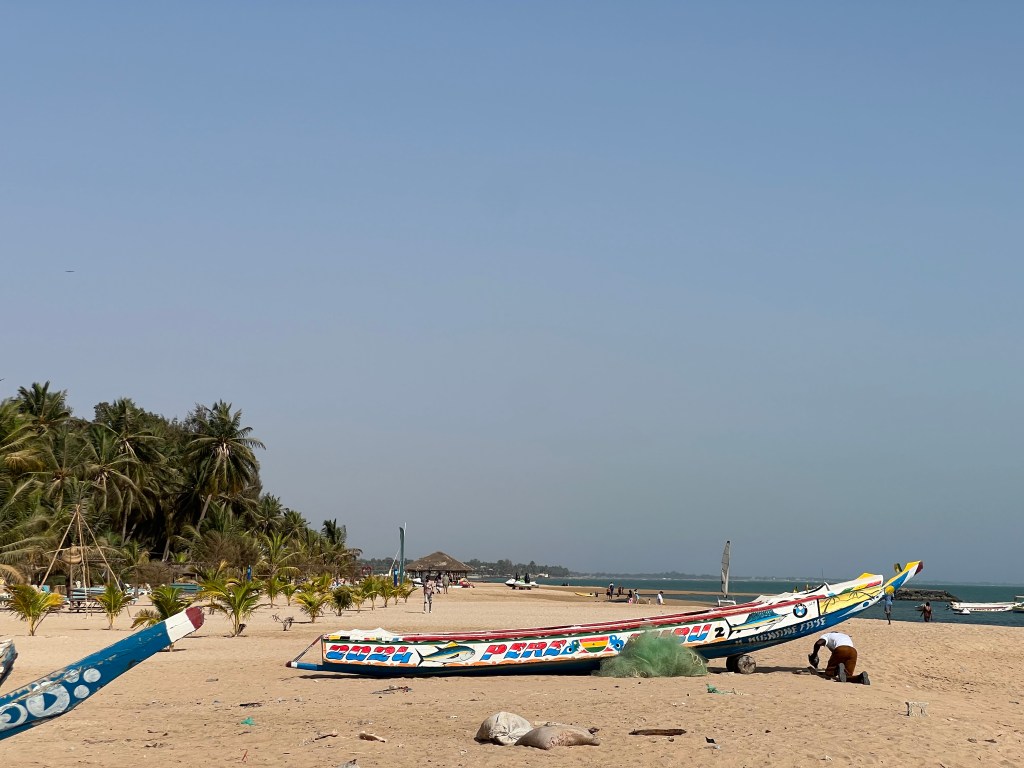
After finding our way back to the hotel, we decided to call it a night since we had an early morning. Something surprising and scary happened when we were getting ready to head to bed: a random guy (who seemed drunk and couldn’t find his room) tried to use his key on our door! I shooed him away but that encounter definitely shook me up a bit!
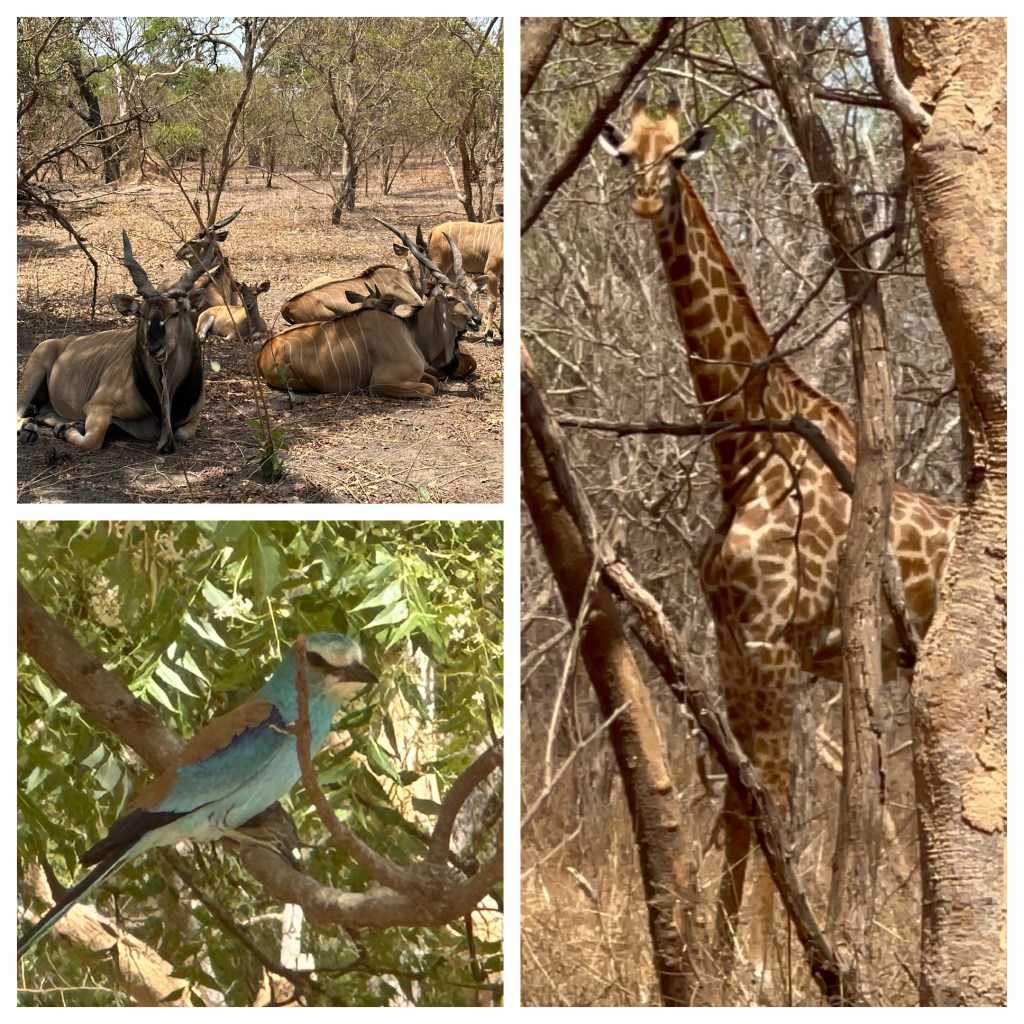
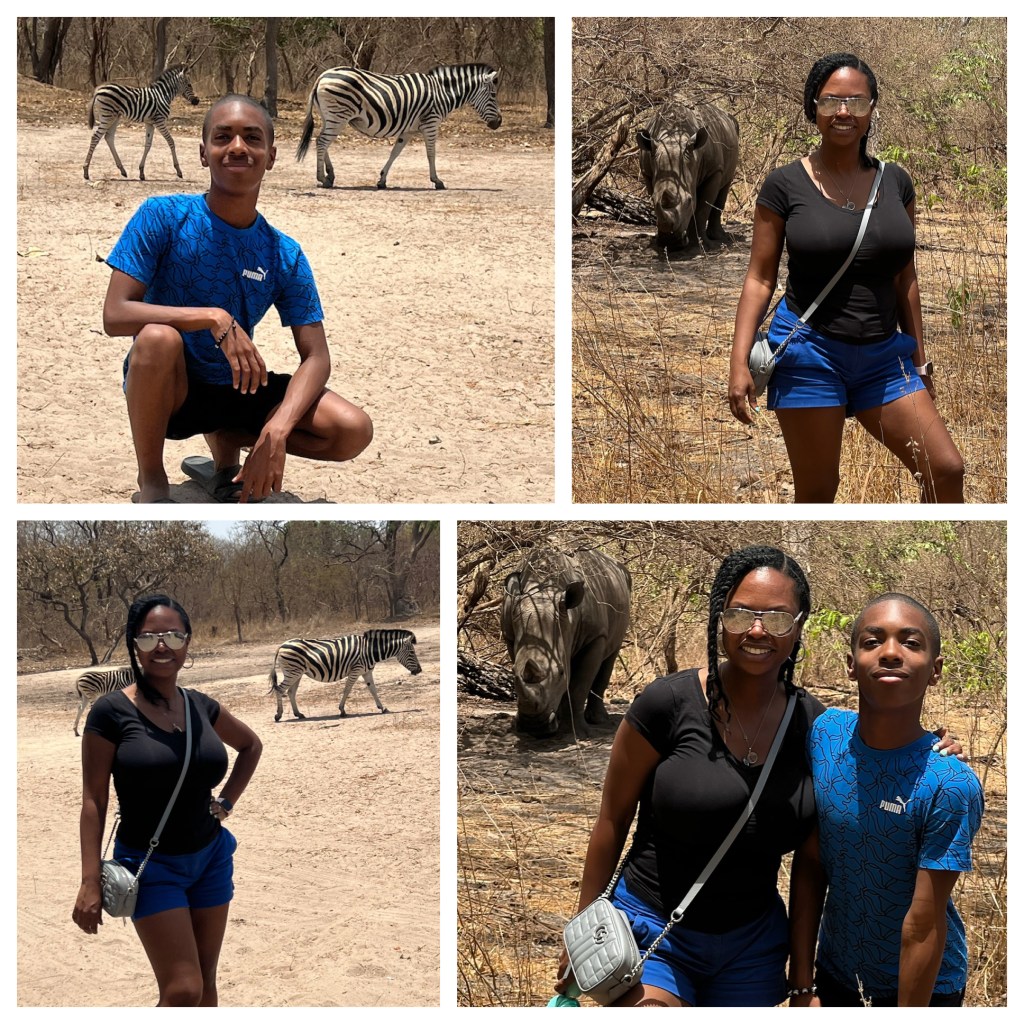
After eating an overpriced and underwhelming buffet breakfast at the hotel, we left around 7am for the 4-hour drive from Saly to the Fathala Game Reserve. The 6,000-hectare reserve was much smaller than I had experienced in Kenya or South Africa, but I knew that before I arrived, so I adjusted my expectations accordingly. Although our reservation for the game drive was originally for 1pm, thankfully we were able to get an earlier one when we arrived two hours early. With a price tag of 30000 CFA (~$50 US) to rent a vehicle and guide for the game drive and another 18000 CFA ($30 US) for the entry fee for adults (kids 12 and under were half price so only 9000 CFA or $15 US), the cost seemed pretty reasonable and well worth it for the two-hour experience. We were able to see a rhino, elands, giraffes, zebras, warthogs, and various colorful birds. We were able to get out of the vehicle at various points to get a closer encounter with some of the animals which was very cool but also a little nerve-wracking!
For those interested in staying overnight, they offer luxury safari-style tents as well as additional tours like sunset boat trips through mangroves, birding safaris, and bush walks, amongst others. The reserve also offers a “lion encounter” where you can walk with lions (that looked drugged), but I personally didn’t want to support that.
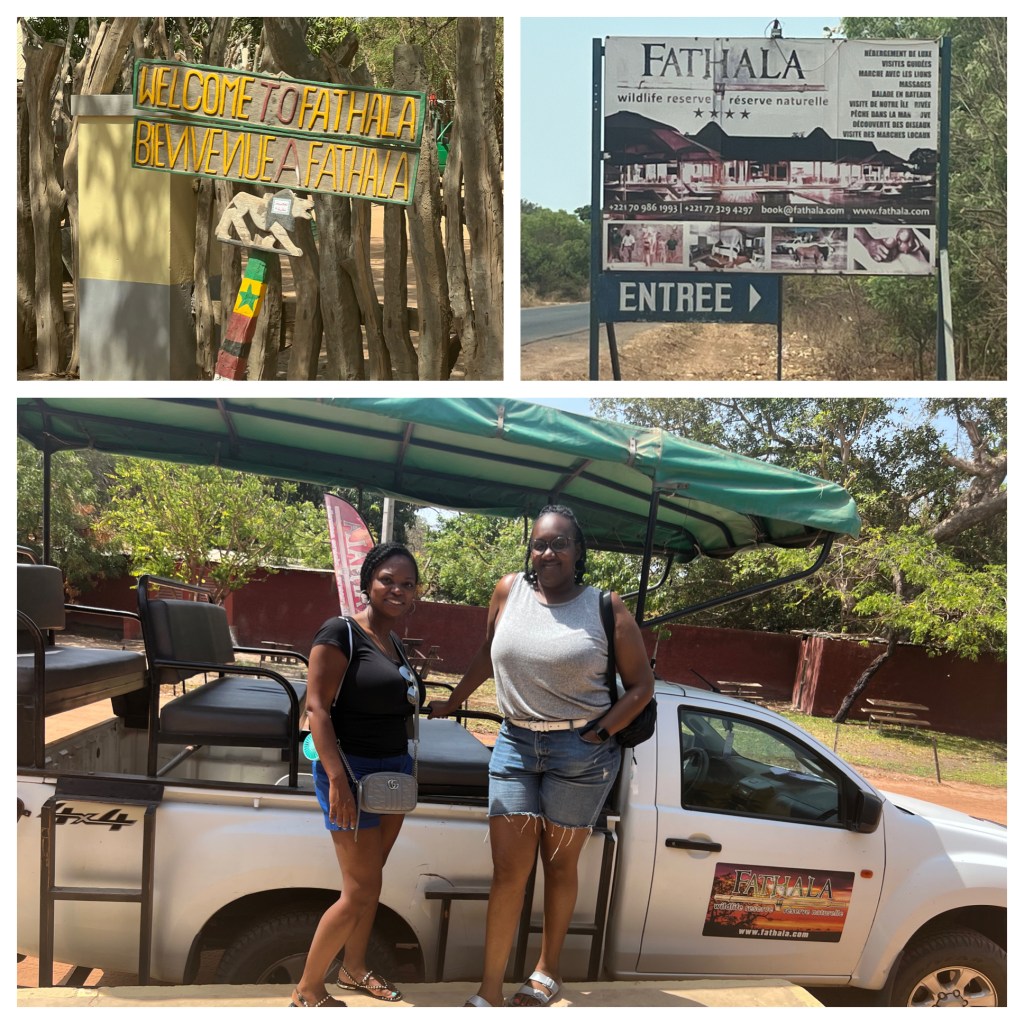
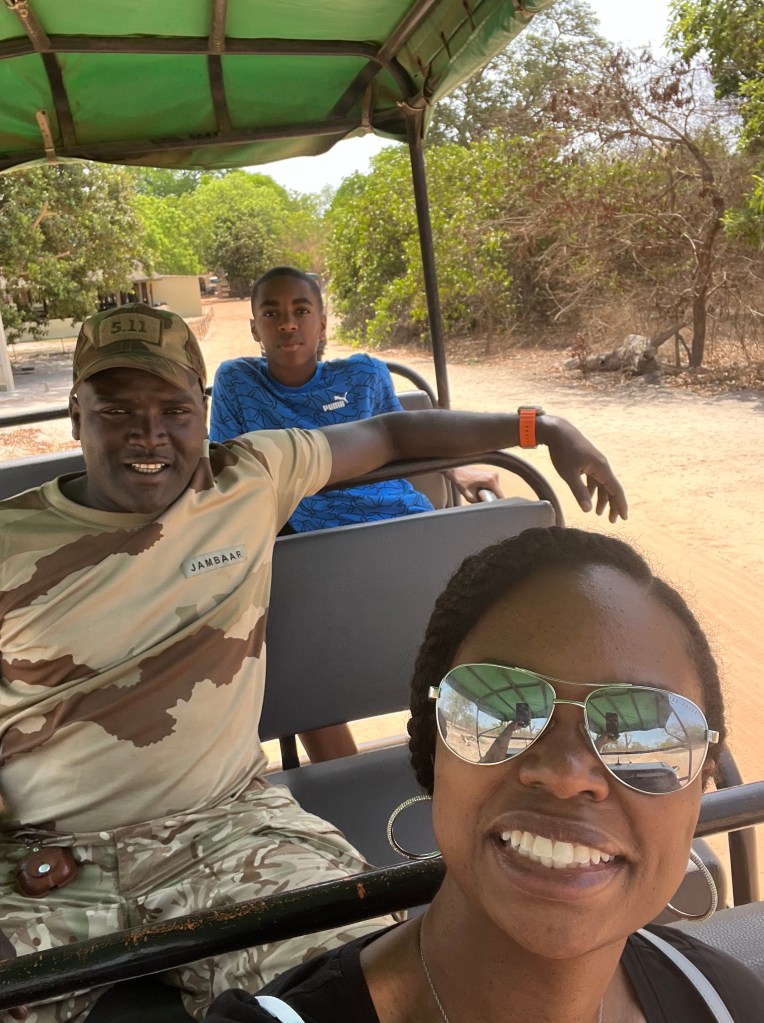
We left around 1pm and our next stop was the Gambia border which was only a few minutes from the reserve. Crossing borders by land can be so chaotic and this is experience was no different. First, we had to exit the vehicle and were stamped out of Sénégal at the border post. Then, we went into some office to pay $100 US for the visa into The Gambia (presumably this was to fast track everything since our guide is friends with one of the immigration officers). After that, we had to go back outside and go to immigration again…but now on the Gambian side. There, they digitally took our fingerprints, took a picture of us, and stamped our passports.
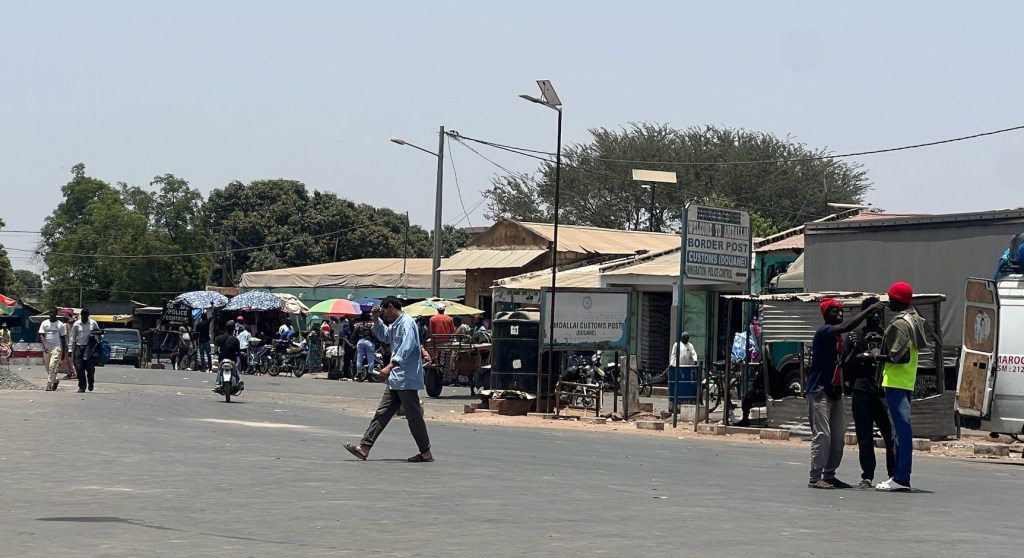
Only a few minutes after we crossed the border into The Gambia, we were stopped at a police checkpoint. Our guide warned us that this would happen more than once since we were driving a vehicle with Senegal plates. Our driver had to give the officer money which our guide called “contribution for drinking tea” (meaning, they were getting paid to do nothing but get bribes from people). Corruption at its finest! I had heard and read about this kind of thing happening, but it was crazy to experience it myself. In total, we passed four police checkpoints on our way to the river crossing (and had to give them each something).
If you look at a map of The Gambia, it is a long narrow strip that is completely surrounded by Senegal. There is also a river (The Gambia River) that runs through the middle of the country and separates the north from the south. The most popular areas are located on the other side of the river, so our intention was to catch one of the ferries across the river. However, after finally arriving at the river, we found out that all three ferries were out of service! All hope wasn’t lost though because there were smaller boats available that lots of locals were using to cross. The downside? We wouldn’t be able to take our vehicle over and the boats didn’t look very sturdy. Funny enough, the biggest adventure wasn’t the 30-minute ride in the open water; it was the experience actually getting on to the boat. There were a bunch of local men hanging around, waiting to pick up our suitcases (and us!) and load them on the boat for a tip. It was definitely an adventure!
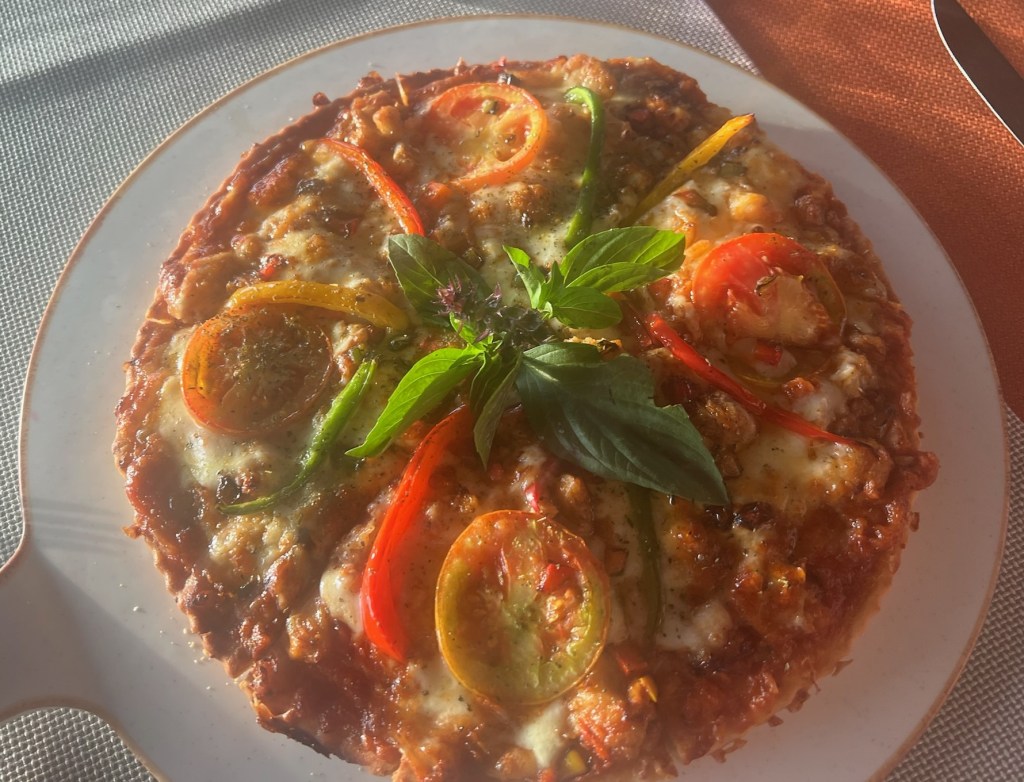
Once we arrived to the other side, there were (once again) local men waiting to take our bags (and us!) out of the boat to dry land. We then took one of the taxis that were waiting there to the African Princess Hotel located in Kololi about 20 minutes away. Note that this hotel doesn’t allow children under the age of 12 but has a swim up pool right outside the rooms on the main floor which was the main selling point for me 😉 It had already been a long day of travel so after we checked in, we quickly changed and grabbed food at the hotel restaurant. To our disappointment, most of the food that we ordered was pretty basic and very bland (no taste whatsoever!). The best item was the pizza with shrimp and squid which was actually flavorful.

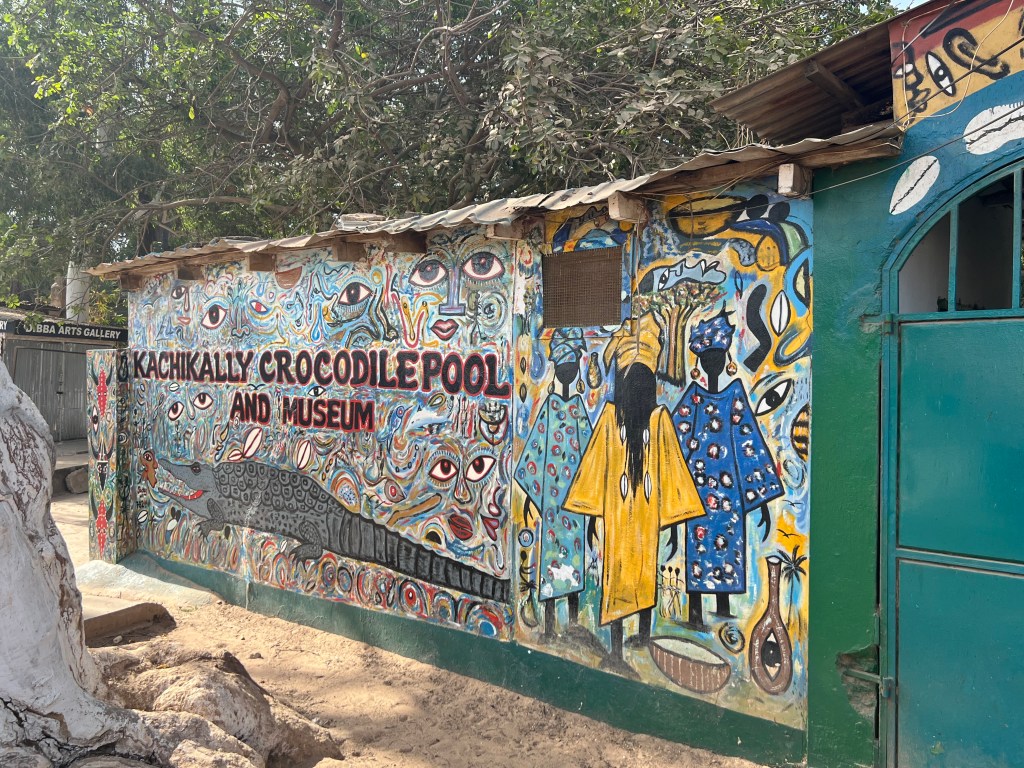
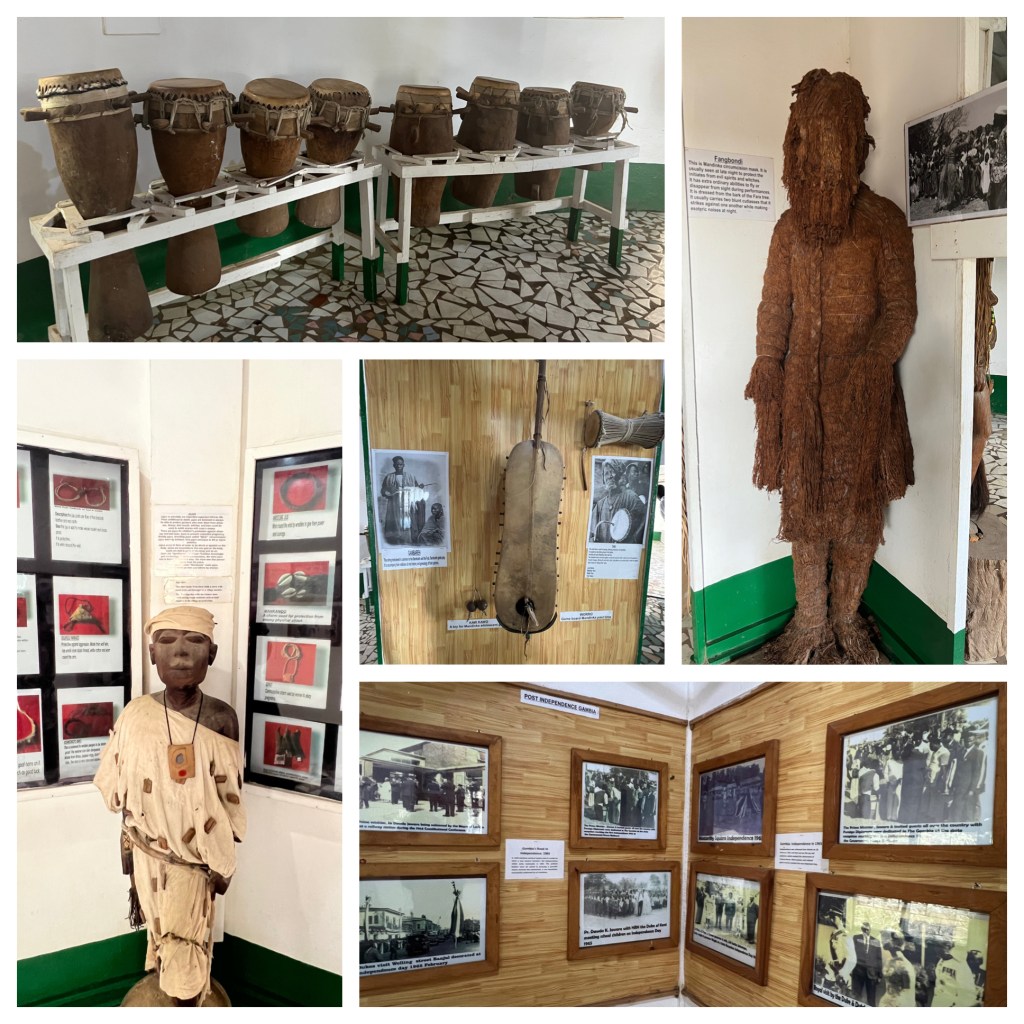
On the Thursday, we did our 7-in-1 tour with Black & White Safari. The first stop was Kachikally Museum and Crocodile Pool. The museum is community run and displays about 1,000 historic artifacts from many of the ethnic groups of The Gambia. It is divided into local crafts, music, agriculture, initiation rites, and traditional medicine.
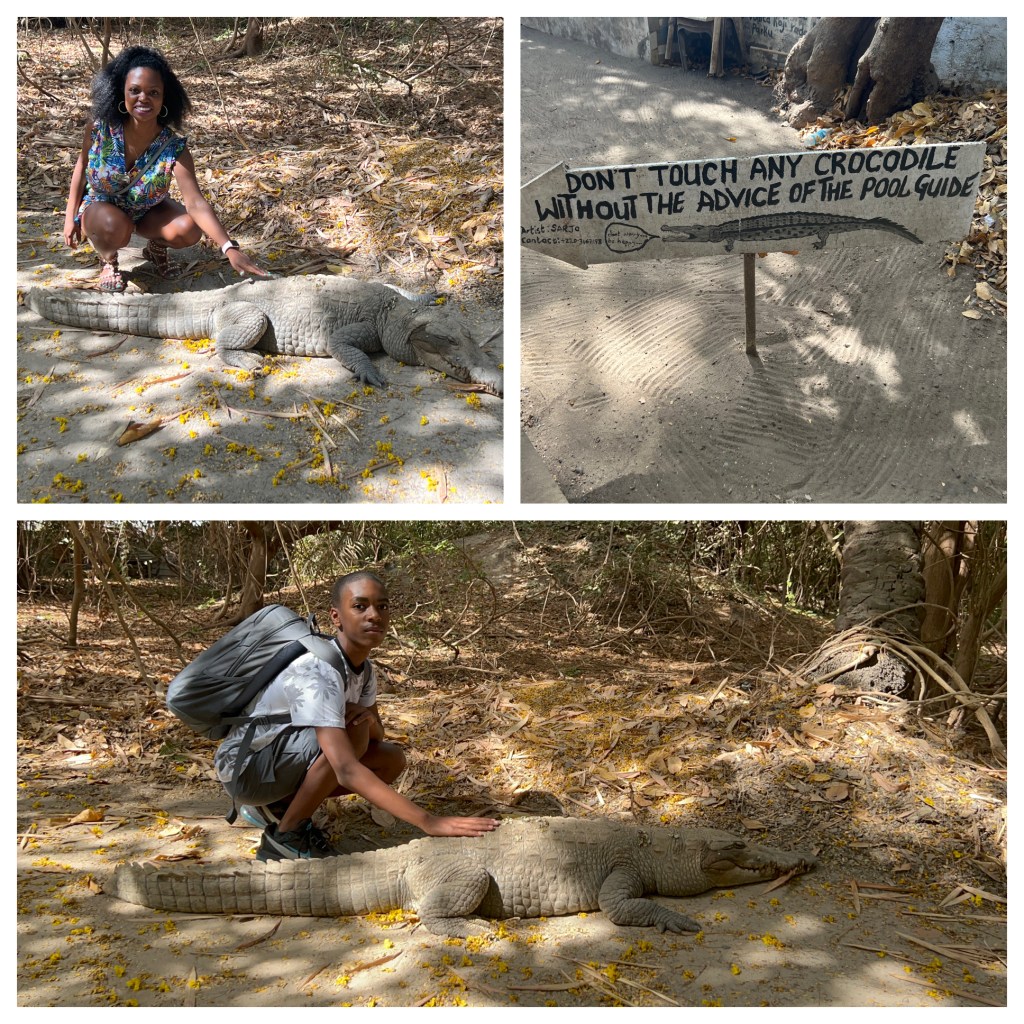
After the museum, we went to the Sacred Crocodile Pool right next to it. Known by local Gambians for its healing powers and as a place where people come to pray for blessings, there were supposedly over 100 crocodiles (though we only saw about 20 or so). We were able to touch them and then afterwards gave a donation for visiting.
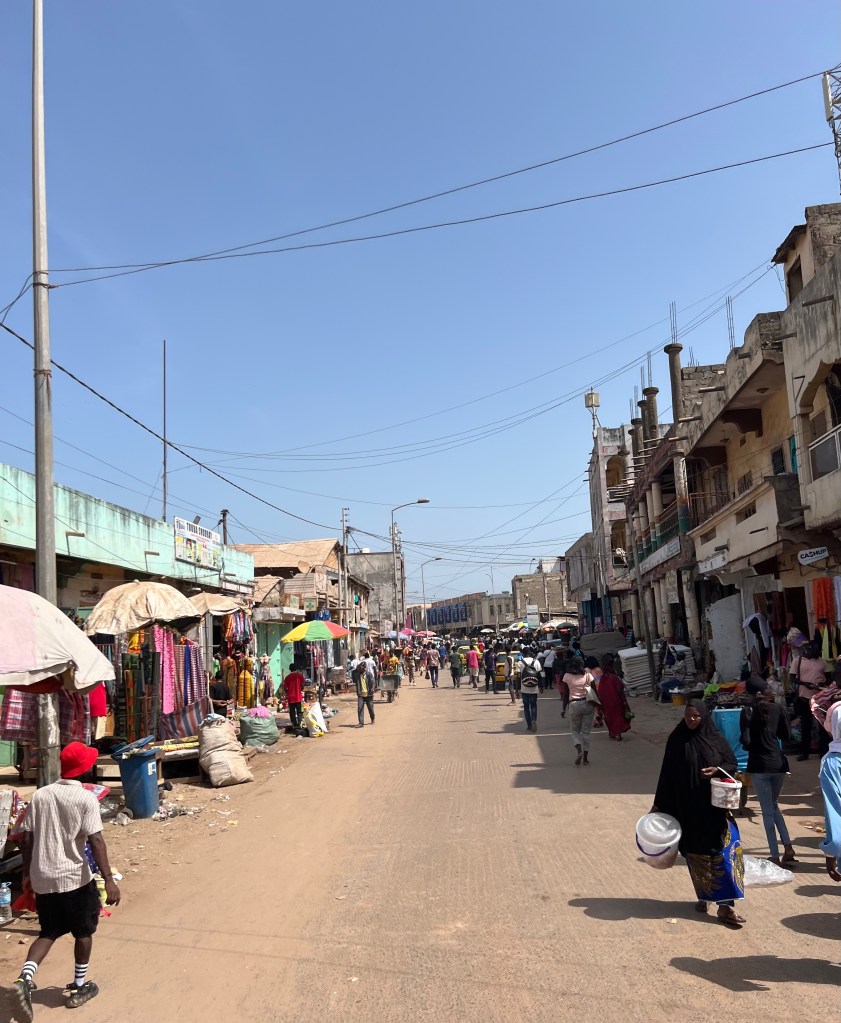
The next stop was Serekunda Market, one of the largest and busiest markets in The Gambia where you can find any and everything from fresh produce, clothing, electronics, and souvenirs. We opted to stay in the vehicle instead of going in, but we got a nice view from our open-air vehicle.
The next stop was a visit to local nursery school. We were able to visit the different classrooms and see what they were learning. The kids even performed for us a bit! Before leaving, we gave the headmaster a monetary donation for the school.
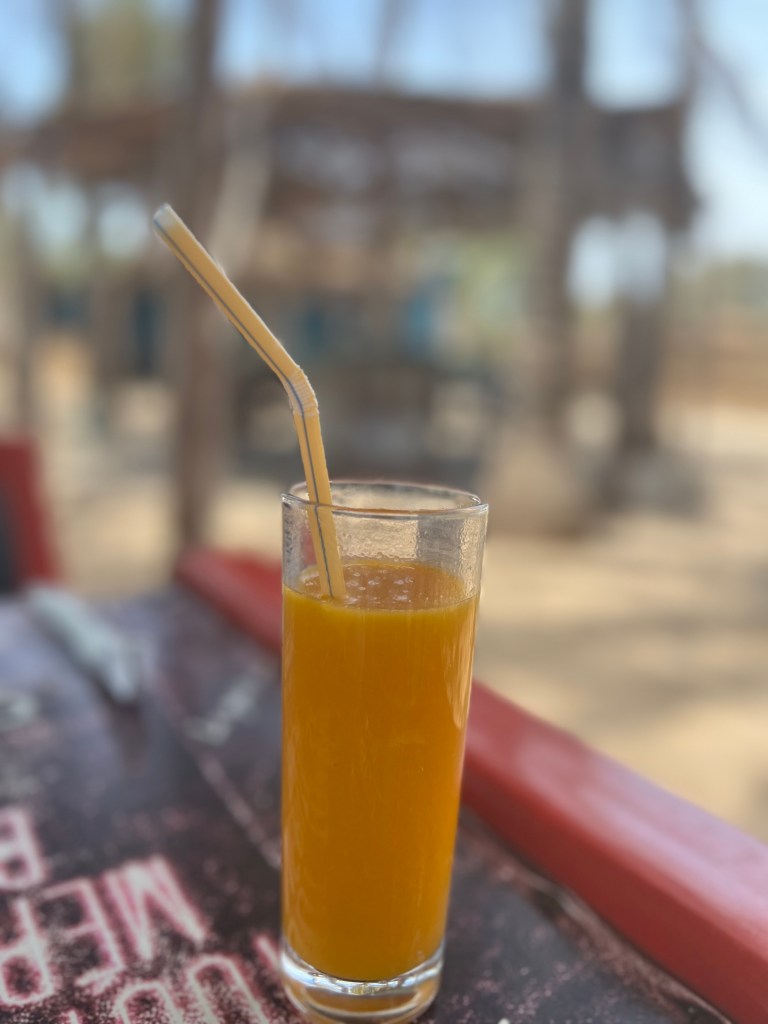
We then briefly stopped at Brikama Woodcarving Shop where we purchased a couple of souvenirs. It was around lunchtime at this point so we headed to Paradise Beach where we had a lunch of fried fish and chips on the beach. I also had a fresh mango juice (not included as part of the tour) and it was easily the best beverage I’ve had in my life. It was incredibly fresh, not watered down, and filled with pieces of mango. There was an opportunity to spend time swimming at the beach but we opted against that since there were still a couple of stops left on the tour.

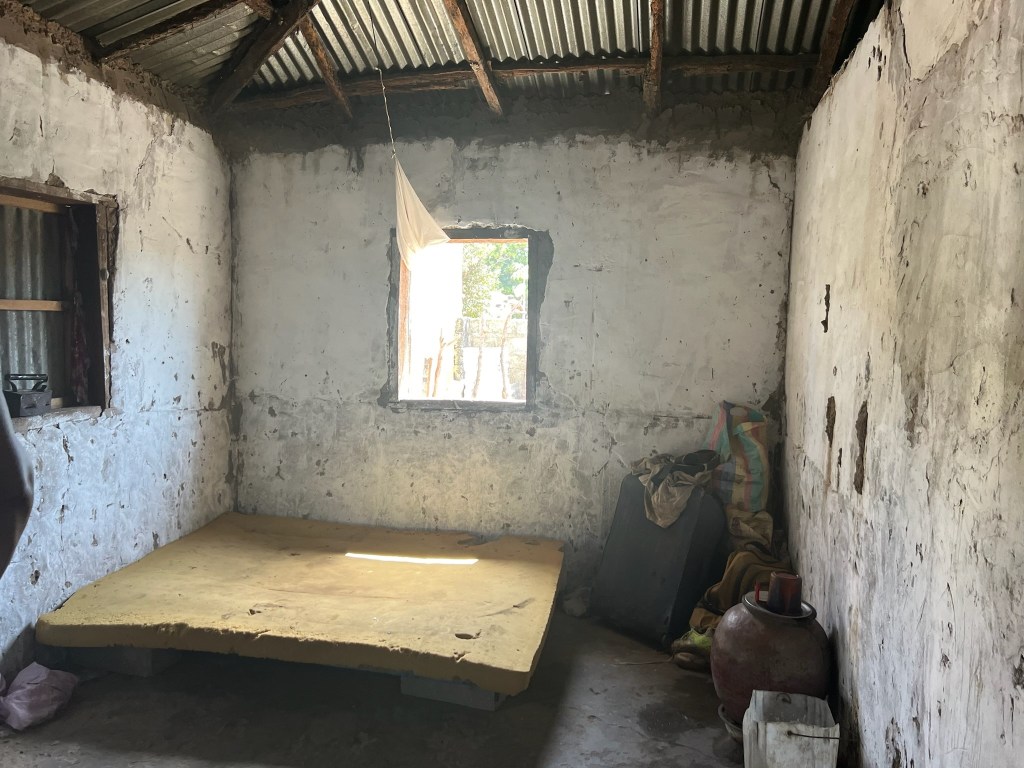
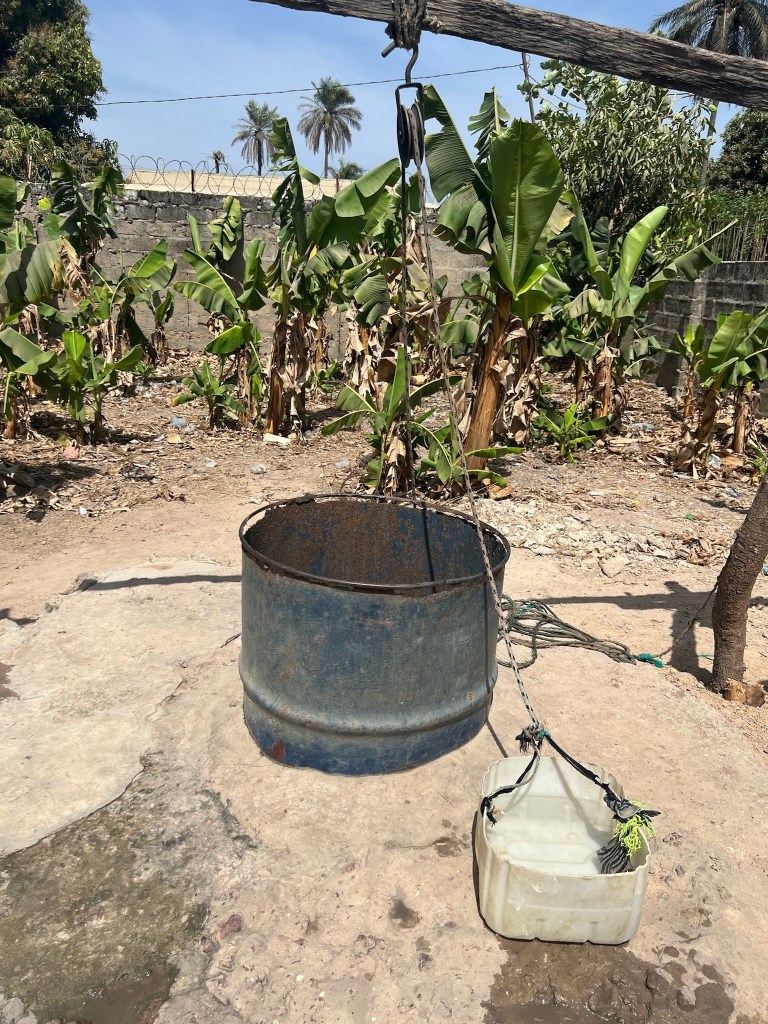
Next up was a typical family compound. Gambian families tend to be large and three generations may live together in one household, with the average household size being around 8. We entered the compound and before we knew it, we were walking through the family’s one room house, backyard, and getting water from the well. I didn’t take too many photos there because it felt a bit invasive going around snapping pictures of their personal living space. Before we left, we gave the family a donation…are you sensing a theme for this tour yet? Hint: donations!
The final stop of the tour was the Tanji Fishing Village where we could see the local fisherman bringing in the day’s catch, women sorting and smoking the fish, icing the fish, and taking it to stalls to be sold.
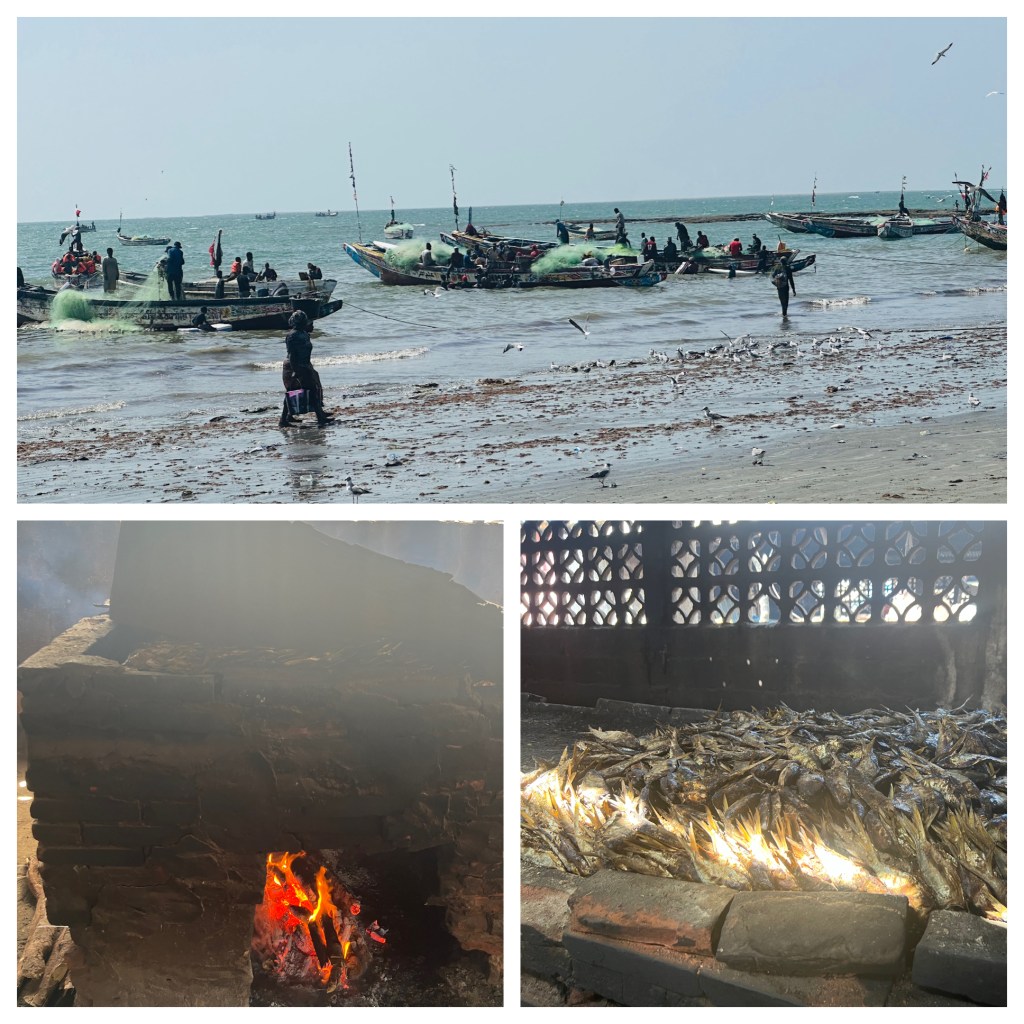
Overall, the tour was good and felt like we got our money’s worth. The tour itself was 50 pounds (rounded up to about $60US) per person…but after you added in all of the money we spent on donations and tips for our guides, it probably was closer to $80US/person.
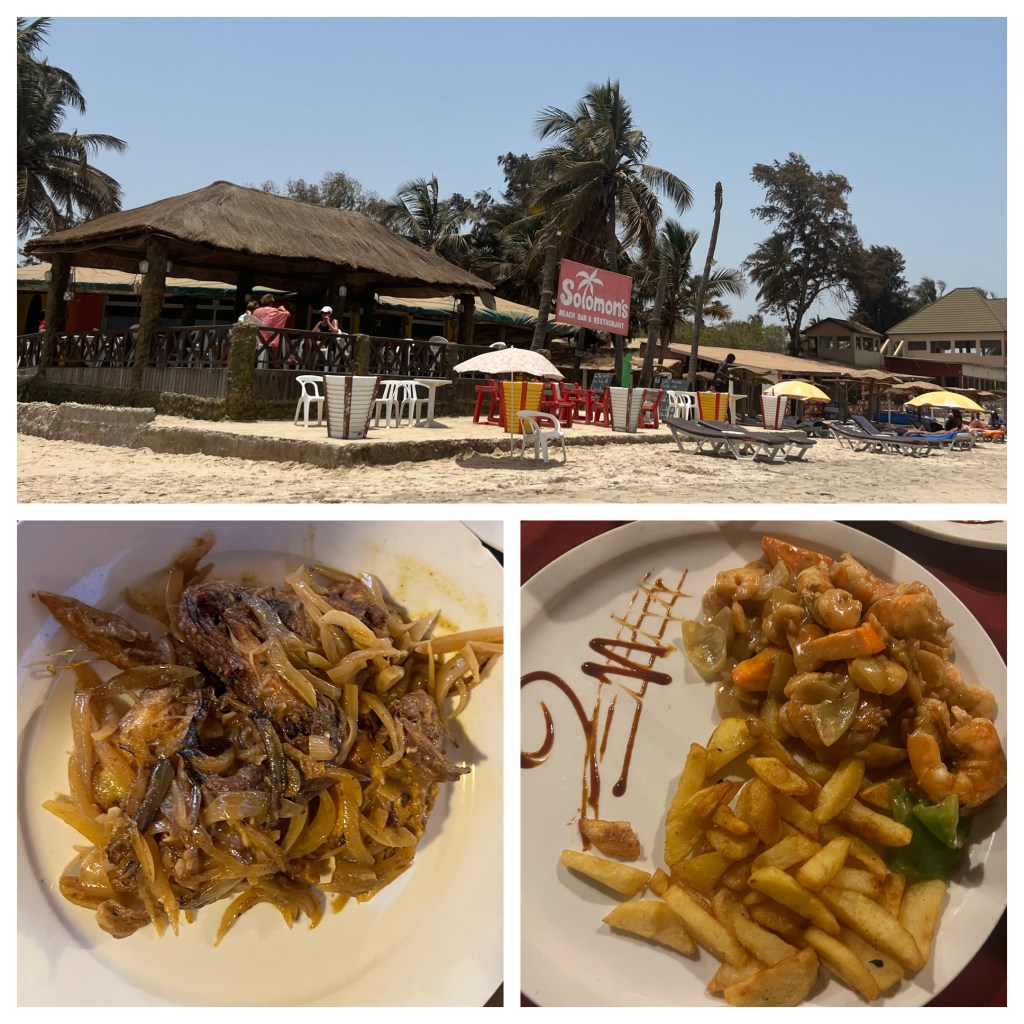
Later that evening, we went next door to Solomon’s Beach Bar & Restaurant for dinner. Located right on the beach, we sat outside to enjoy the sea breeze but then the wind became too much so we headed inside. My strawberry mojito was decent but the prawns in garlic sauce and chicken smothered in onions was even better (though not as good as Senegal).
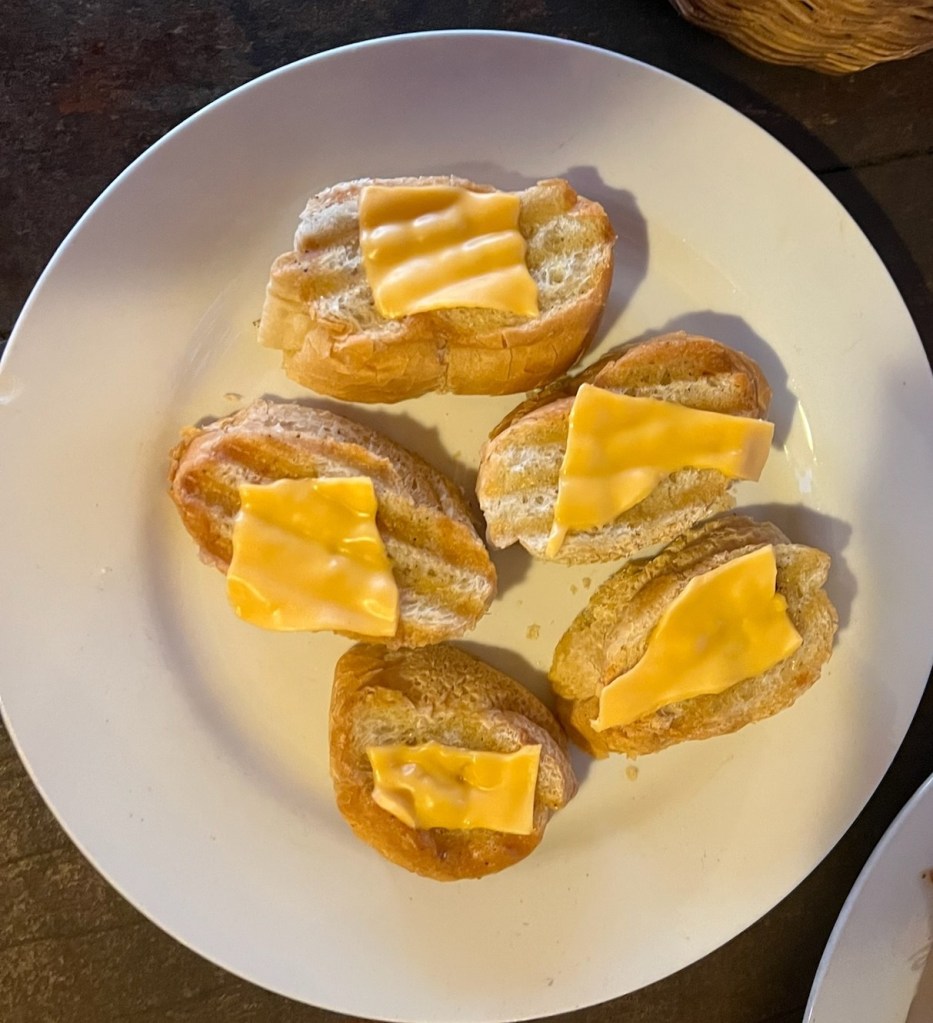
Avery ordered a bread with cheese and that is literally what he got…kraft cheese singles torn apart and put on some bread. Definitely not what he expected!
For our final day in The Gambia, we decided to have a relaxing day at the hotel. Our flight didn’t leave until the evening, so we arranged for a late checkout until 7pm by paying an additional $60 which is a great deal. I typically don’t build in “relaxing days” in my itineraries but after the non-stop pace and unexpected adventures, we deserved some cocktails and down time by the pool.
We arrived to the airport about 3 hours ahead of time because we did NOT want to miss our flight (or connection!). There was a $20US fee we had to pay but other than that, a pretty easy process. We arrived in Dakar after 11pm and by the time we went through immigration and grabbed our luggage, it was close to midnight. Our flight to New York wasn’t until 11:30am so instead of waiting it out in the airport, we ended up spending 8 hours (if that much!) in an exorbitantly priced hotel (~$600 for ONE night) that was “close” to the airport (but still about 30 minutes away). We were grateful for a chance to shower and comfortably get some sleep and breakfast BUT it definitely was not worth the price tag for the amount of time we actually stayed there.
All in all, despite language barriers, transportation mishaps, and some questionable food options, we had a memorable experience in the two countries. Until next time, I leave you with a few random thoughts from my experience and tips:
- Travelling in West Africa is not for the weak. In West Africa, you never know what to expect and sometimes plans don’t go as scheduled, so you have to be prepared for anything and have a back-up plan. For example, when we arrived at the river crossing, all three ferries weren’t working so the only other way across was to use local boats OR drive miles and miles to get to a bridge.
- While the requirements show that you need to have a yellow fever certificate to enter either country, no one ever asked for it!
- If heading to Fathala Game Reserve isn’t an option, the Bandia Game Reserve is closer to Dakar; just know that it is much smaller.
- In Senegal, French is widely spoken, while English is not. I don’t mind trying to use the few words I know in French (along with some charades) to communicate but if that makes you uneasy, then you can use Google translate (or learn French!).
- We were almost going to add on a day trip to Guinea Bissau but because I was unsure of the situation in Southern Senegal (I read about some instability), I decided against it.
- There is A LOT of traffic to and from Dakar because there is only one road. Beware and leave yourself extra time, especially between the hours of 7am and 11am.
- I didn’t see a single stoplight or stop sign in Sénégal or The Gambia. Cars just got in where they fit in.
- Cars wait for no one so they will run you over if you aren’t paying attention while crossing the street.
- Don’t accept anything less than a 600 CFA exchange rate.
- Don’t wear your good clothes. Between the endless construction and sandstorms from the Sahara desert, everything is covered in a layer of dust.
- Curious as to why The Gambia has “the” and not just Gambia? Well, the Portuguese named the country after the river that flows through it, known as ‘The River Gambia.’ When the British took over the territory, they decided to keep the name given by the Portuguese.
- Don’t be pressured to buy from the first vendor you see. There are tons of street vendors selling random things in the road so you will always have another chance.
- Everywhere you turn, someone is trying to sell you something! I don’t knock anyone’s hustle and can admire them being out in the sun every day for hours a day BUT after awhile, it gets exhausting saying no especially to the persistent ones. Some do have some good tricks: at Paradise Beach, a guy called us over to look at a mussel shell and while we were doing that, slyly pulled out bracelets out of his pocket to sell to us.
- Don’t ever believe vendors when they try to give you something for free or as a present. They are always looking for money in return.
- There are so many similarities between Caribbean and African food and drink (not surprisingly). In The Gambia, we had wonjo juice; in Senegal, we had bissap…both of which are similar to sorrel in the Caribbean (all made from hibiscus leaves).
- Interesting note that I read (and observed with my own eyes) about The Gambia: Lots of older, white women go there to pick up young Black boys (and same for old, white men picking up young Black women). We saw a few of these “match-ups” at various restaurants.

 Toya's Travels