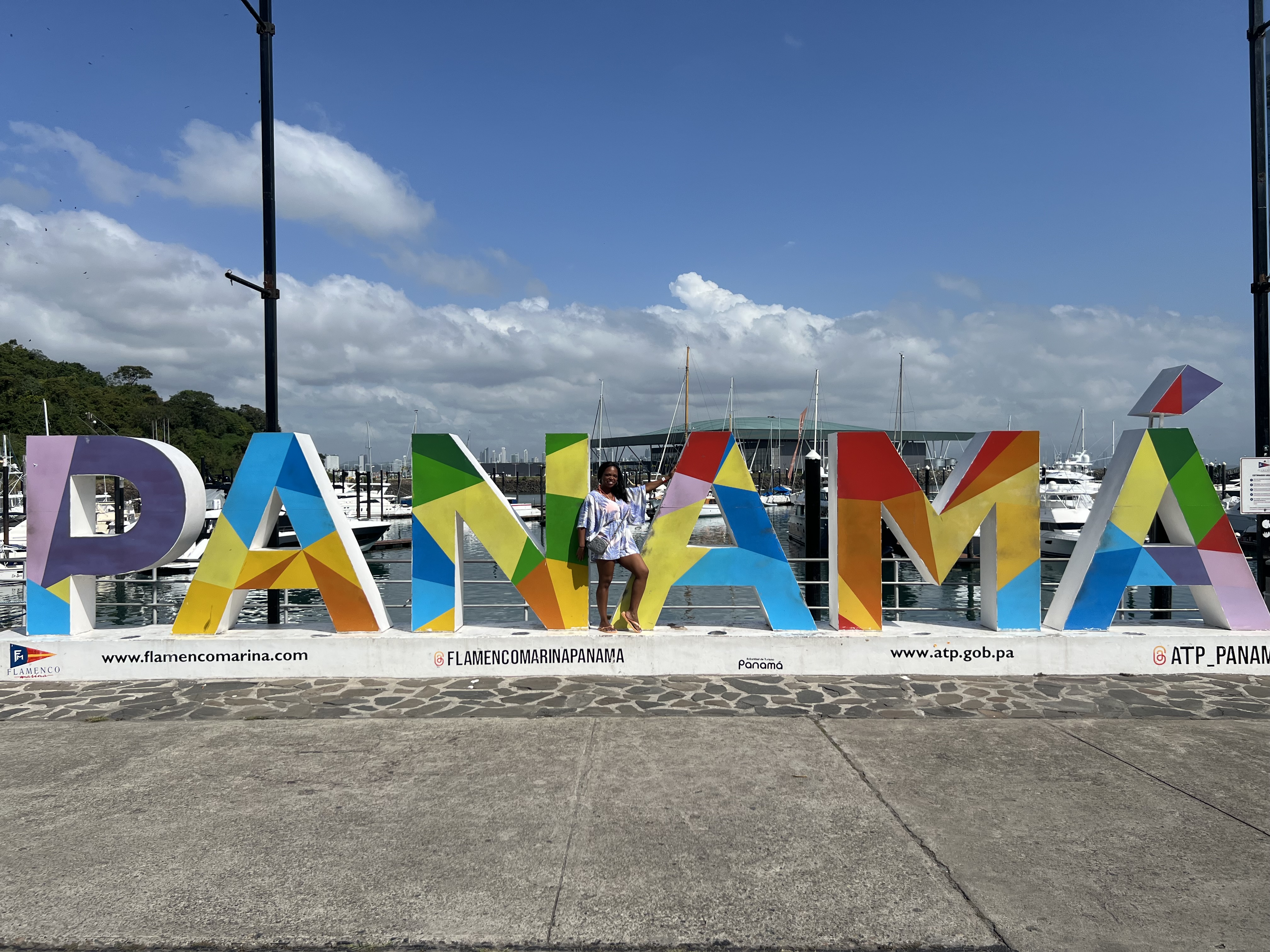
So why Panama? Well, I was originally searching for a no-fuss 2025 spring break destination, but between work and life being life, I ended up rescheduling the trip to January 2026 instead. What started as a mommy-and-son getaway with my youngest son CJ quickly turned into a three-generation trip with my mom coming along as well—and honestly, I loved that for us.
We took advantage of the long MLK weekend and spent five days in Panama City. To maximize our time, I booked a 2:20 a.m. flight, figuring we could hit the ground running after the approximately five-hour flight. While that sounded great in theory. I absolutely regretted it the day of. Staying awake until boarding time felt like torture.
But before we get into the trip, let’s talk about some pre-trip details:
- Passport requirements: Your passport must be valid for at least six months beyond your travel dates to enter Panama. I learned this just in time and had to renew CJ’s passport because of it, so definitely double-check yours early.
- Where to Stay: Panama City has no shortage of beautiful hotels. One that really stood out was Amarla Boutique Hotel in Casco Viejo…absolutely stunning! Unfortunately, they only had one night available, and since I was traveling with both a toddler and a senior citizen (don’t tell my mom I called her that!), I didn’t want to put them through the hassle of switching hotels mid-trip. Other hotels on our shortlist included the Waldorf Astoria (very reasonably priced and actually our second choice), Bristol Panama, Marriott Panama, and La Concordia – all solid options depending on your travel style.
Back to the flight! Despite the brutal departure time, the flight experience itself turned out better than expected. Copa Airlines emailed a few days before departure offering an instant upgrade for around $300, or the option to place a bid for less. Bids started at $140 and went up to $285.
I bid $180, fully assuming it wouldn’t be enough—but to my surprise, we found out just two days later that we’d won. The upgrade made a huge difference, especially on a red eye flight, and was well worth it.
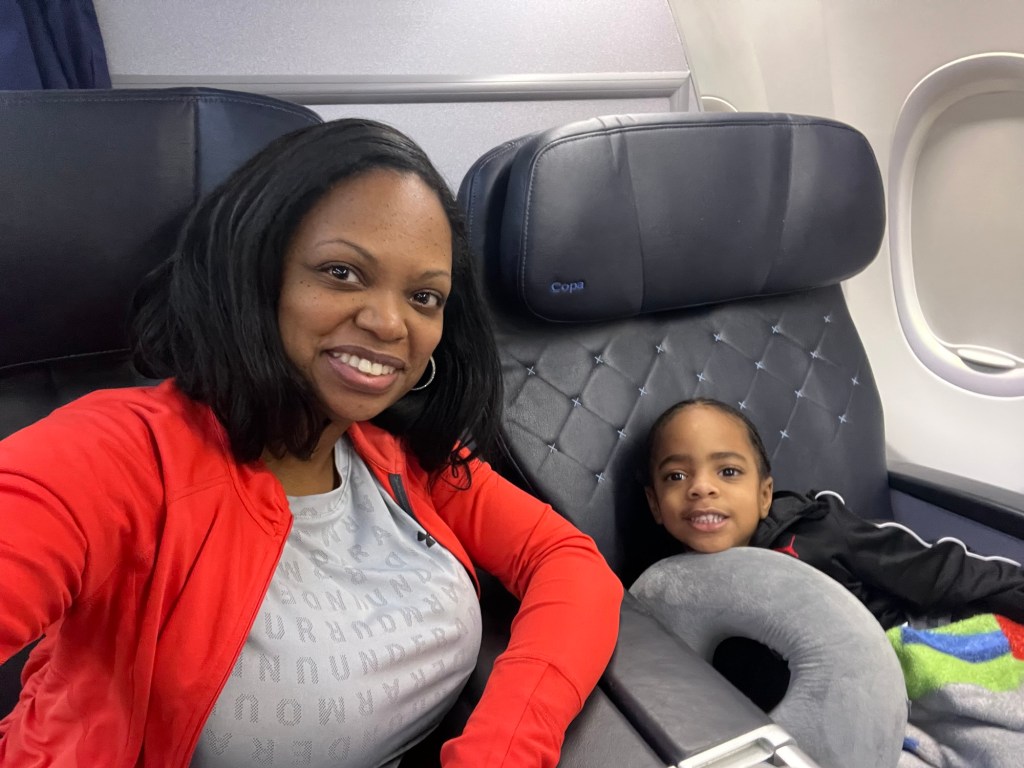
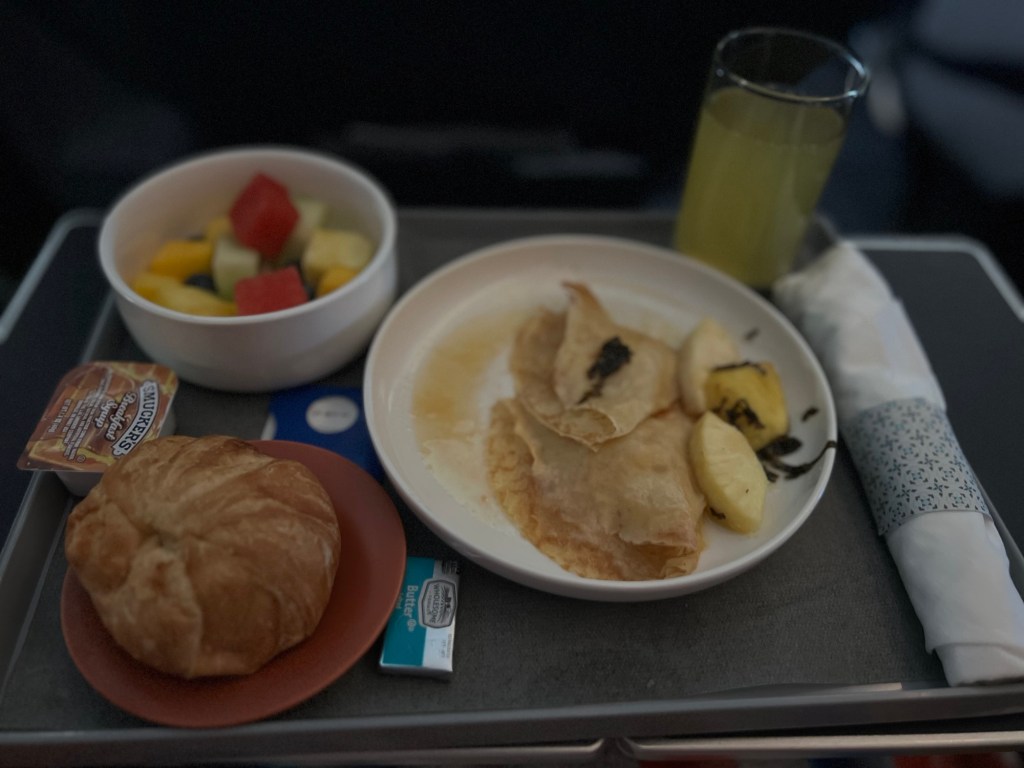
I was already exhausted while we were waiting to board so as soon as we settled into our business class seats, I got comfortable and fell asleep almost immediately. I woke up later for breakfast—pineapple crepes and a mimosa that tasted like it was made with Tang 🤢
Immigration looked intimidating at first, but while the line was long, it moved steadily and we were through in about 30 minutes. Once outside, we called an Uber, which cost less than $20 from the airport to our hotel – easy and affordable.
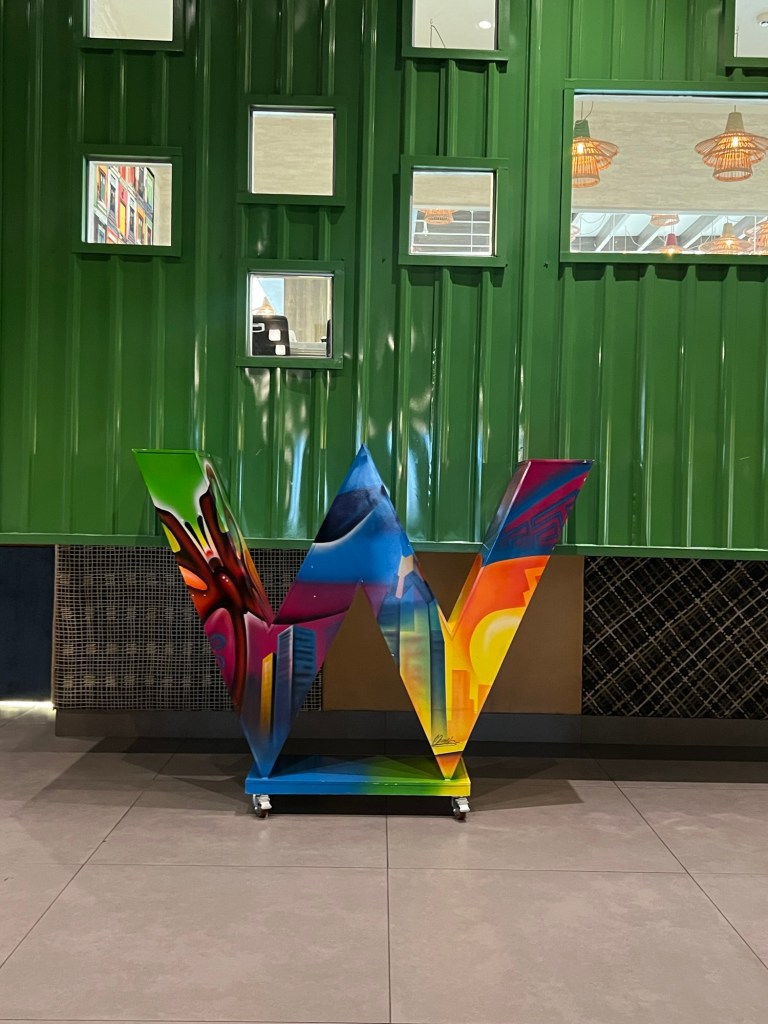
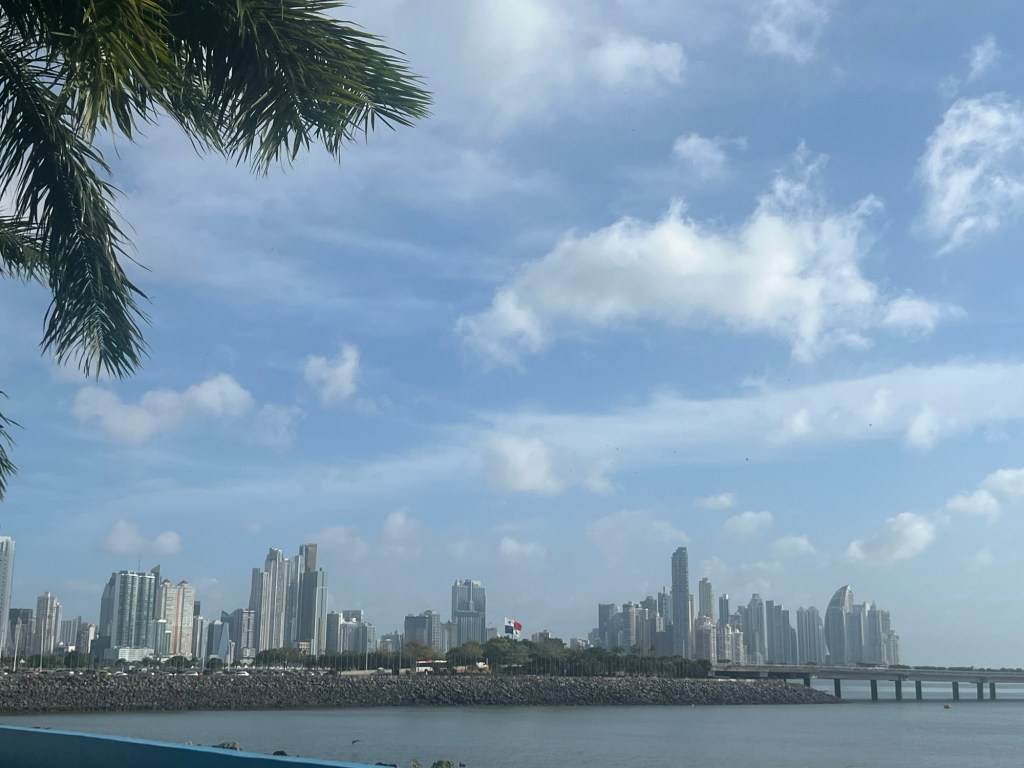
We stayed at the W Panama, located in the city, and while the hotel itself was gorgeous, its location is right in the heart of the city’s traffic. Just a heads up: getting back and forth to Casco Viejo can take up to 30 minutes depending on traffic, so plan accordingly. Also, the best areas to stay are: Casco Viejo (for history, charm, and boutique vibes) or Obarrio (the commercial district filled with skyscrapers and centrally located hotels).
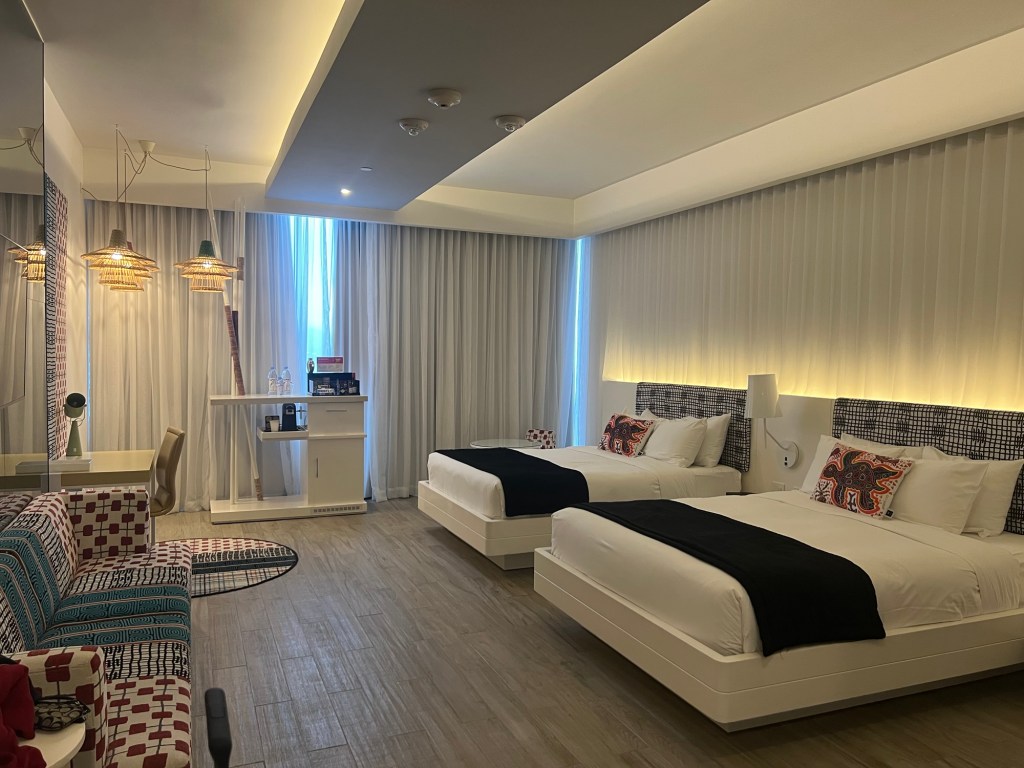
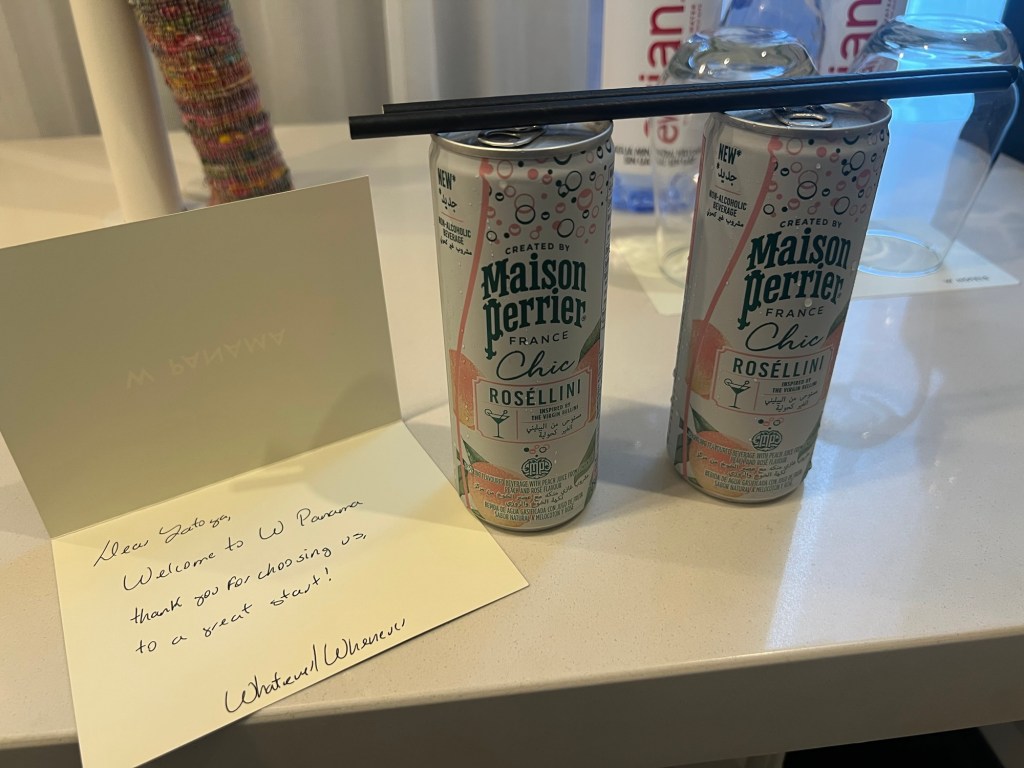
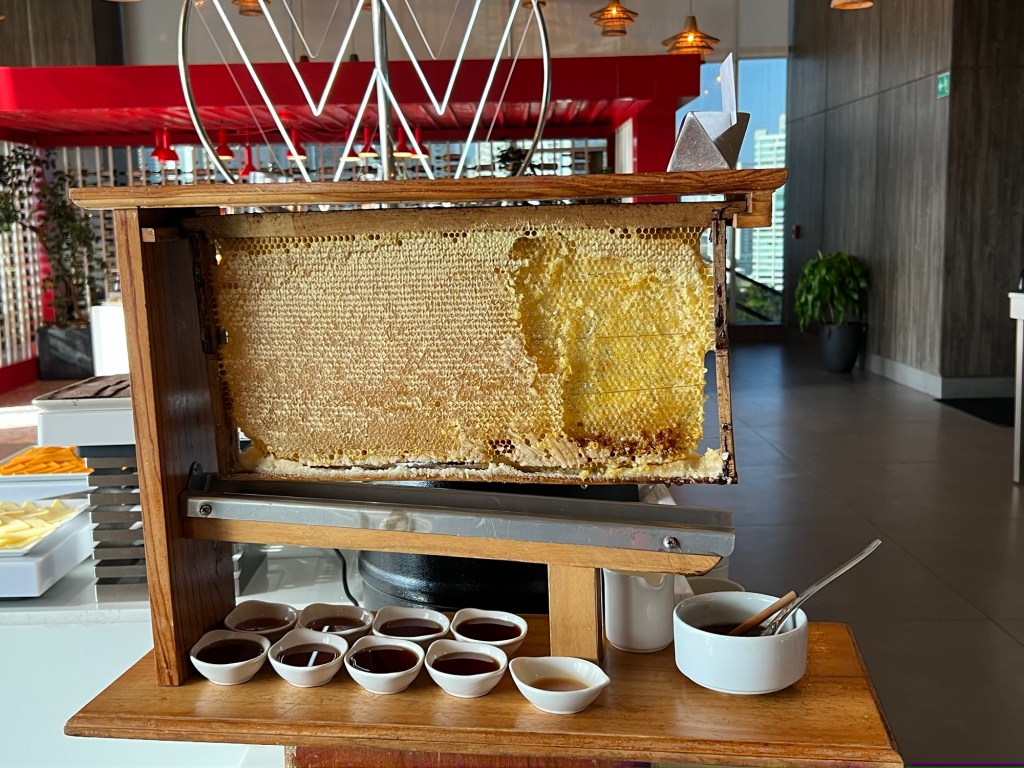
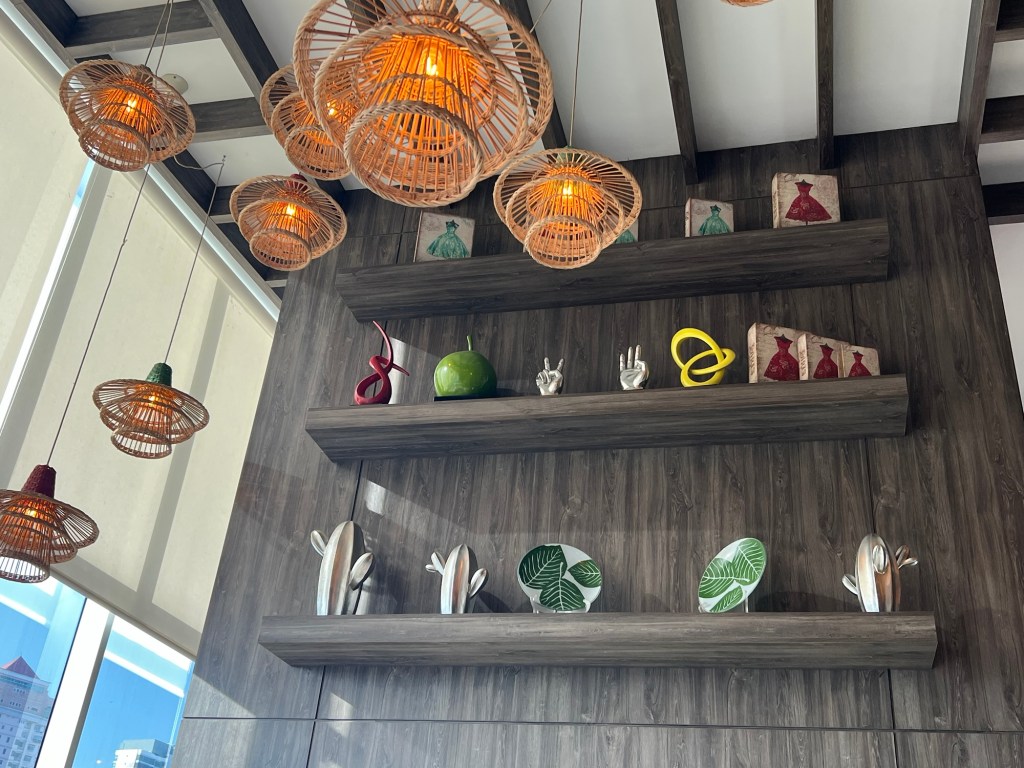
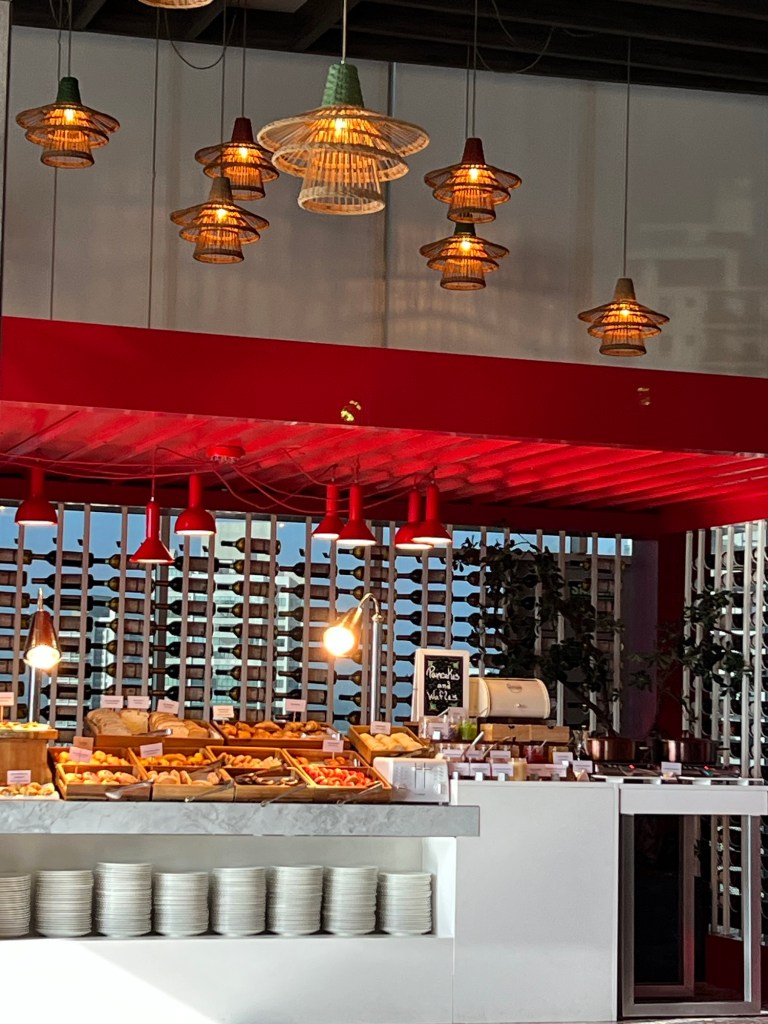
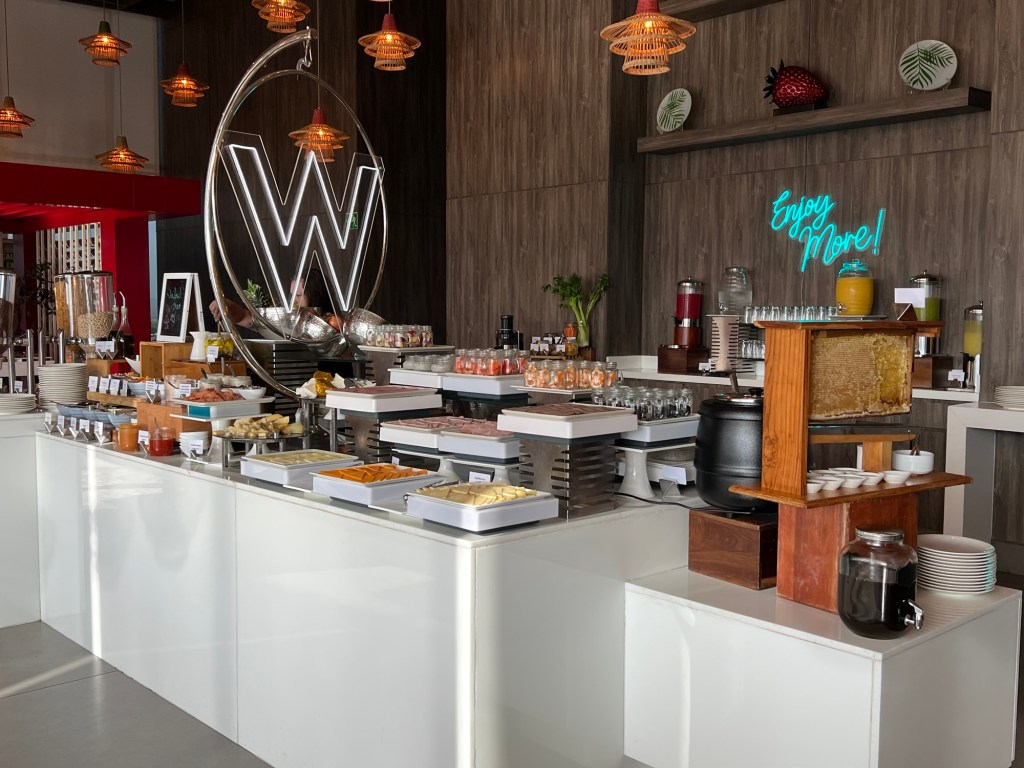
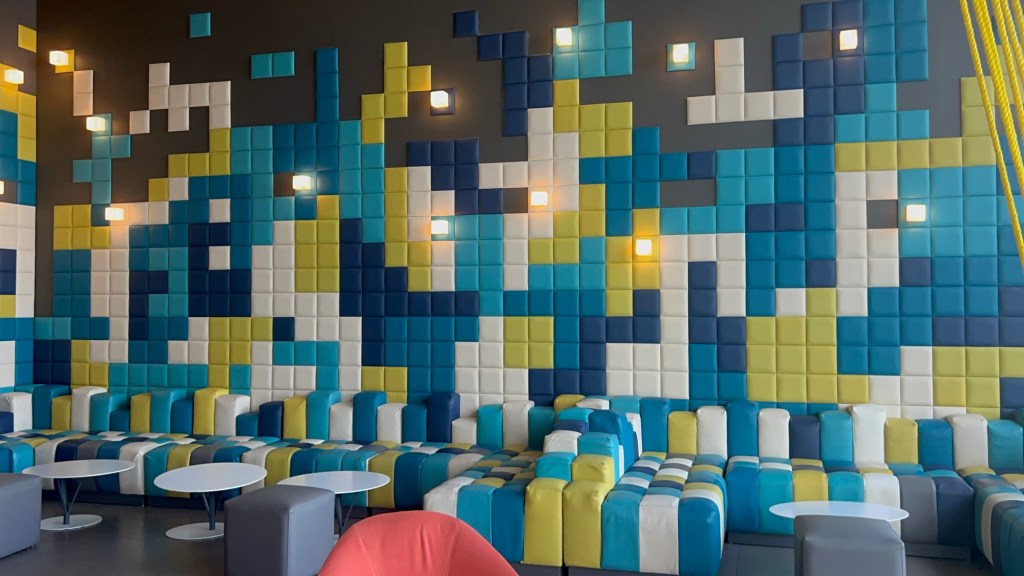
We spent a couple of days at the pool while we were there, but it was freezing both times—though that didn’t stop CJ from jumping right in! One day, we had lunch poolside: a shrimp tempura roll and shrimp and steak kebabs. Both were really good. The bar also had a very generous pour of my JW Black, and it was only $11!
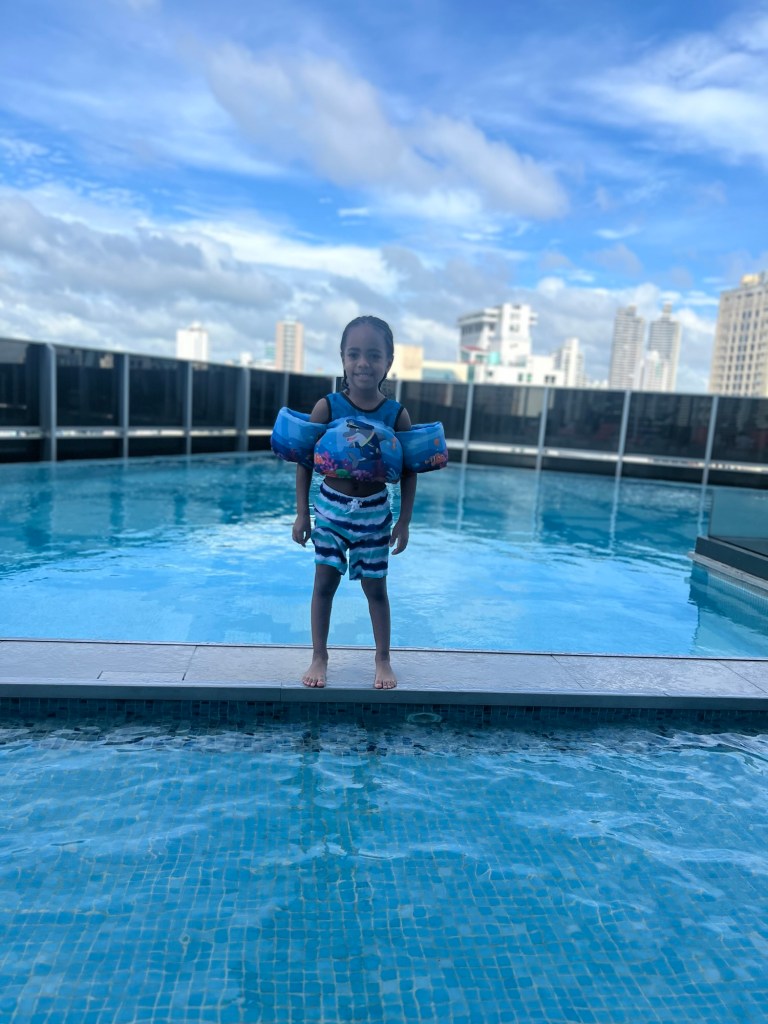
Ubers in Panama were incredibly cheap. No matter where we were headed, it cost us between $3-$10 to get there. It made getting around so easy and affordable so we used it everywhere.
Let’s get into the food! I always do my research of restaurants to visit so let’s get into where we ate.
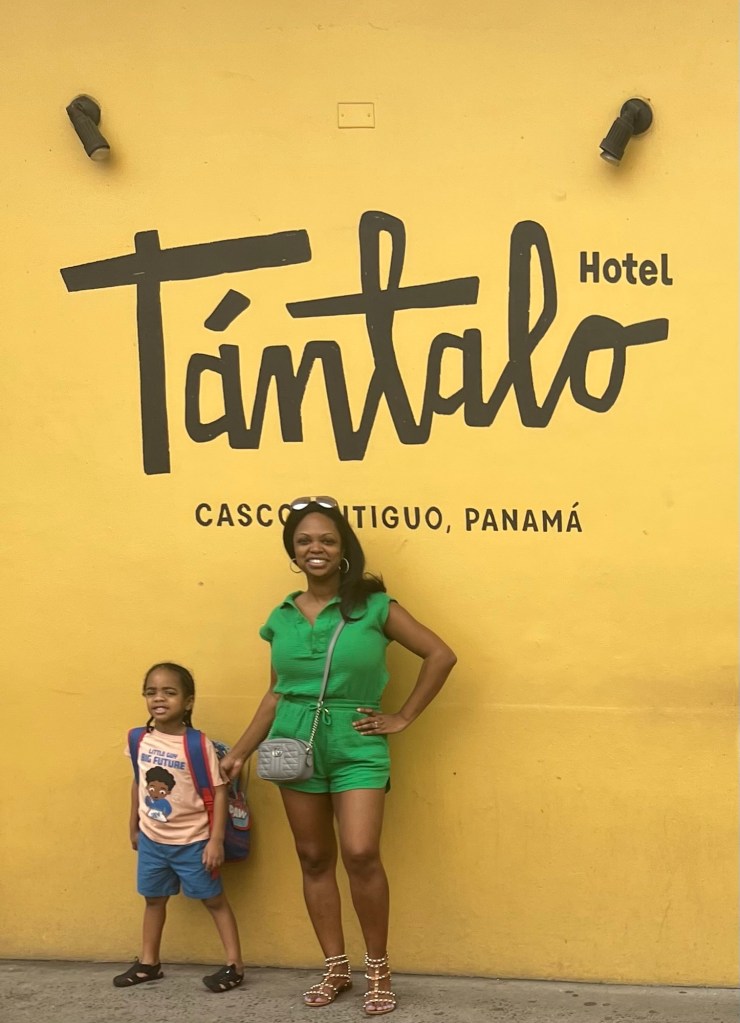
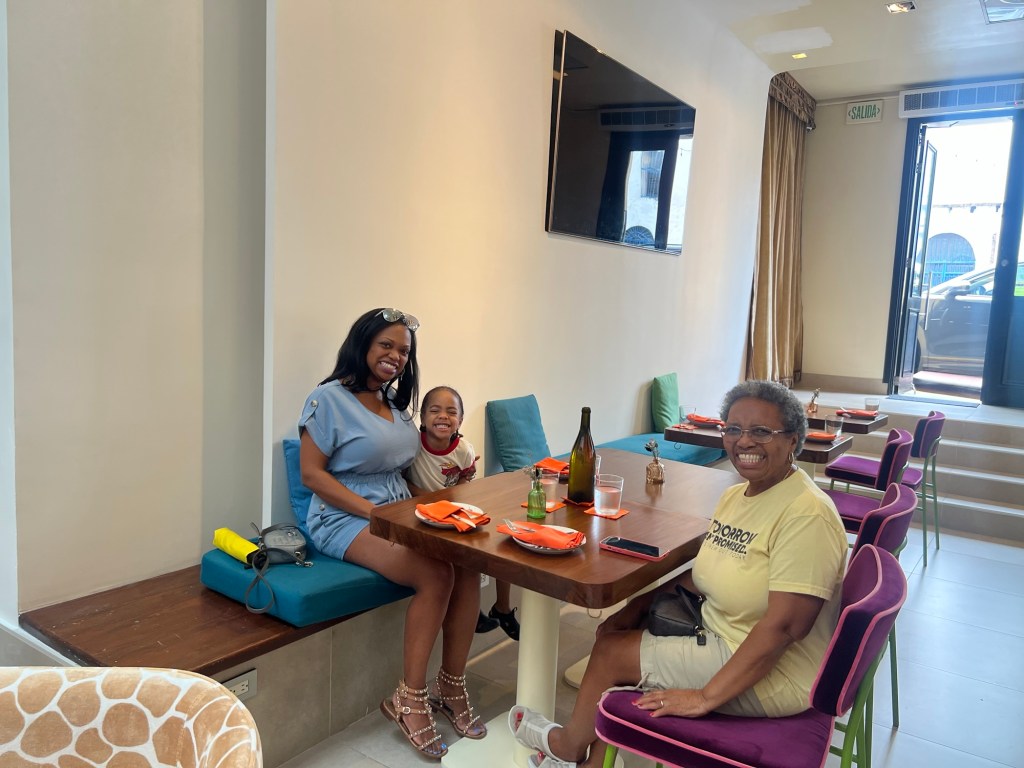
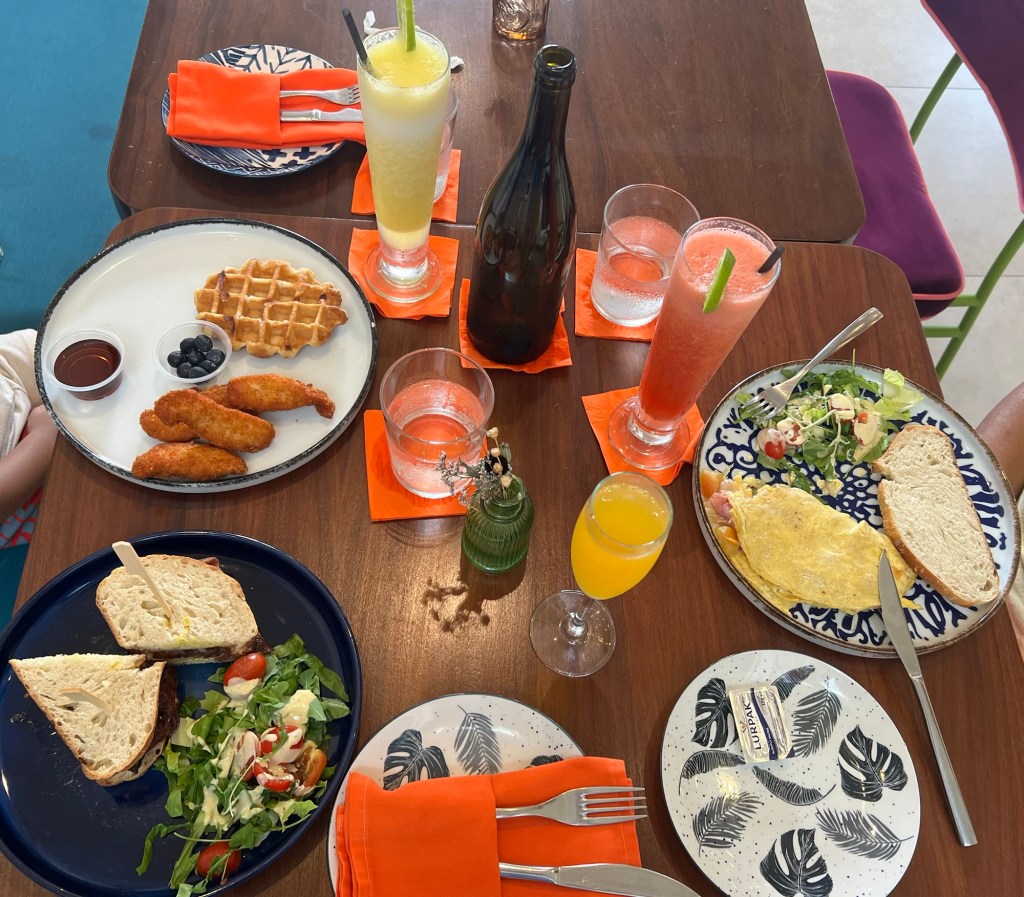
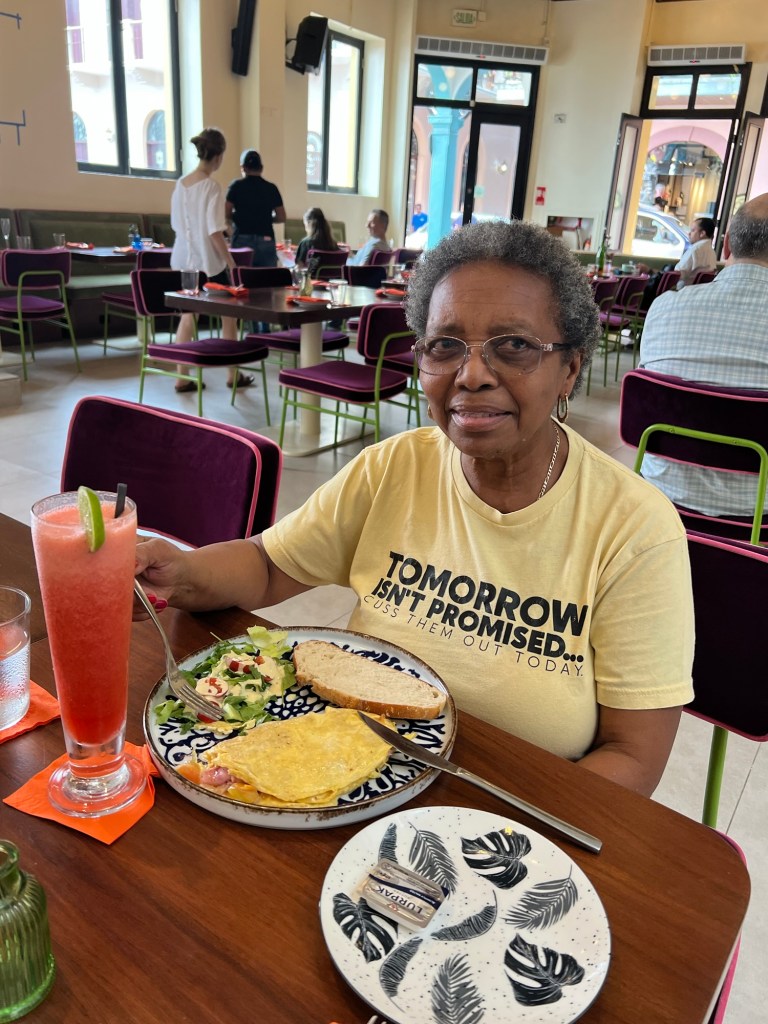
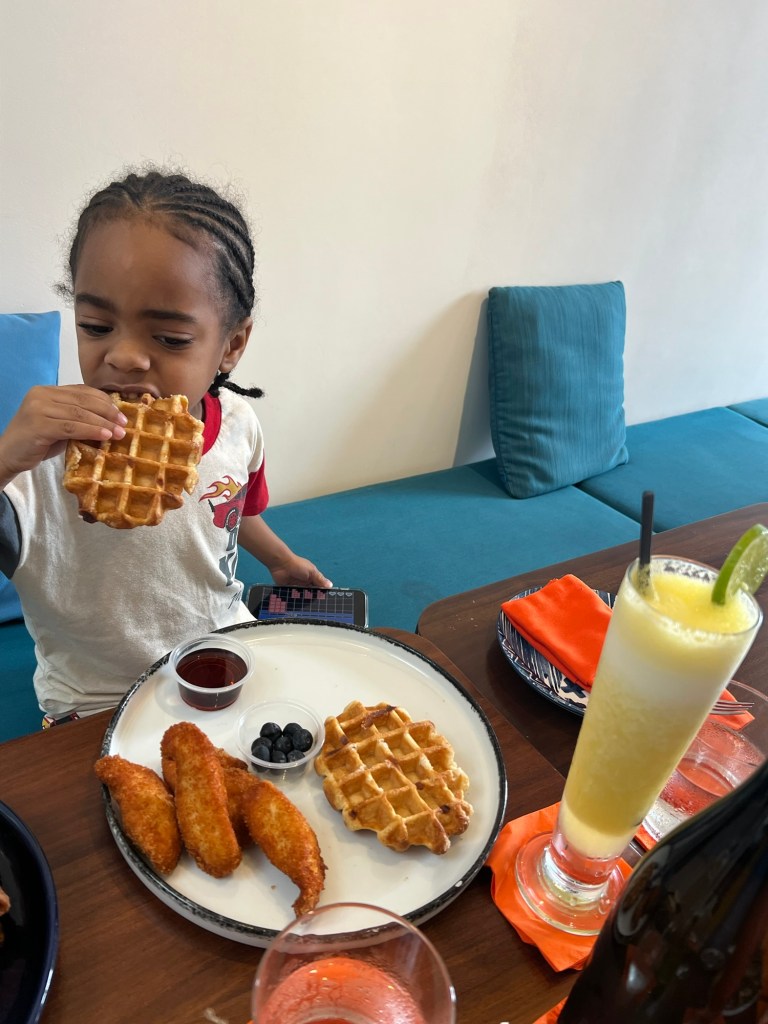
We kicked off our first morning at Tántalo Kitchen, tucked inside the eclectic Tántalo Hotel. I went all in on the Tántalo Lover’s sandwich—layers of fried egg, bacon, smoked ham, gouda, tomato, mustard, caramelized onions, and their signature sauce, all hugged by perfectly toasted sourdough. CJ dove into a plate of chicken and waffles, and my mom ordered the Tántalo omelet. Every dish hit the mark and was rich with flavor for a simple breakfast.
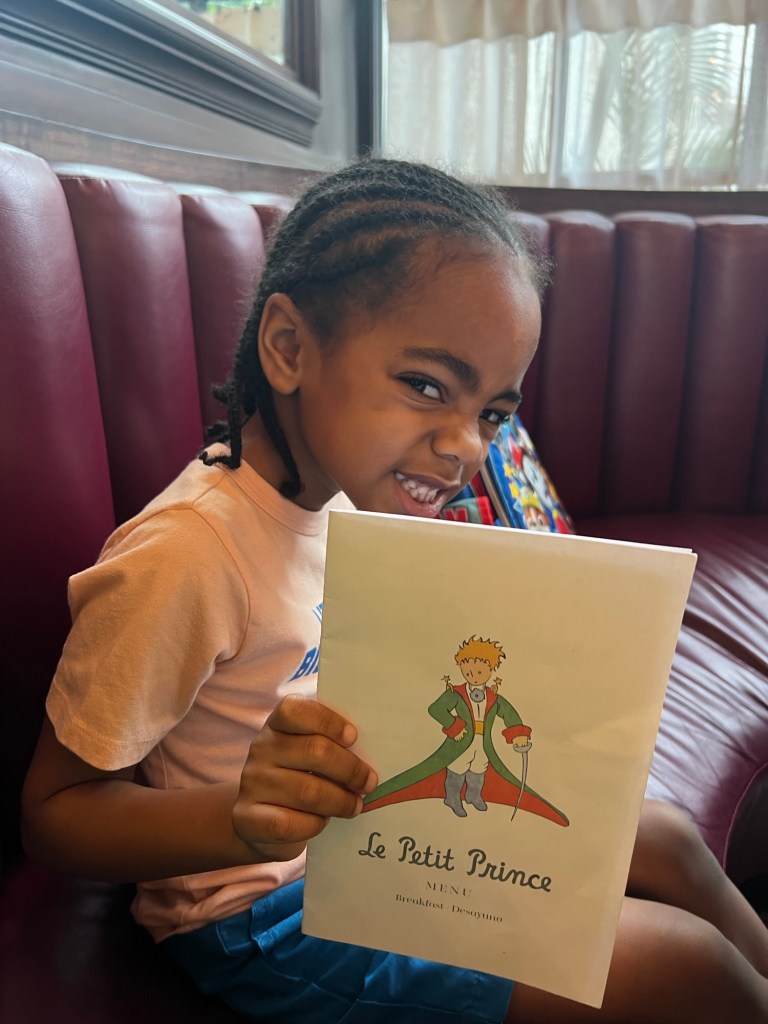
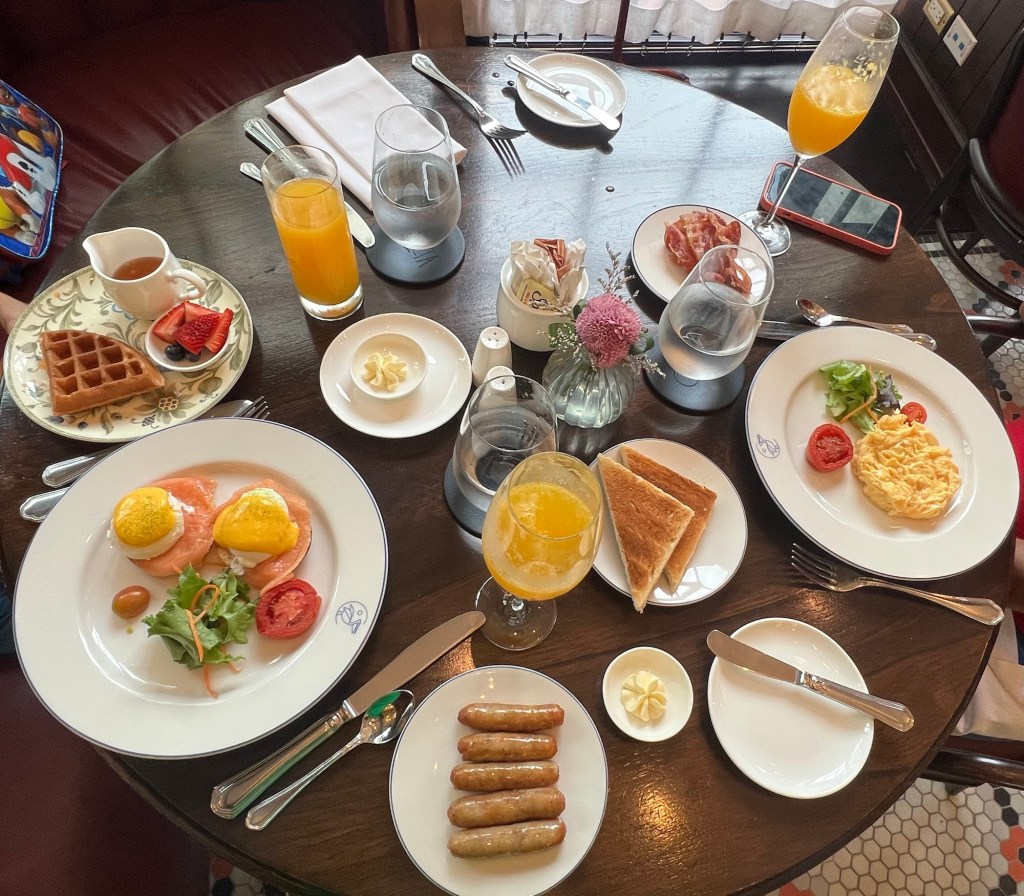
On our second day, we had breakfast at Caleta, tucked inside the elegant Sofitel Legend in Casco Viejo. I ordered the eggs Benedict with smoked salmon and CJ went straight for waffles with a side of sausage. My mom pieced together her own à la carte plate of scrambled eggs, bacon, and toast… which, in a funny twist, ended up costing more than the full breakfast sets on the menu. The food itself was good, but the atmosphere leaned a bit stuffy and the prices definitely reflected the hotel’s luxury status.
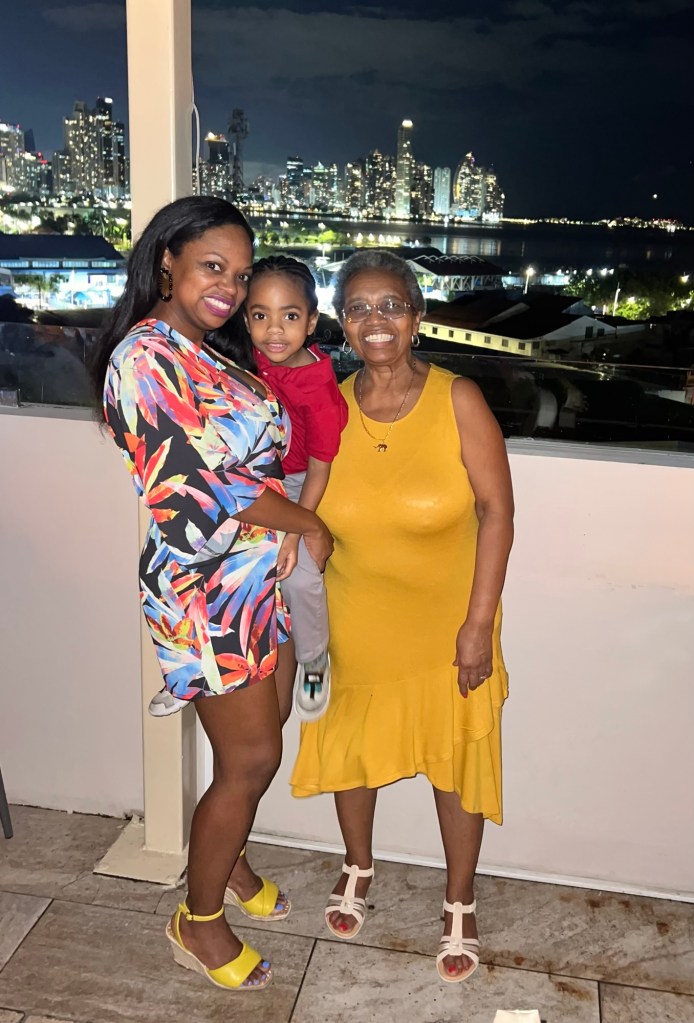
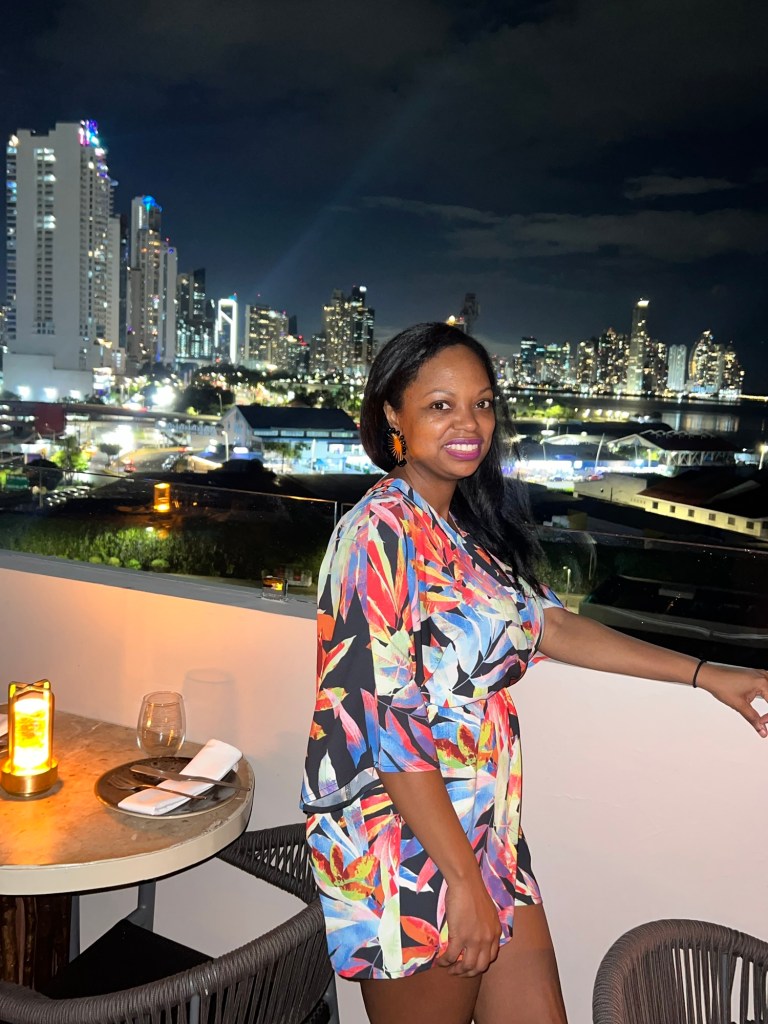
Dinner at Kanibal had great energy: an option to sit either inside or outside, a lively crowd, and a DJ spinning upbeat tracks that gave the whole restaurant this effortless, cool rhythm. We kicked things off with the waiter’s top recommendation: the smoked avocado which was paired with crisp fried fish. It ended up being the star of the night. The pork belly bites followed and were tasty as well. For our entrees, I ordered the beef fillet, cooked tender and served with Parmesan potatoes which were soft, buttery, and coated in a salty Parmesan crust. My mom went for the seafood curry, a bowl filled with shrimp, fish, and mussels in a rich, coconut‑based curry sauce, served with rice. Both dishes leaned a bit salty, but the flavors were still satisfying. My drink of the night was the “Origin,” a cocktail that tasted as good as it looked. It came served in what looked like half an eggshell which was as unique as its flavor.
Despite CJ accidentally spilling water all over himself and the staff initially seating us inside before we moved, the restaurant won us over, especially with the gorgeous view of the city. The team even surprised CJ with a birthday serenade and a complimentary slice of cake, which sealed the deal. Kanibal definitely earned a spot on my list of memorable dining experiences.
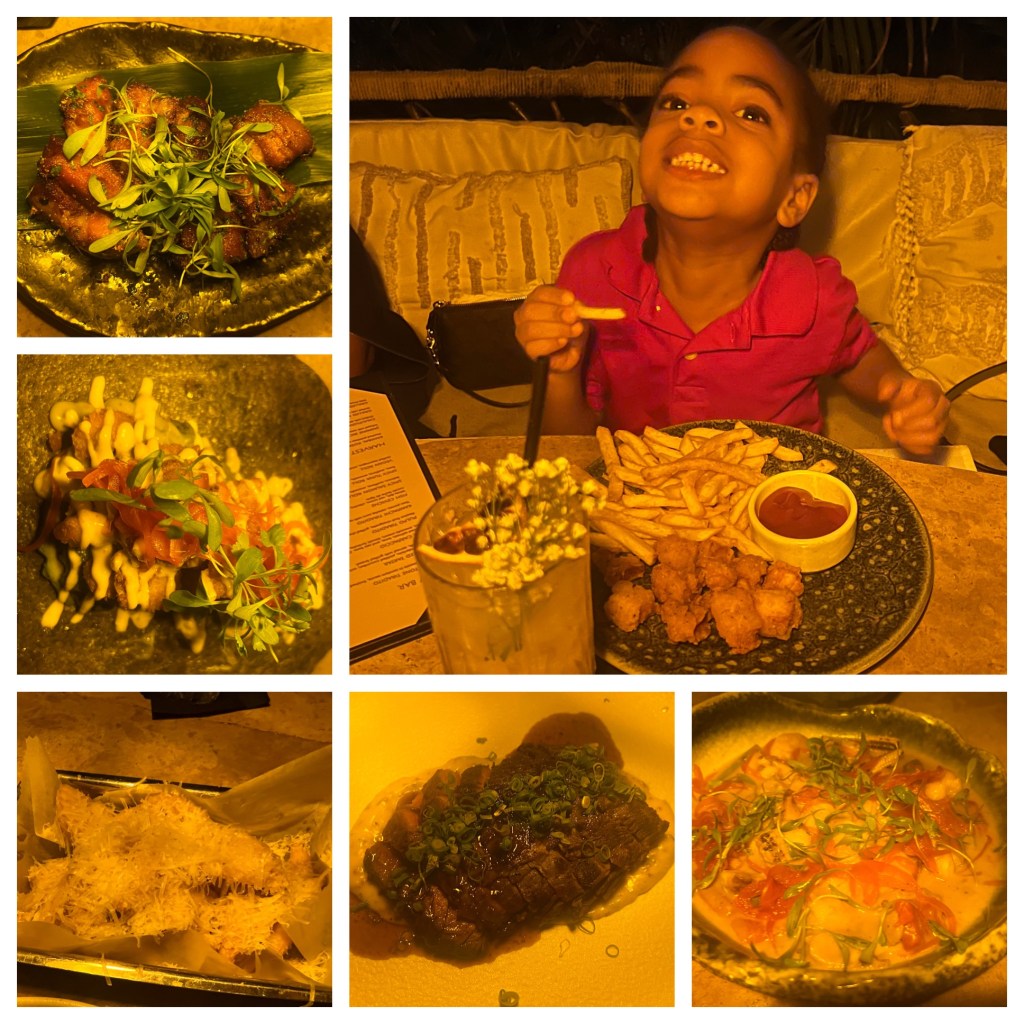
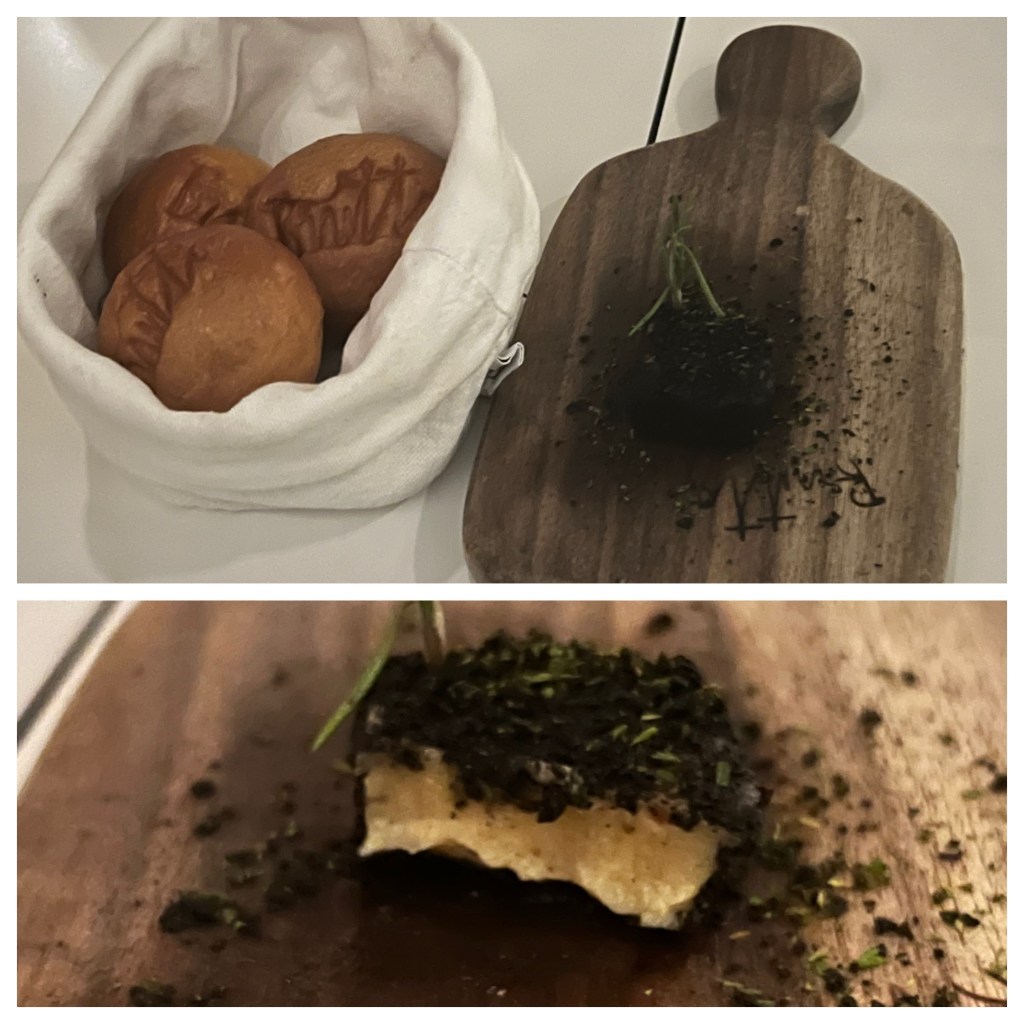
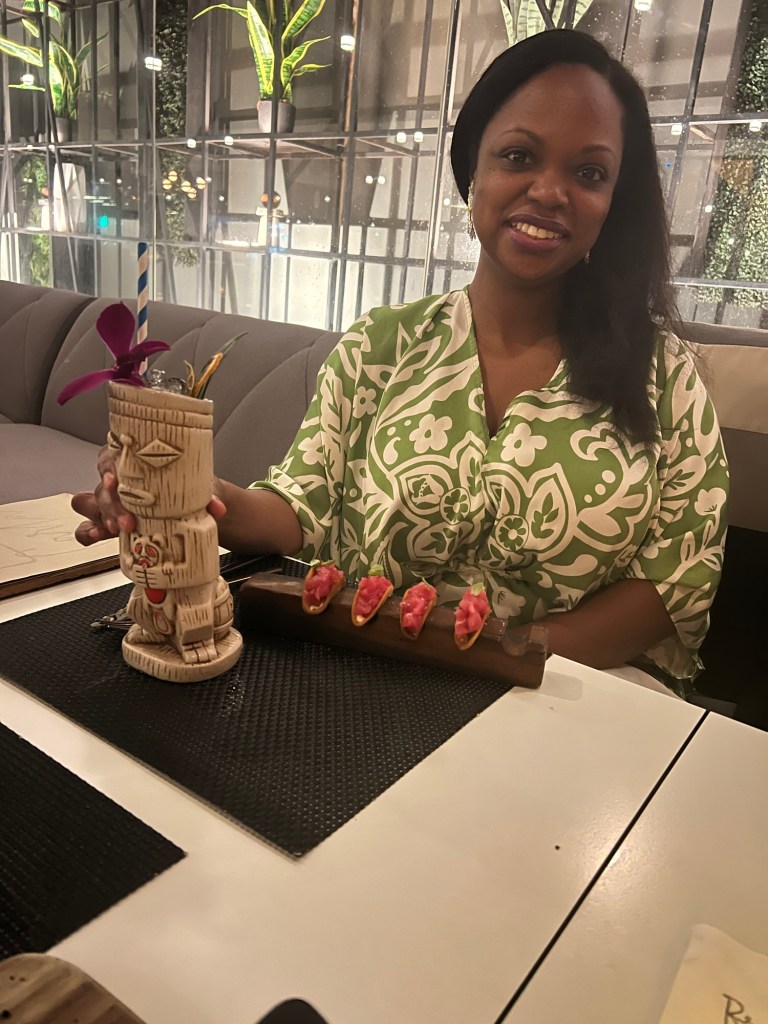
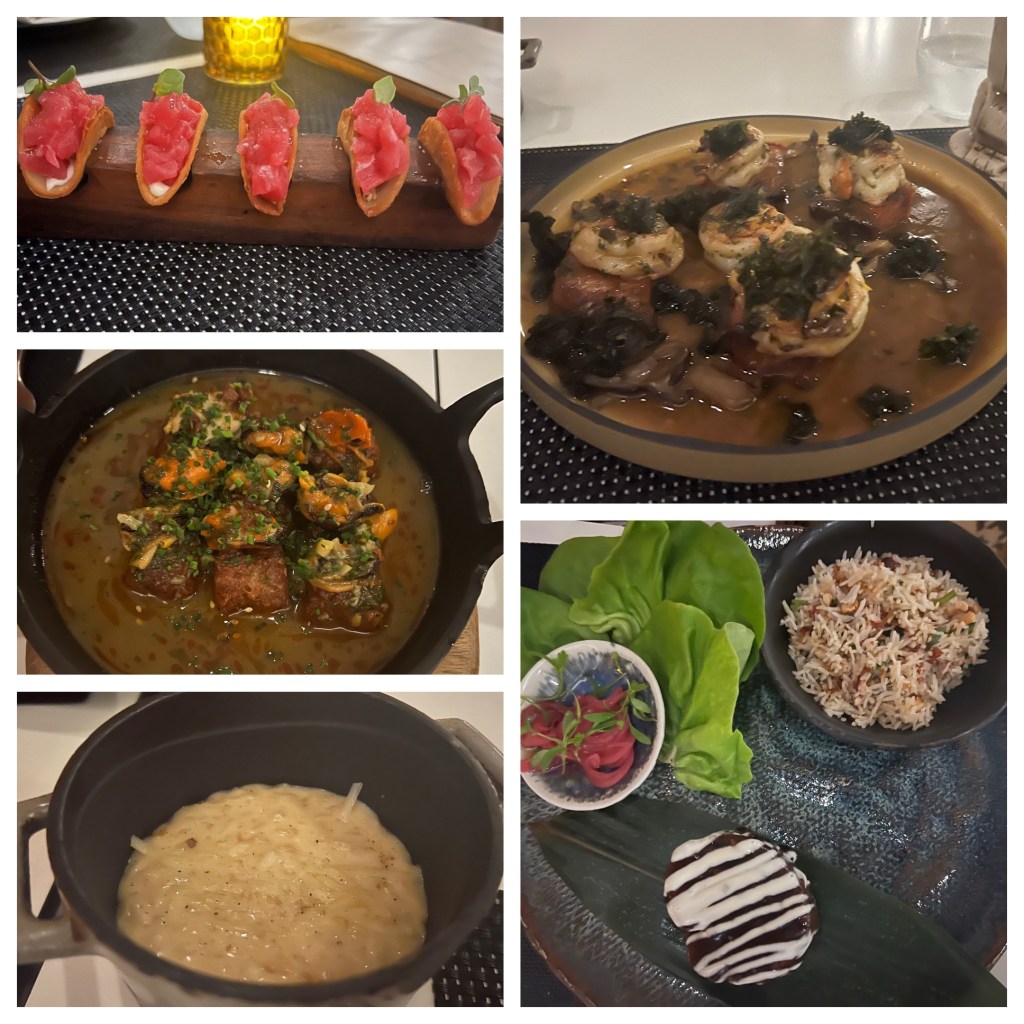
Another restaurant where we had dinner was Brutto, and the experience was interesting from the start – the dining room was surprisingly empty for a weekend night, especially for a spot with locations not only in Panama but also in El Salvador and Aruba. Its sleek, modern vibe still set the tone for a good meal. The menu was extensive, and we kicked things off with the Mai Tai Son, served in the cutest little glass, before tearing into the fresh bread with black truffle butter, which was honestly unforgettable. We followed that with New Zealand mussels bathed in garlic butter with candied potato and tuna tacos filled with red tuna, crispy tortillas, red onion, and mayo‑shiso. For mains, I ordered the Surf & Belly, a mix of red prawns, pork belly bites, pork jus, mushrooms, and greens, plus a creamy risotto on the side because why not! My mom and CJ shared the boneless ribs, slow‑cooked baby backs glazed in gochujang BBQ and served with mayo‑ponzu, butter lettuce, and jasmine rice. We enjoyed the meal, however, it was not one of our favorites while we were there.
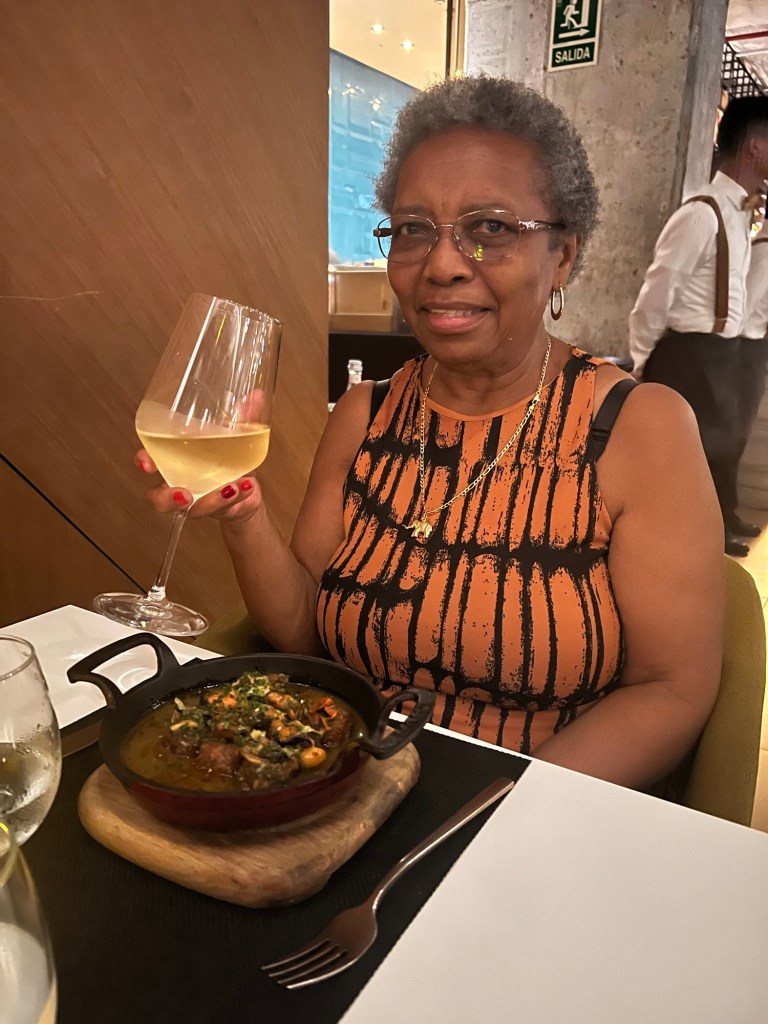
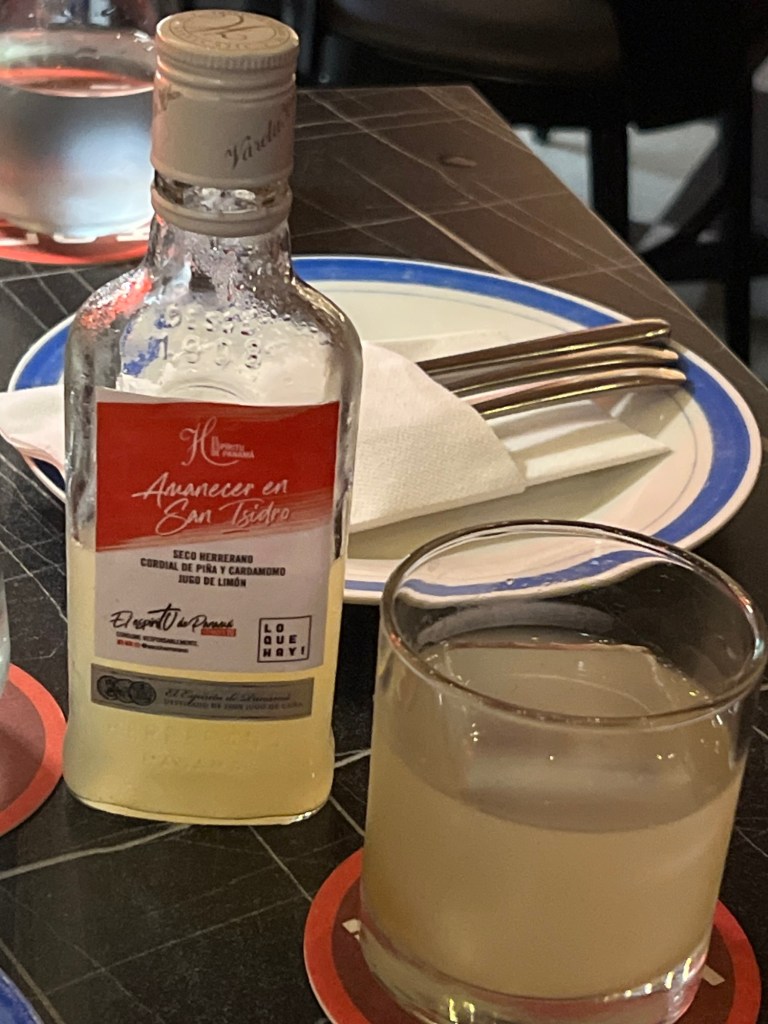
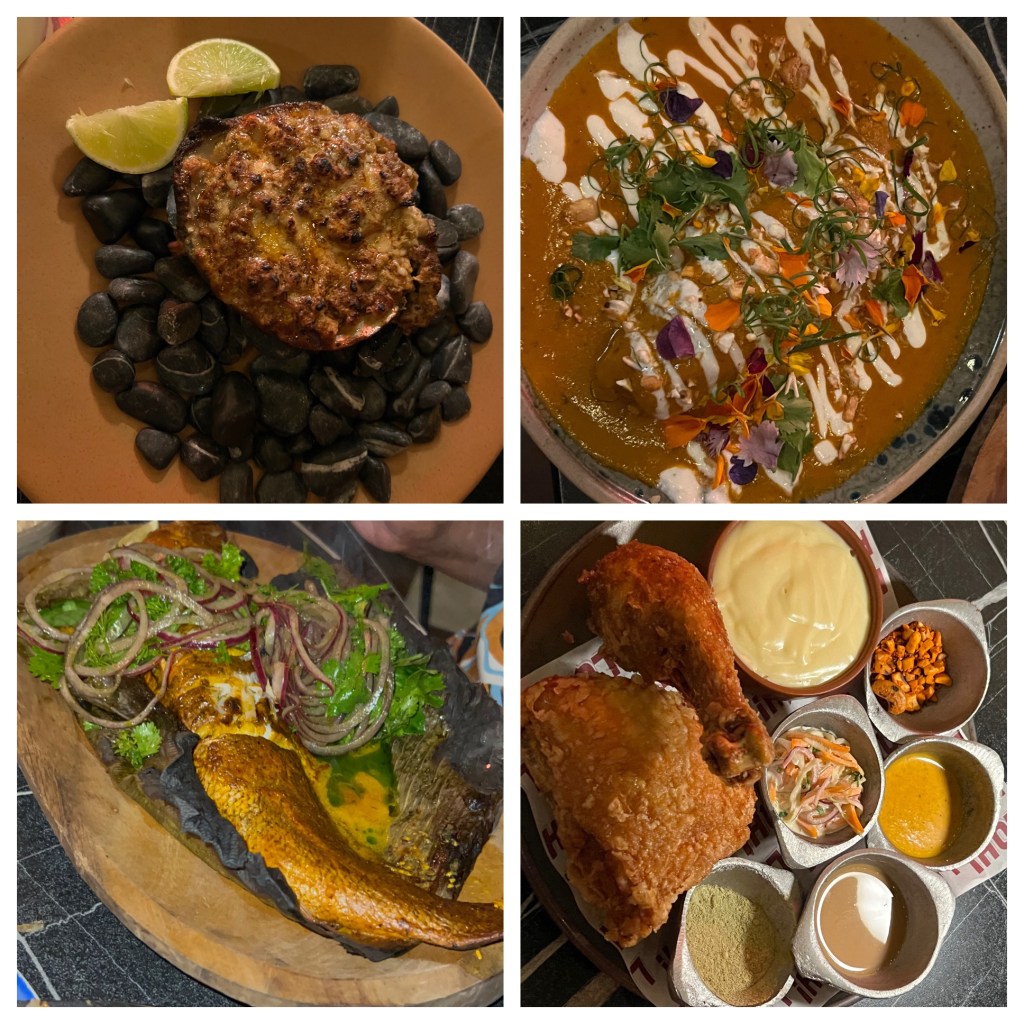
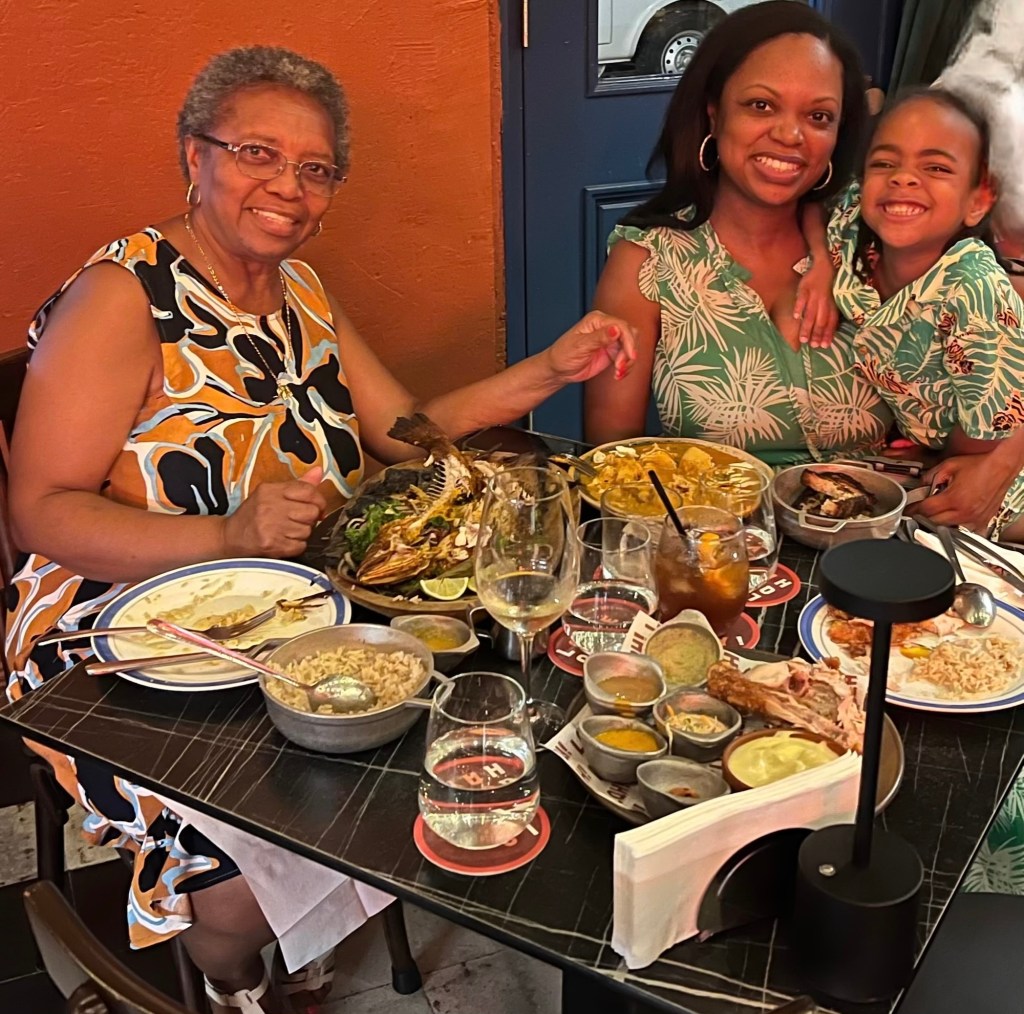
We also dined at Fonda Lo Que Hay for dinner. On the list of Latin America’s 50 best restaurants, I had very high expectations before arriving. To drink, I had the El Comandante (Seco Herrerano – Piña y Cardomomo – jugo de Limón Persa) which was really good (and it didn’t hurt that it came in a personal bottle!). CJ had the fried chicken accompanied by mashed potatoes and although the texture was a bit too watery for either of our liking, the gravy was delicious. I had the bollo prenao which was some sort of maize outside with Octopus stuffing and sofrito cream sauce. It was a bit too starchy and thick for my liking but the sauce was flavorful. I also had charbroiled oysters but definitely a surprising prepared though it tasted ok. My mom had the roasted whole fish of the day (which was bass) and it was sooo good. They set it on fire and that was the icing on the cake. Needless to say, there was nothing left after we finished with it!
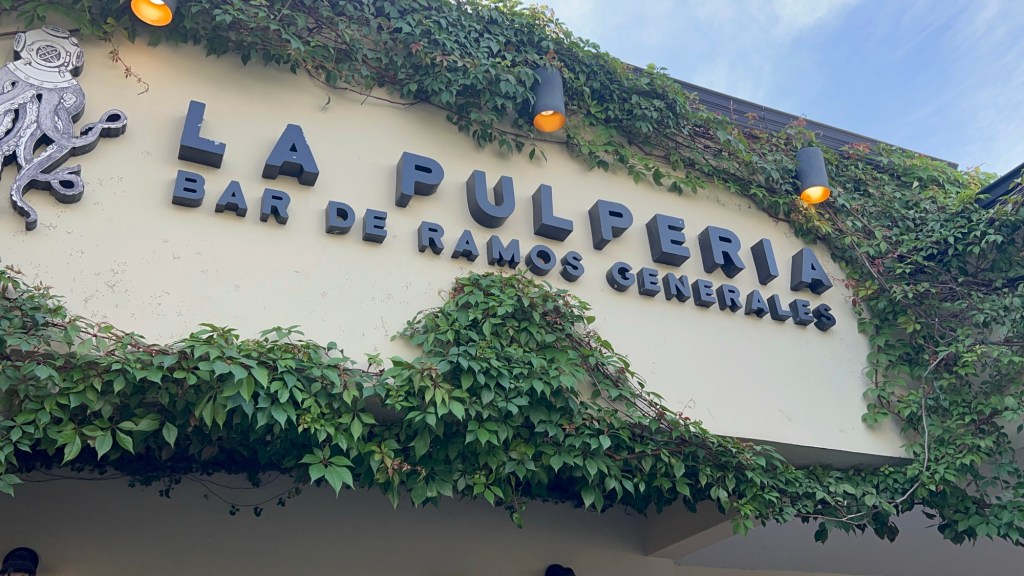
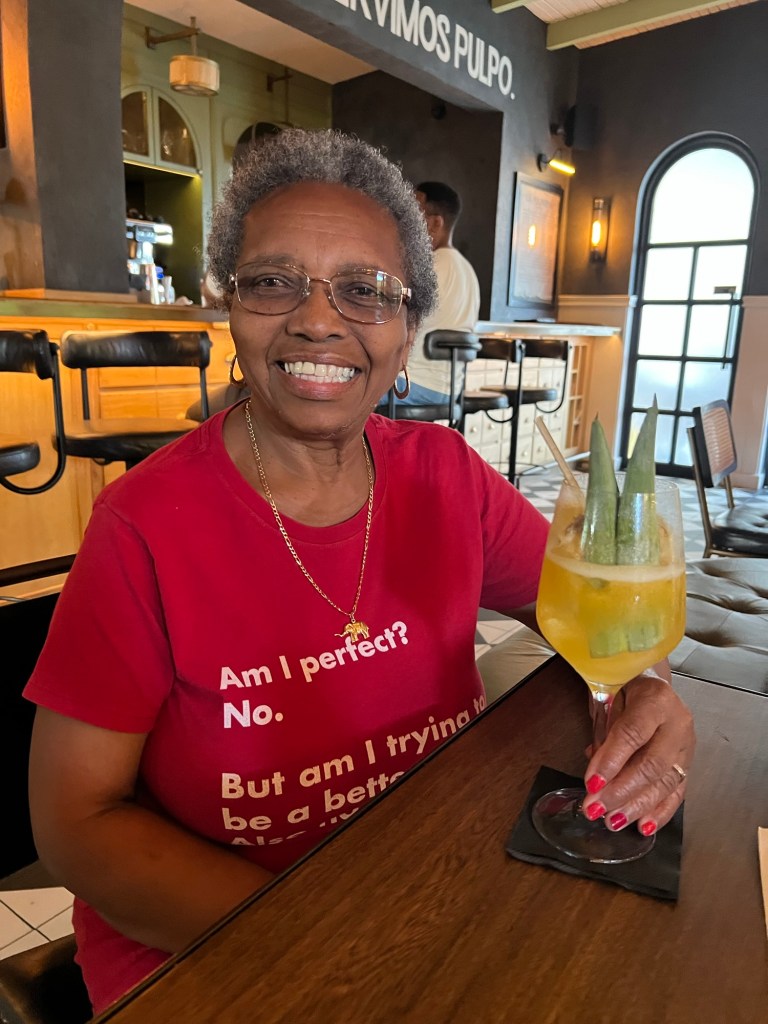
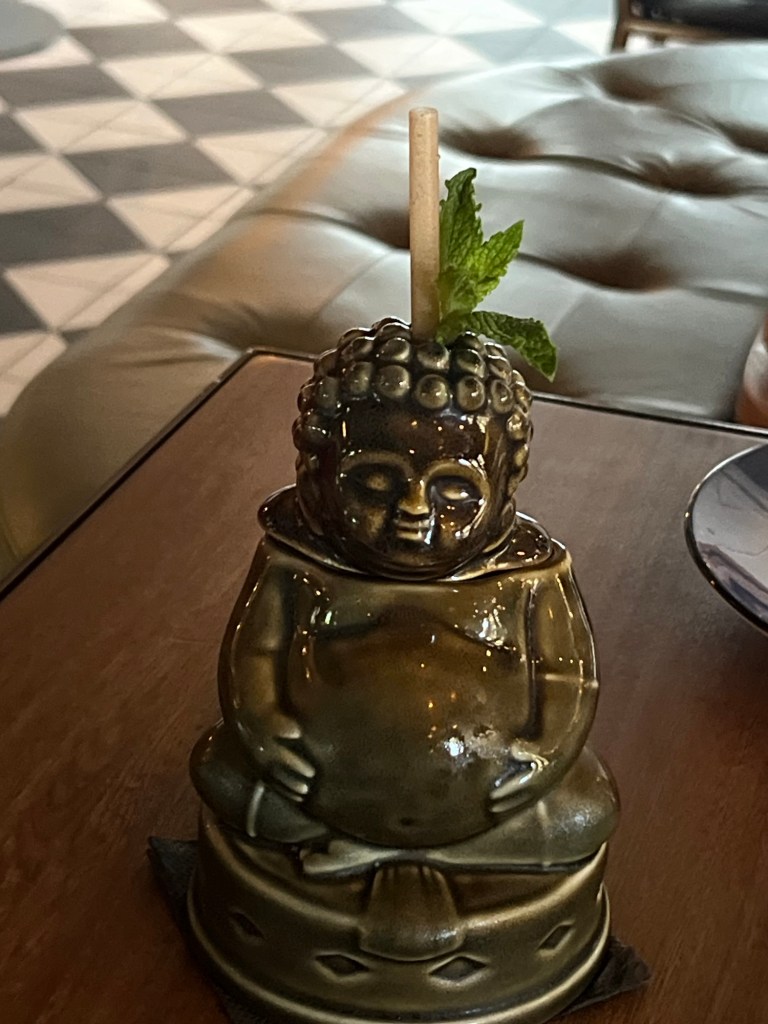
Right before heading to the airport, we stopped at La Pulpería (which has a couple of locations) and it ended up being the culinary highlight of our entire trip. From the first sip, we knew we’d found something special. I ordered the Señor Tiki, served in a unique glass that made it as fun as it was delicious. My mom went with the maracuyá sangria—bright, refreshing, and dangerously easy to drink. Both were the perfect send-off cocktails.
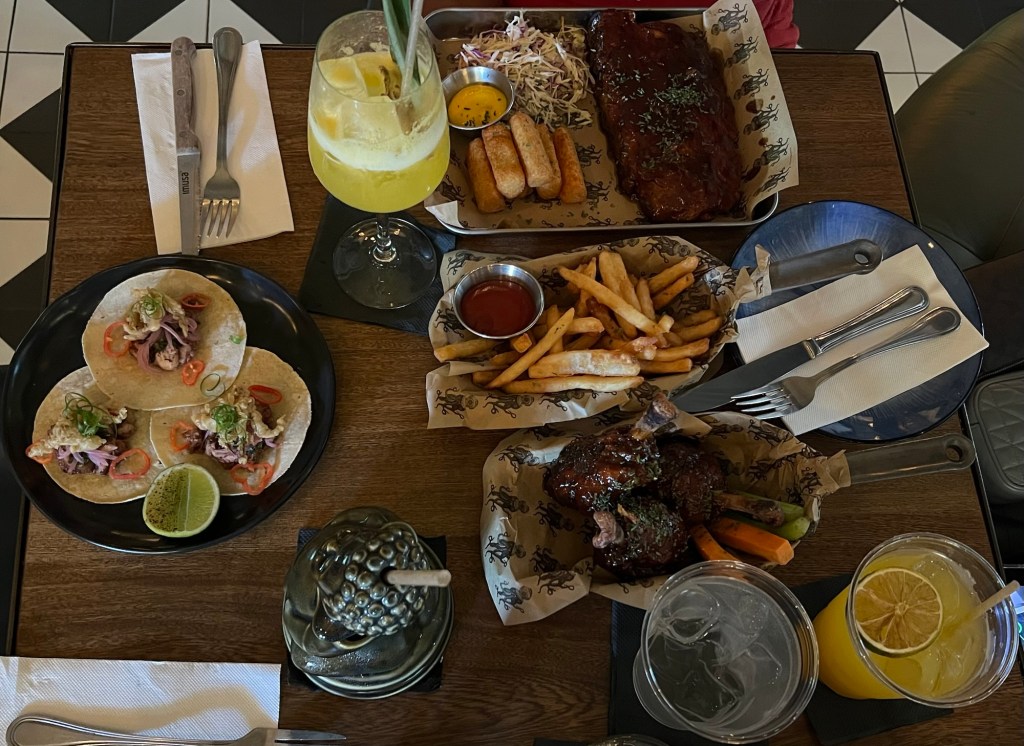
For food, we had octopus tacos, barbecue wings, and ribs with a side of fries. Every single dish delivered. The octopus was tender and flavorful, the wings sticky and satisfying, and the ribs fall-off-the-bone good. Even better? Everything was reasonably priced, which somehow made it all taste even better. If we had discovered this spot earlier, we absolutely would have gone back to try more. So take it from us; don’t wait until your last day. Make this one a priority!
Now for the activities!
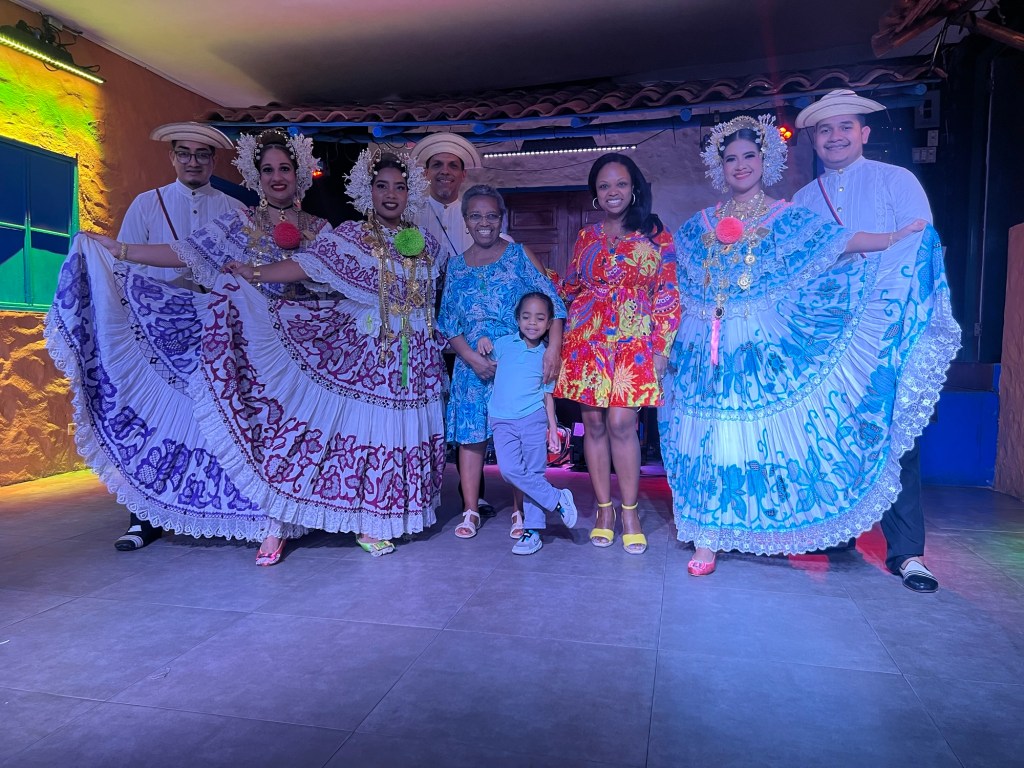
One of the cultural highlights of our time in Panama was a folklore dance and dinner show at El Trapiche, conveniently just a five-minute walk from our hotel. It turned out to be far more than just dinner and entertainment; it was a lively introduction to Panama’s traditions, music, and national pride.
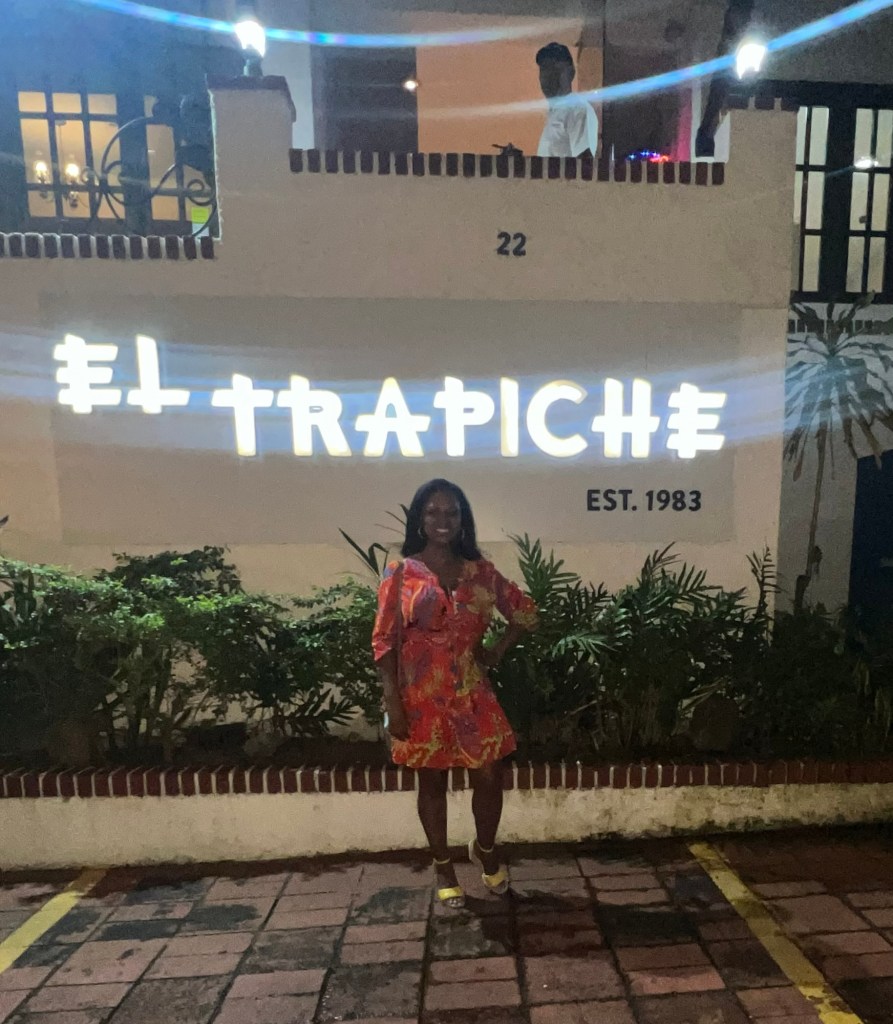
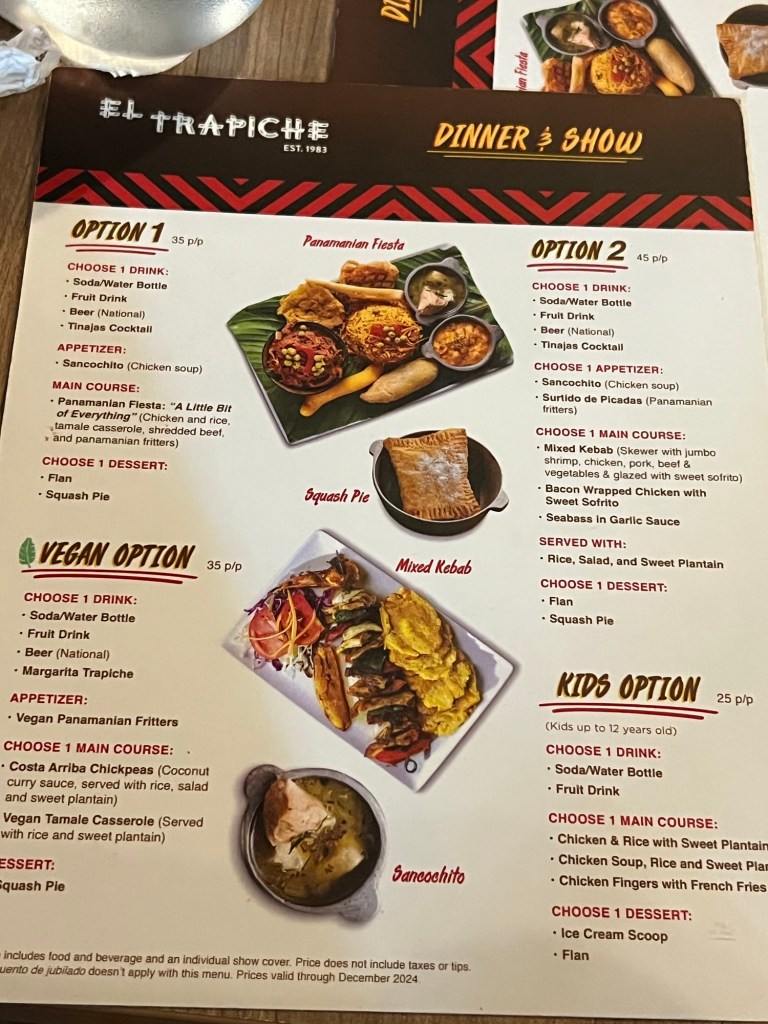
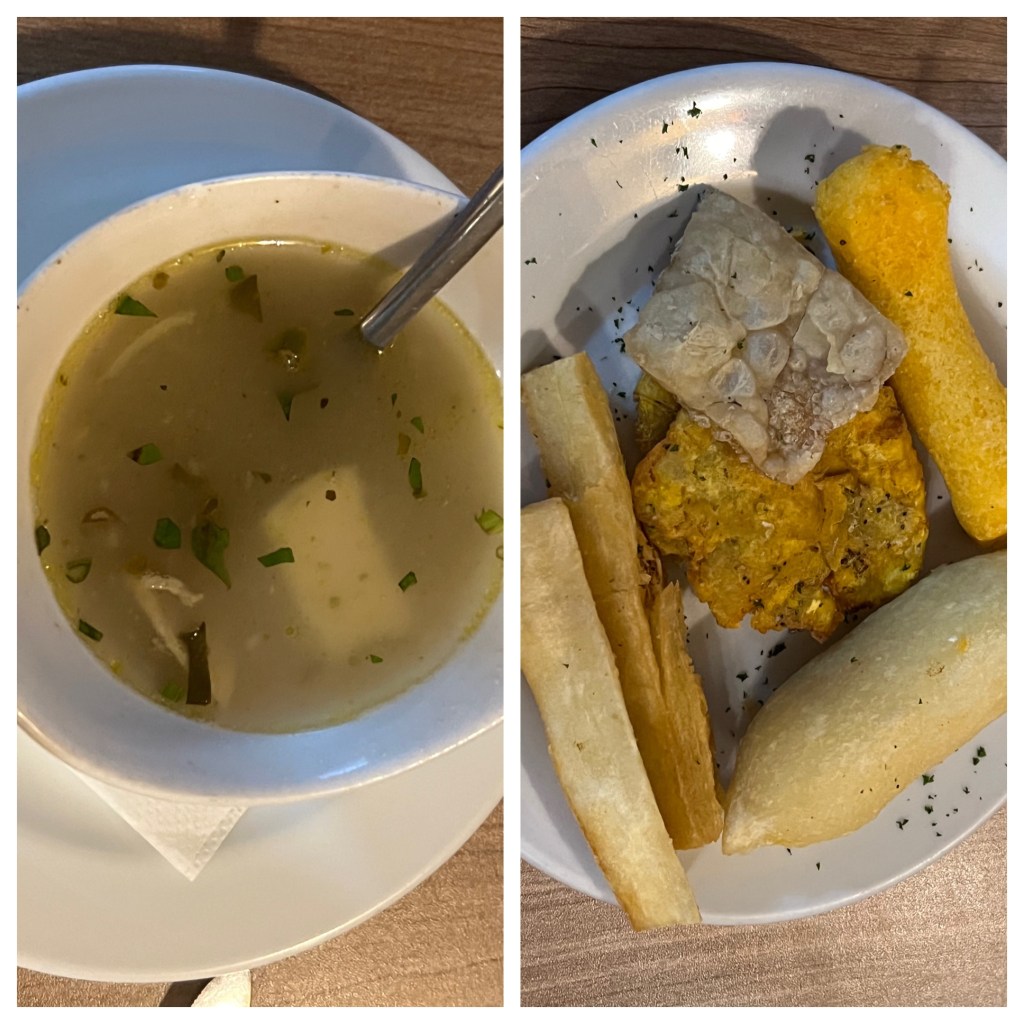
Dinner is served as a set menu with two options, featuring classic Panamanian dishes. My mom and I got different options so we can try everything.
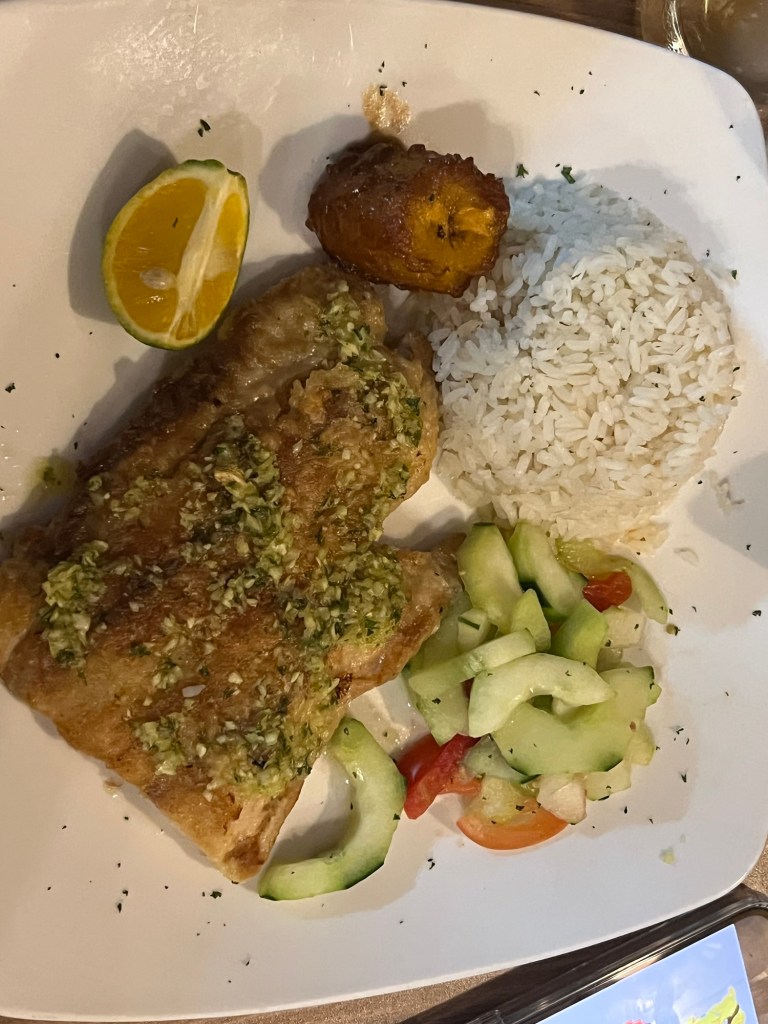
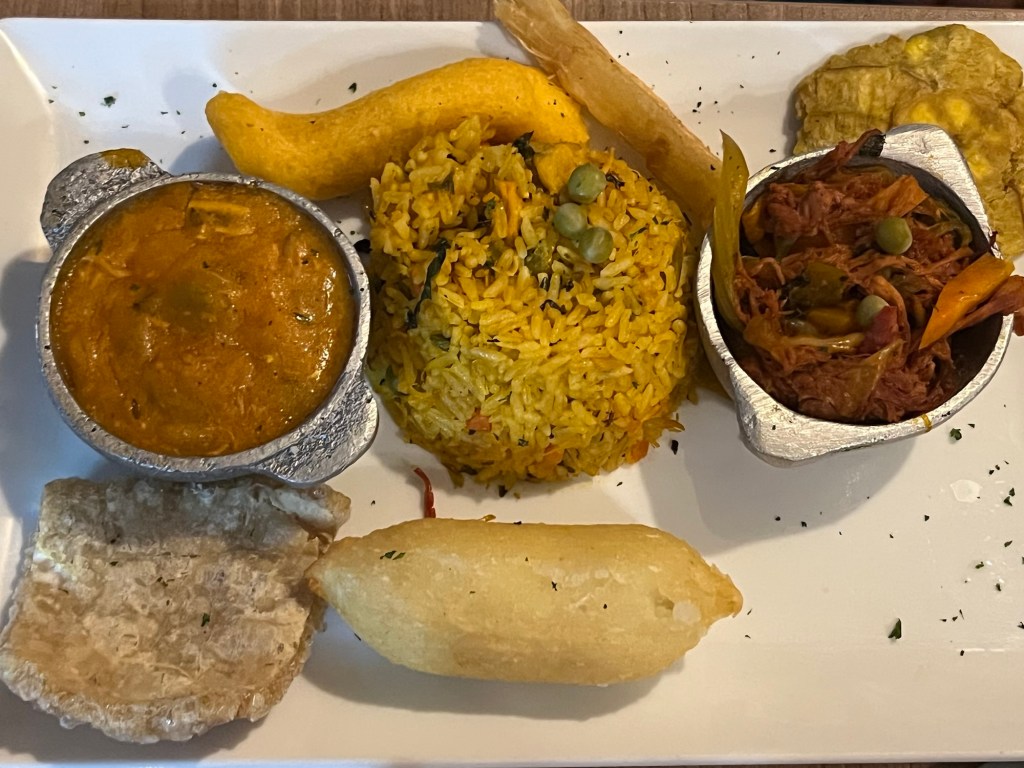
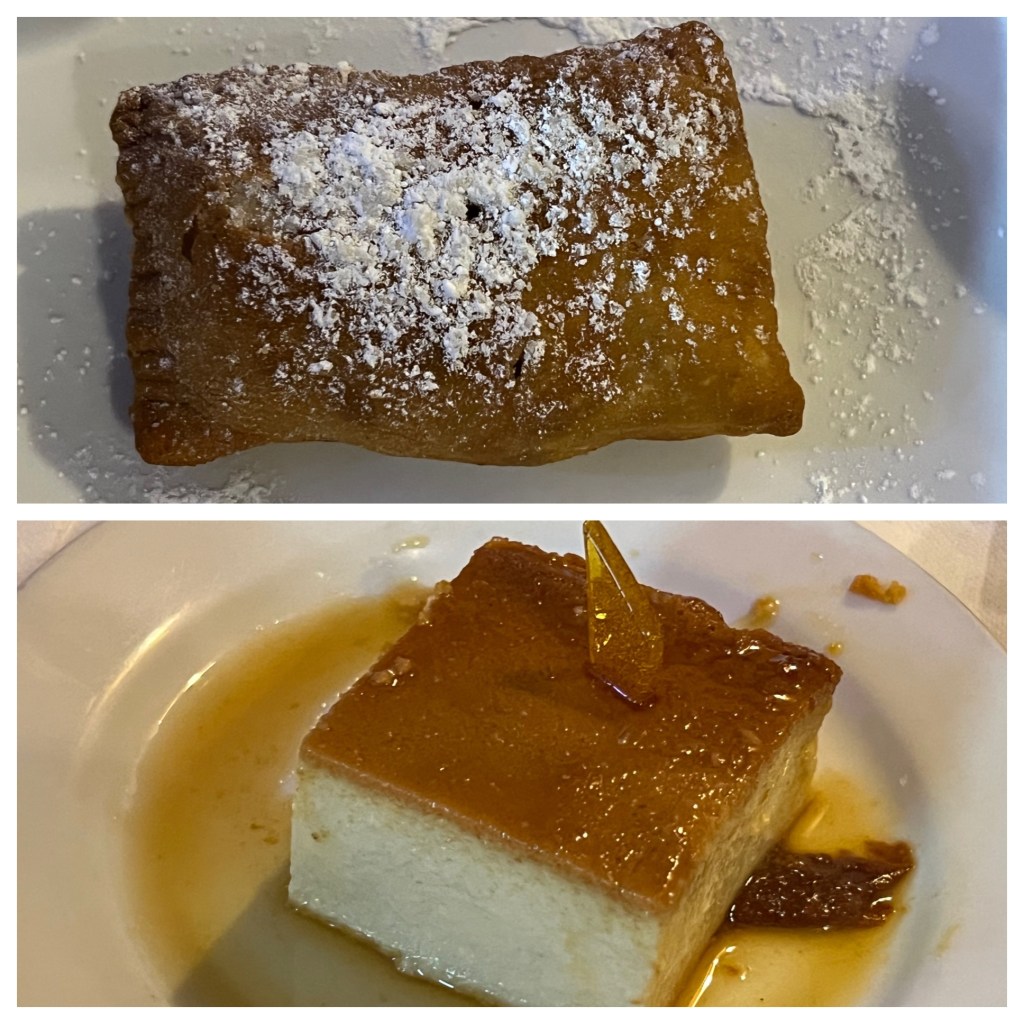
The performance starts at 8:00 p.m. and runs for about an hour. The evening opens with traditional dances and then there was drumming. The performers also explained the meaning behind the garments they were wearing, from the craftsmanship to the symbolism of the accessories. There was even a birthday shout out to everyone celebrating birthdays that day! At the end of the performance, we were invited to take photos with the dancers where we were able to get a closer look at the beautiful costumes and capture a memorable moment from the evening.
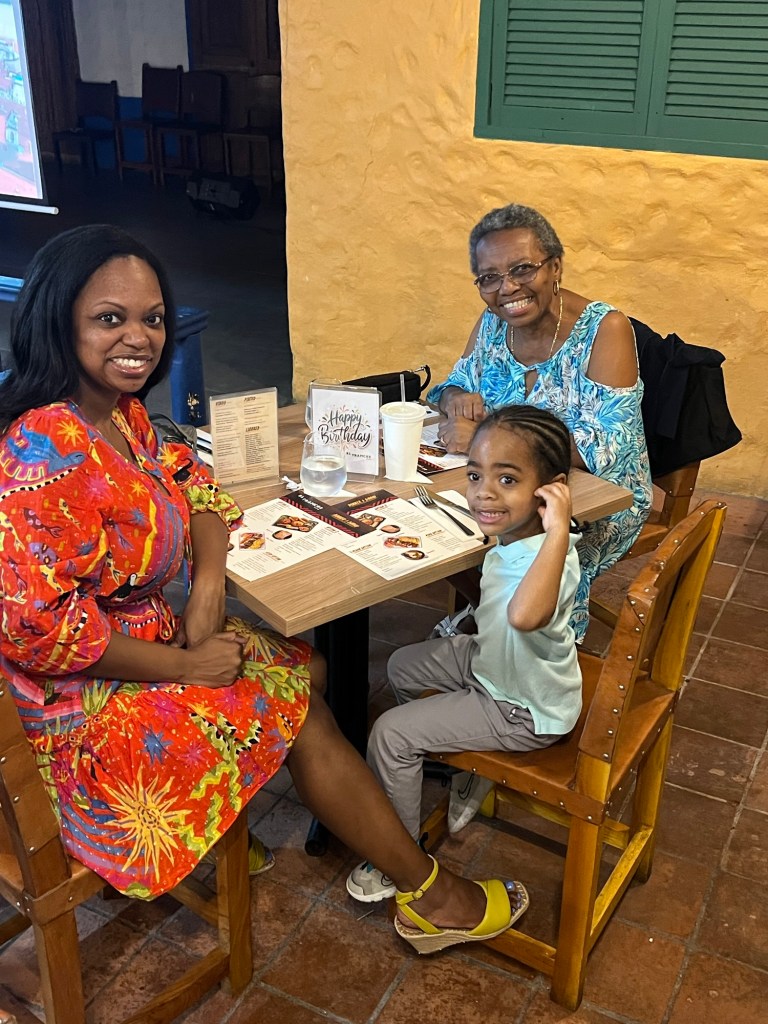
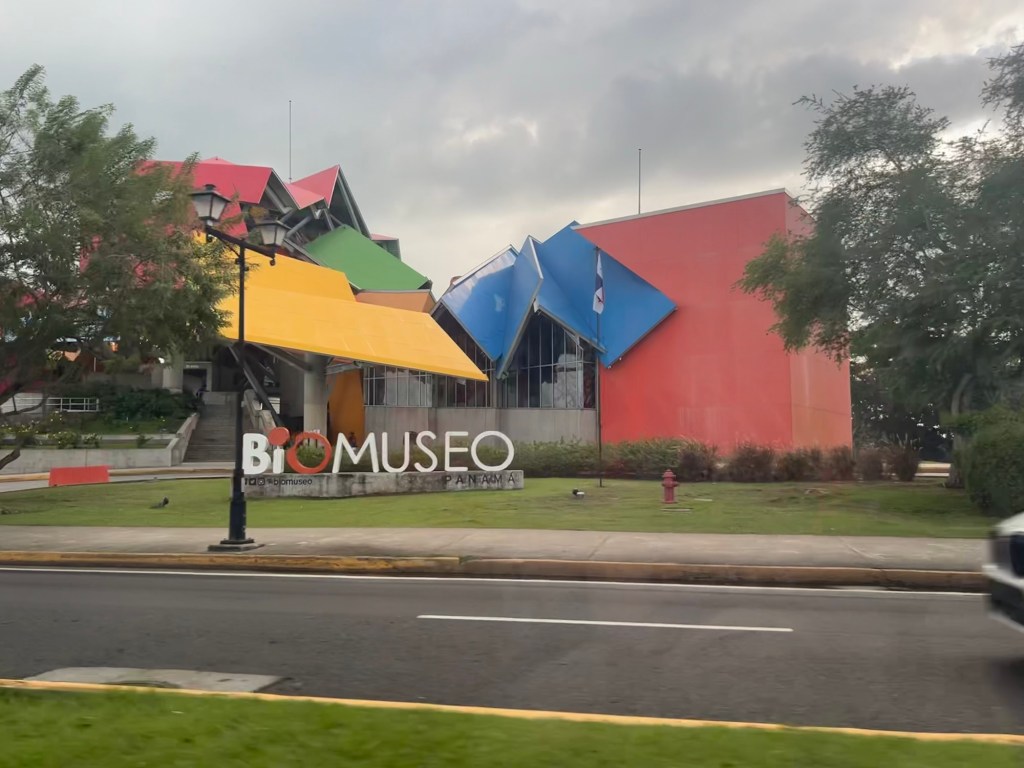
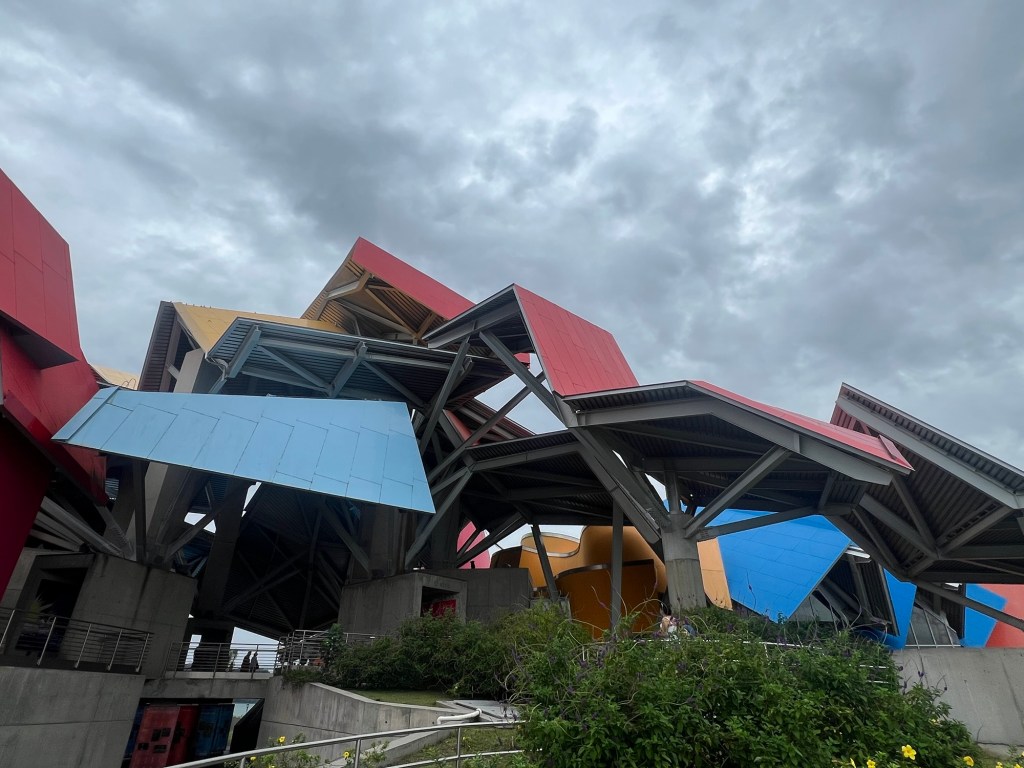
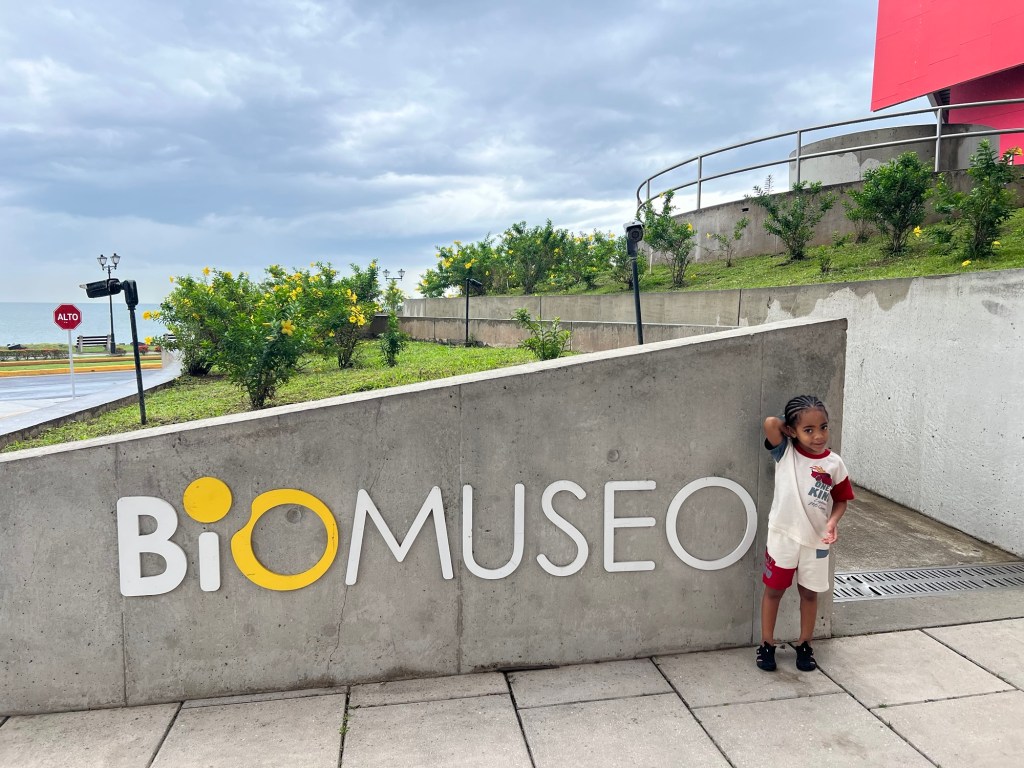
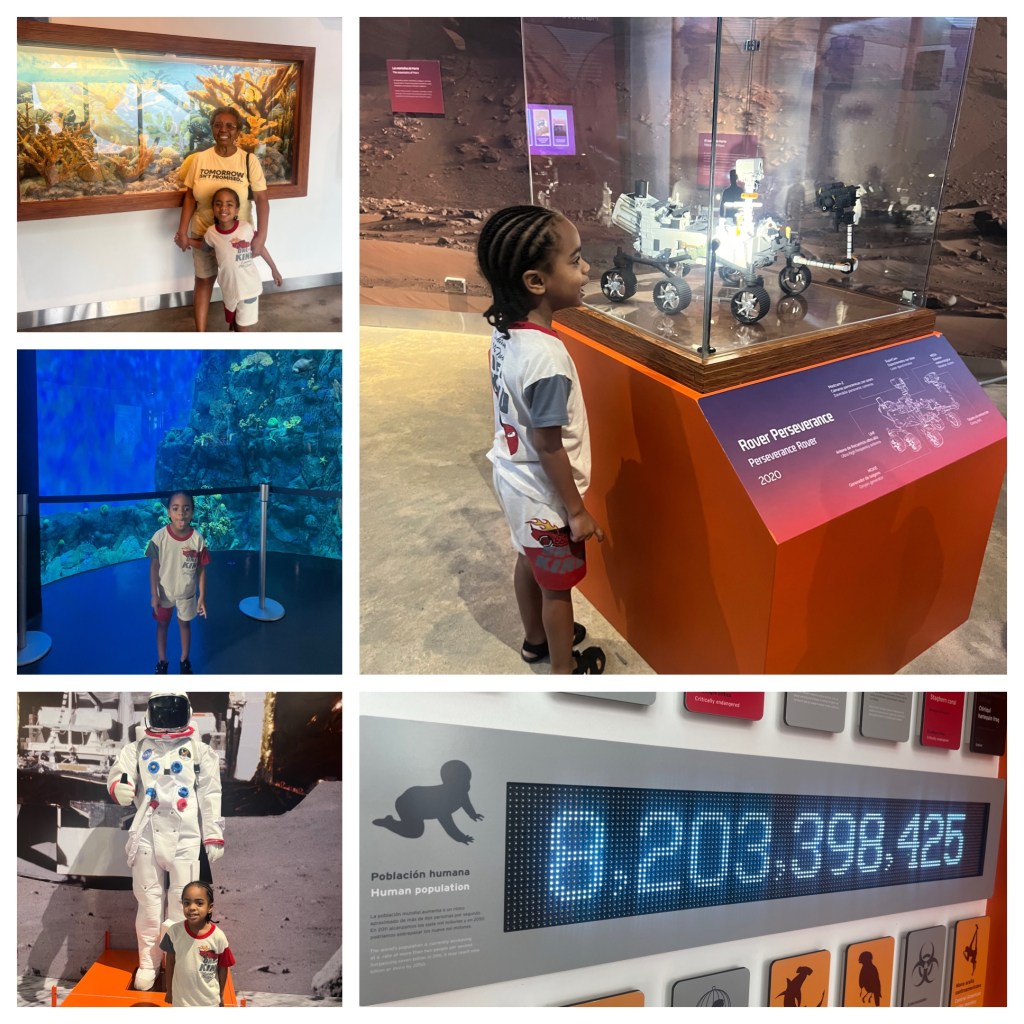
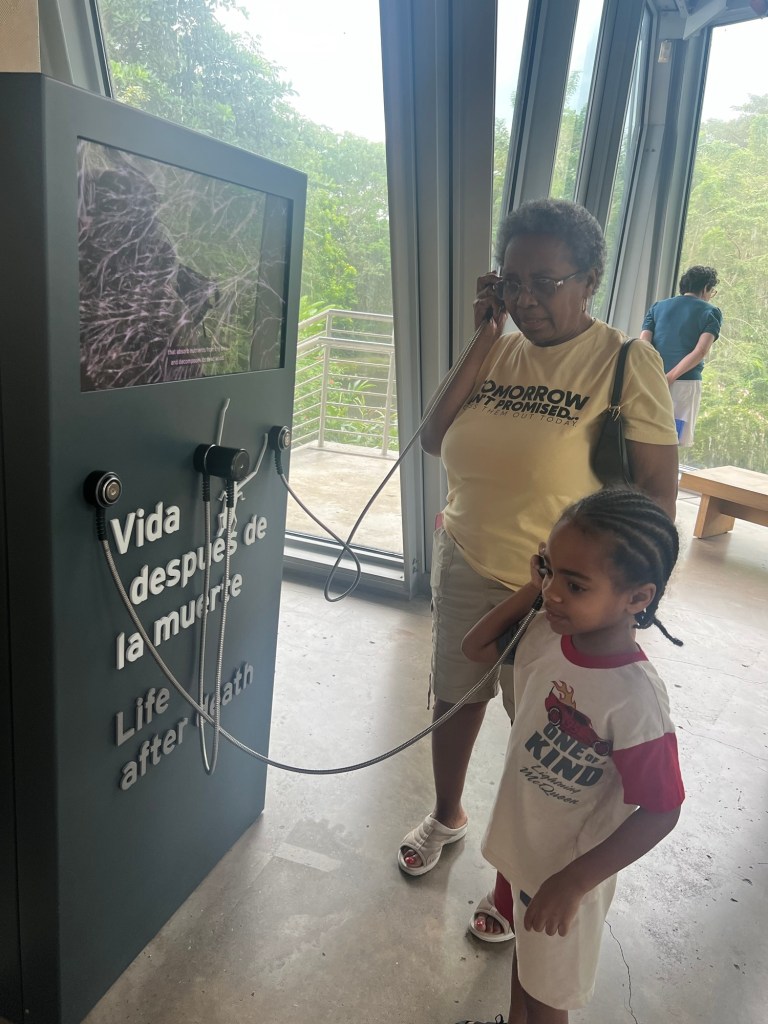
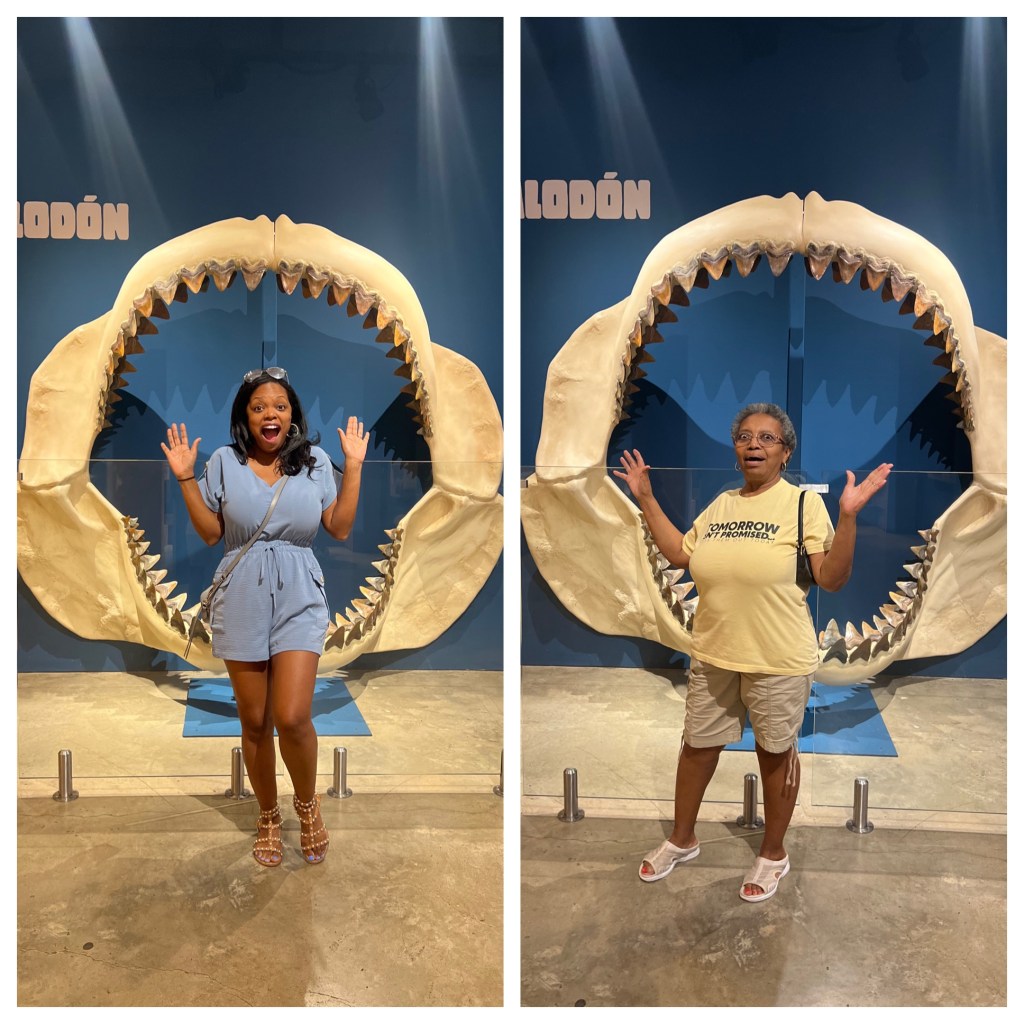
We also visited the Biomuseo, a colorful, eye-catching museum located along the Amador Causeway. The building itself is really unique, with angular panels in bright colors.
Inside, the museum focuses on Panama’s unique role in shaping global biodiversity. The exhibits explain how the formation of the Isthmus of Panama millions of years ago connected North and South America, allowing plant and animal species to migrate between the continents — a pivotal event known as the Great American Biotic Interchange. The galleries walk you through geology, ecosystems, marine life, and rainforest habitats, with large visuals, immersive rooms, and detailed informational displays.
There’s also a café on-site, which makes for a nice break during your visit. The outdoor areas offer pleasant views of the water and skyline, adding to the overall experience.
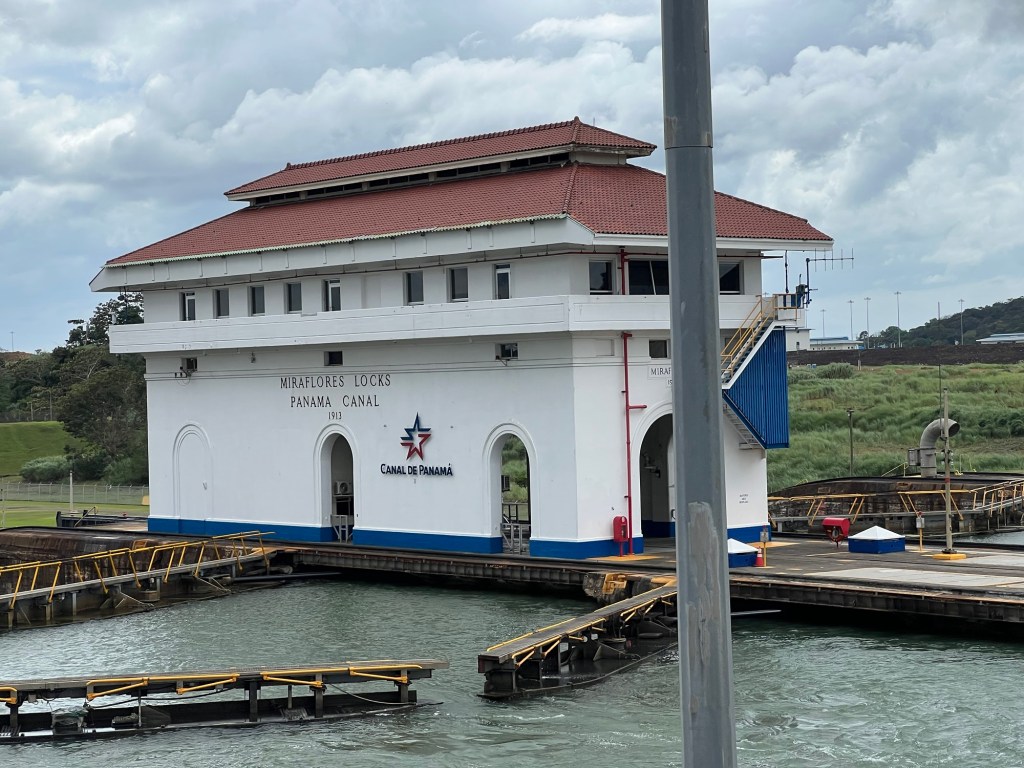
One of the highlights of the trip was visiting the Miraflores Locks. No trip to Panama is complete without a visit to the Panama Canal! But be prepared! It gets very crowded, especially at the Miraflores Locks visitor center.
The ships don’t pass at the same times every day and can vary widely daily, so we checked the schedule with our hotel that morning and they told us there were two times that day: one around 9am and the other around 2pm. We chose the latter and arrived about an hour before the scheduled transit, and it was already getting busy. By the time the ship entered the locks, it was packed.
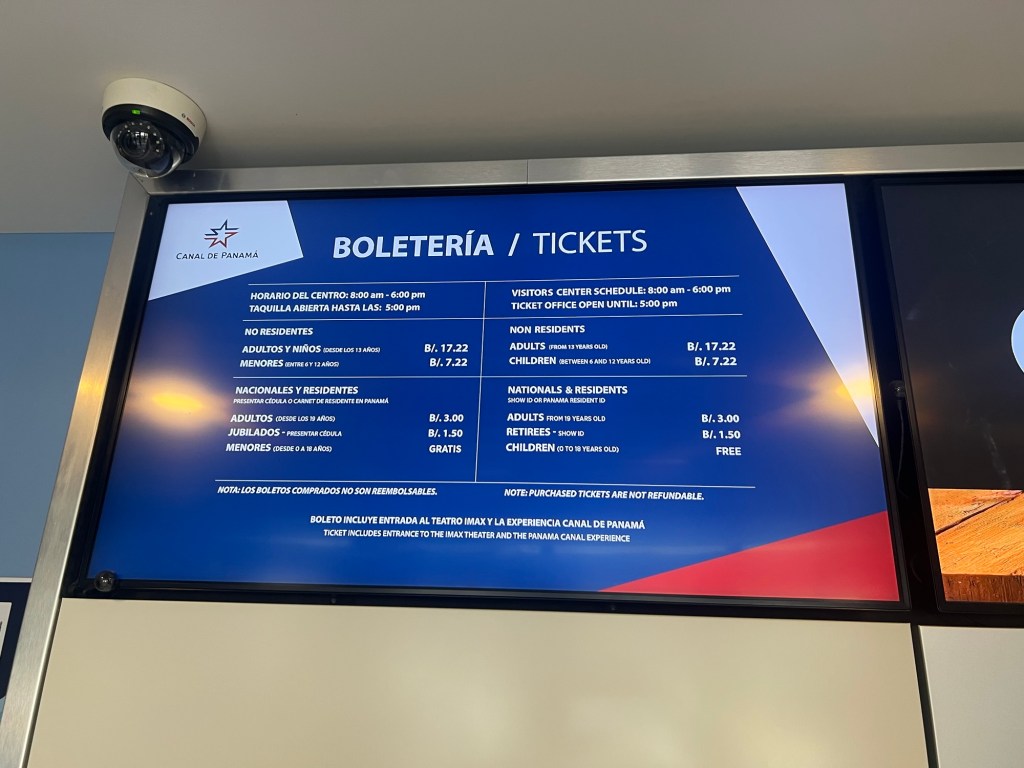
Admission for two adults was $34, and CJ was free. Inside the visitor center, there’s a café with snacks and drinks, which is helpful if you’re waiting between ship transits.
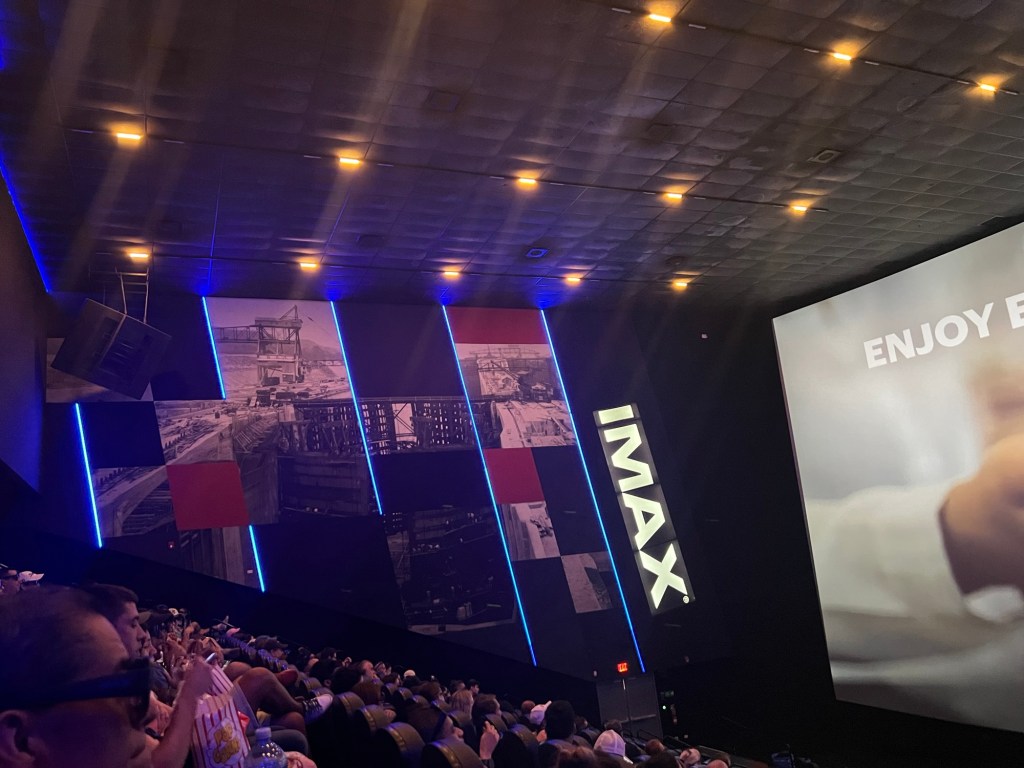
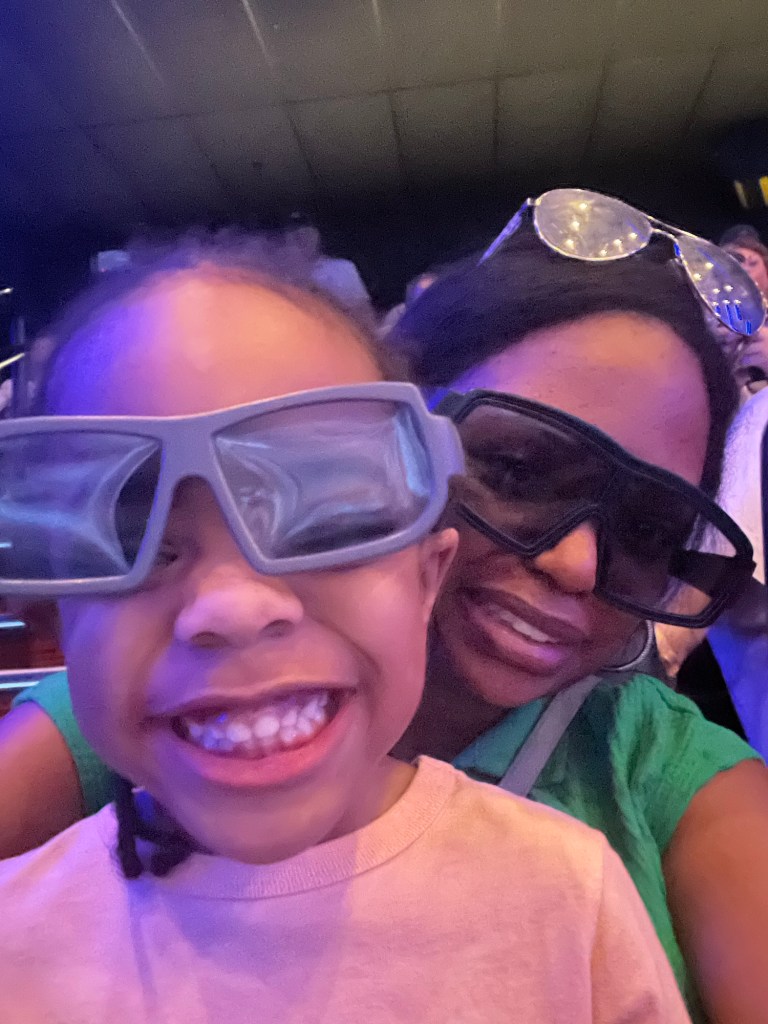
There’s also a 3D IMAX film about the canal, narrated by Morgan Freeman. The movie gives a great overview of the canal’s history, construction, and global importance – a nice complement to seeing the real thing in action.
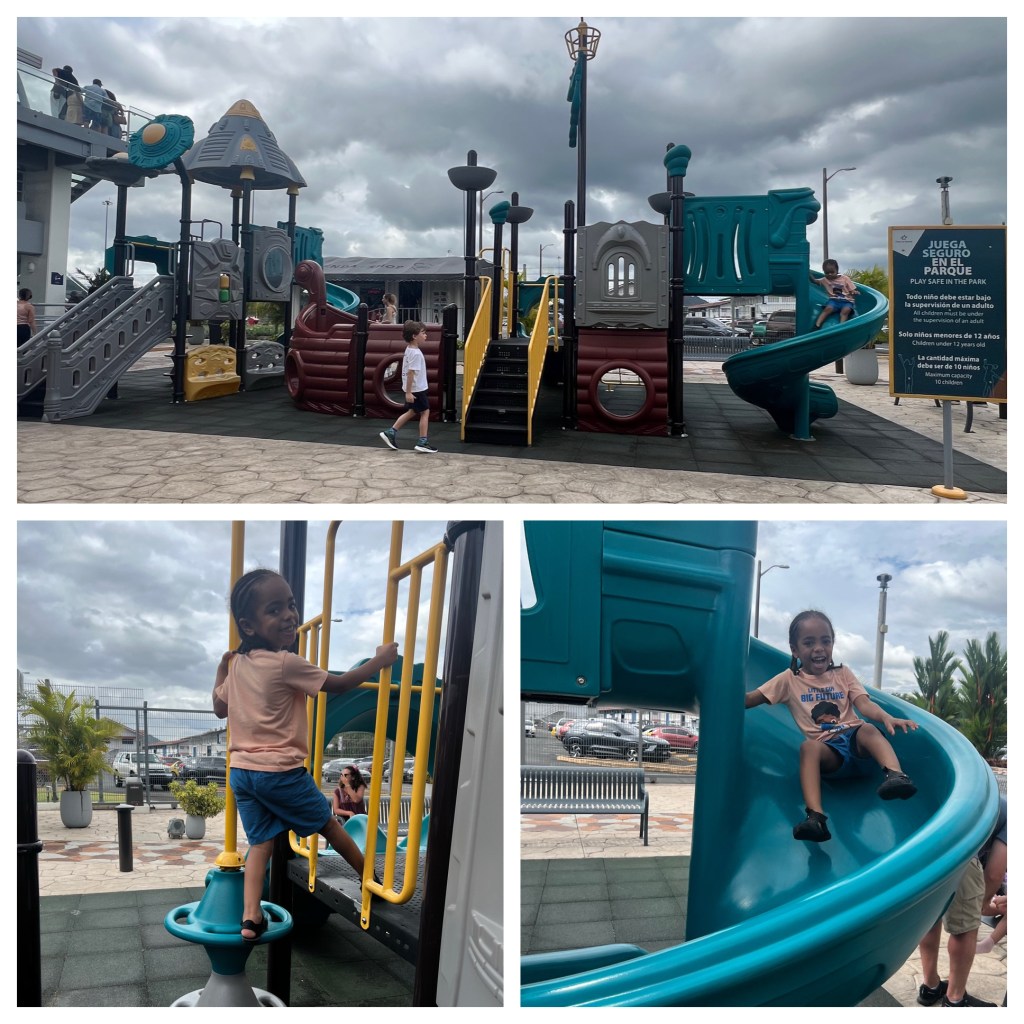
There is also a playground for kids…which was a lifesaver for us as CJ started getting a bit antsy while we were waiting for the ships.
There are two main viewing areas: 1) a lower viewing level (access is partially gated, but you can still get close) and 2) a larger upper observation deck where most people gather. The viewing areas fill up fast so if you want a good spot along the railing, arriving early is key. We were standing and waiting for a while, so was grateful that we brought:
- Something to drink (it’s hot and humid)
- An umbrella (there was a quick shower and it was helpful keeping the sun from beaming directly down on us)
- A little patience!
While we were there, three massive ships passed through the locks. Watching the water levels rise and lower as the vessels move between the chambers is fascinating and really gave me an appreciation for the engineering behind the canal.
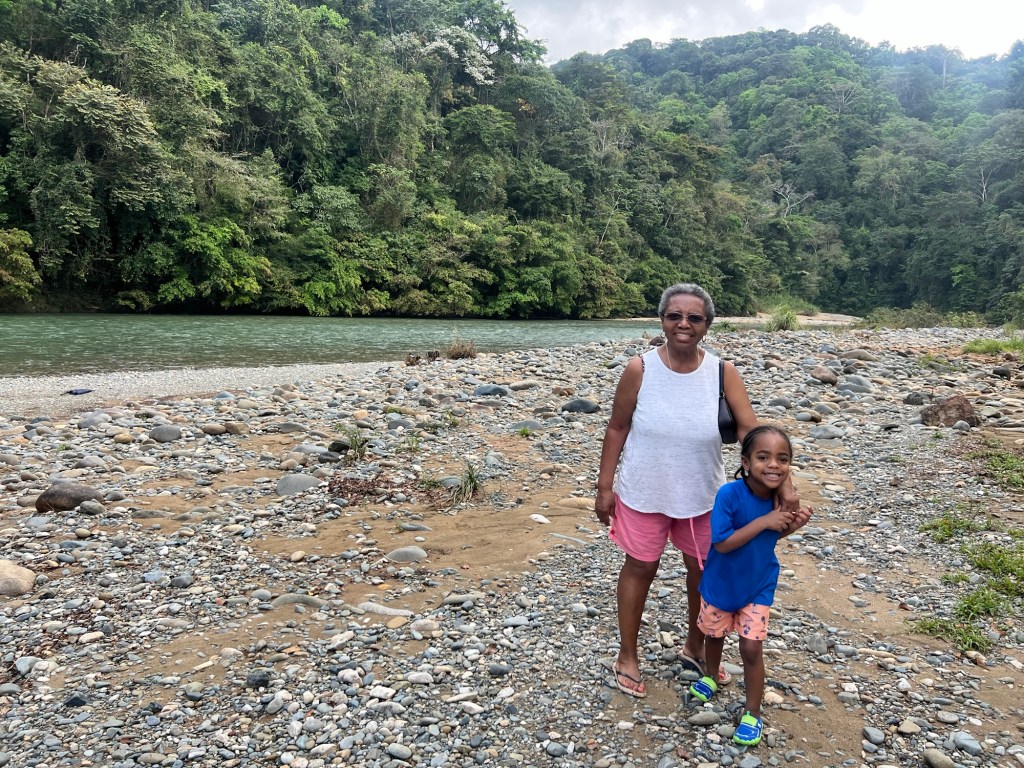
One of the most memorable cultural experiences of our trip was visiting an Emberá village in the rainforest outside Panama City. It was a full day adventure — about seven hours total — and felt worlds away from the city skyline. We were picked up at 7:30 a.m. and drove about an hour north, with a quick supermarket stop to grab snacks and water. From there, the real adventure began.
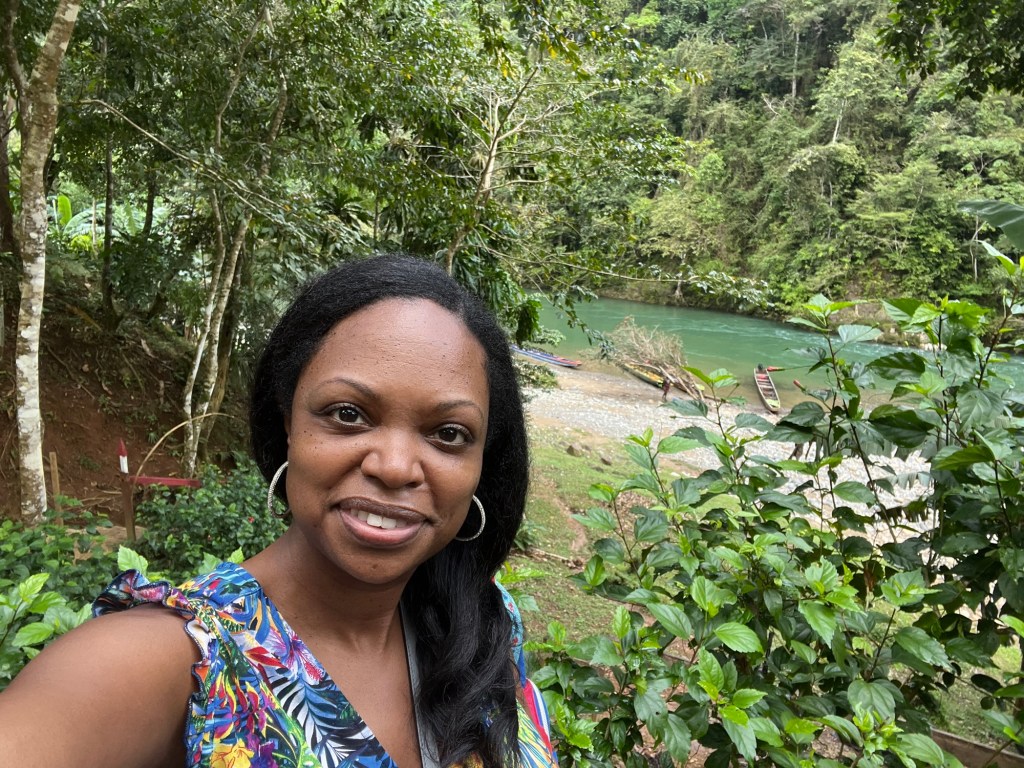
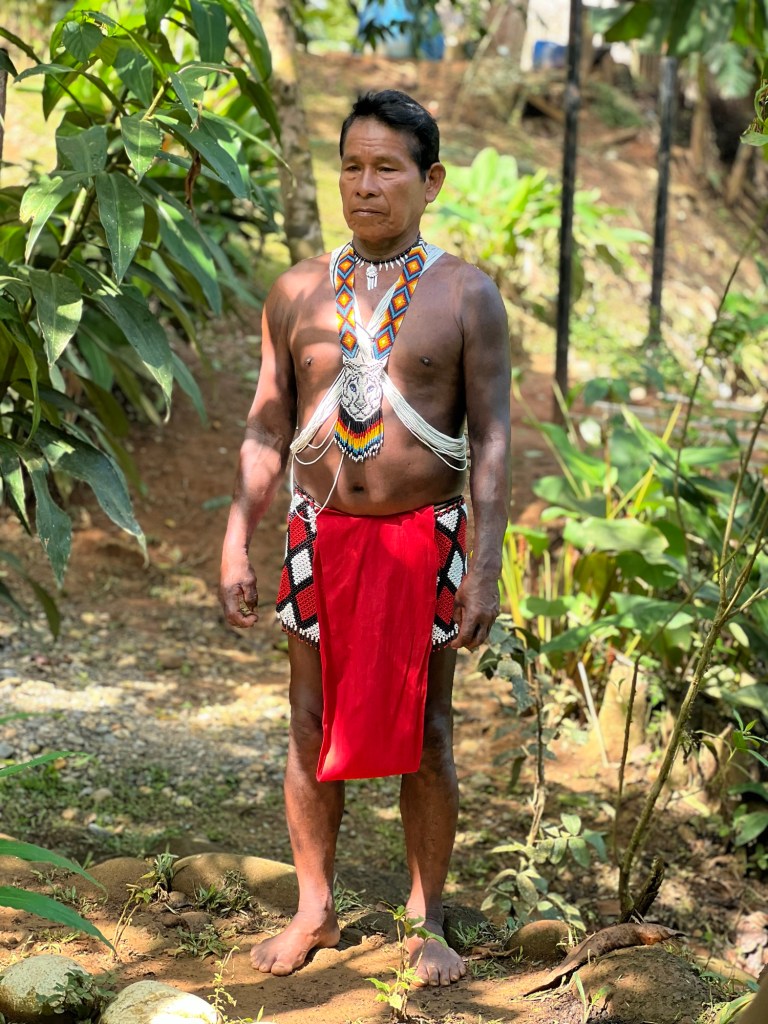
We climbed into a long wooden canoe and traveled upriver for about 30 minutes, gliding through calm water surrounded by dense rainforest. The Emberá are one of Panama’s Indigenous groups, traditionally living along rivers in stilted wooden homes with thatched roofs. When we arrived, we were welcomed into the community and given an introduction to their way of life. We learned how they use local plants for medicine, dyes, food, and construction materials. They showed us inside one of their homes — simple, open-air structures raised above the ground — and even pointed out what they jokingly called their “gym,” demonstrating the physical nature of their daily routines.
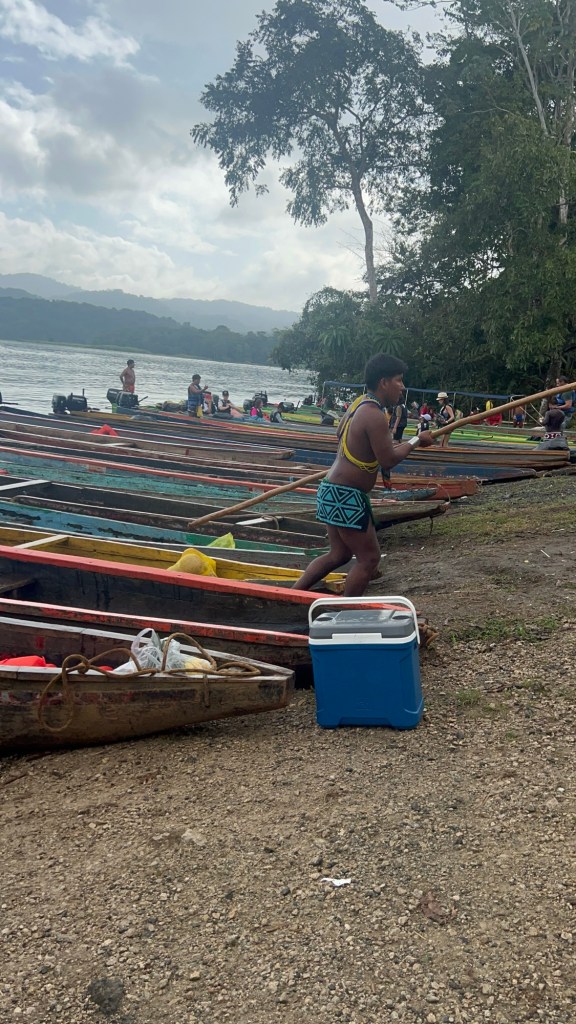
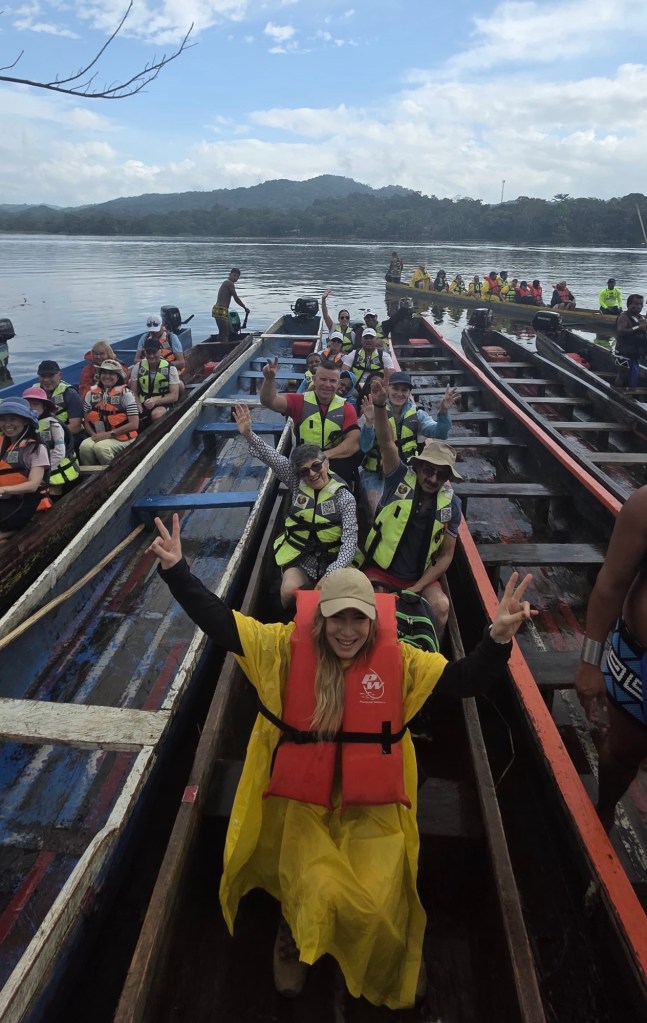
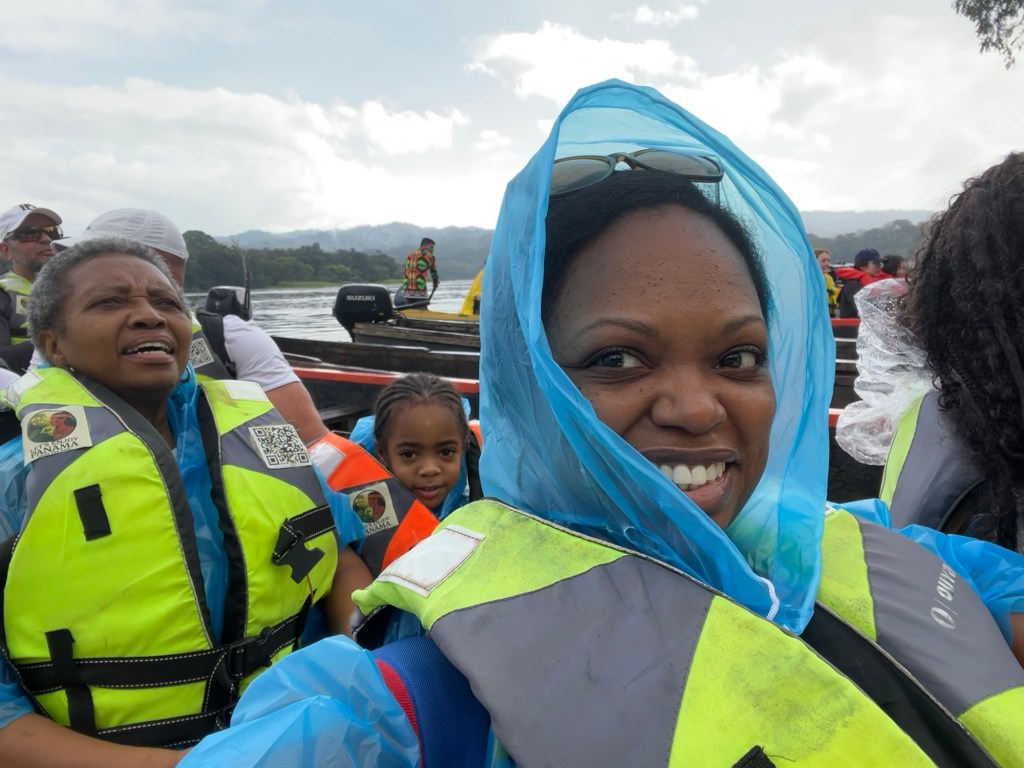
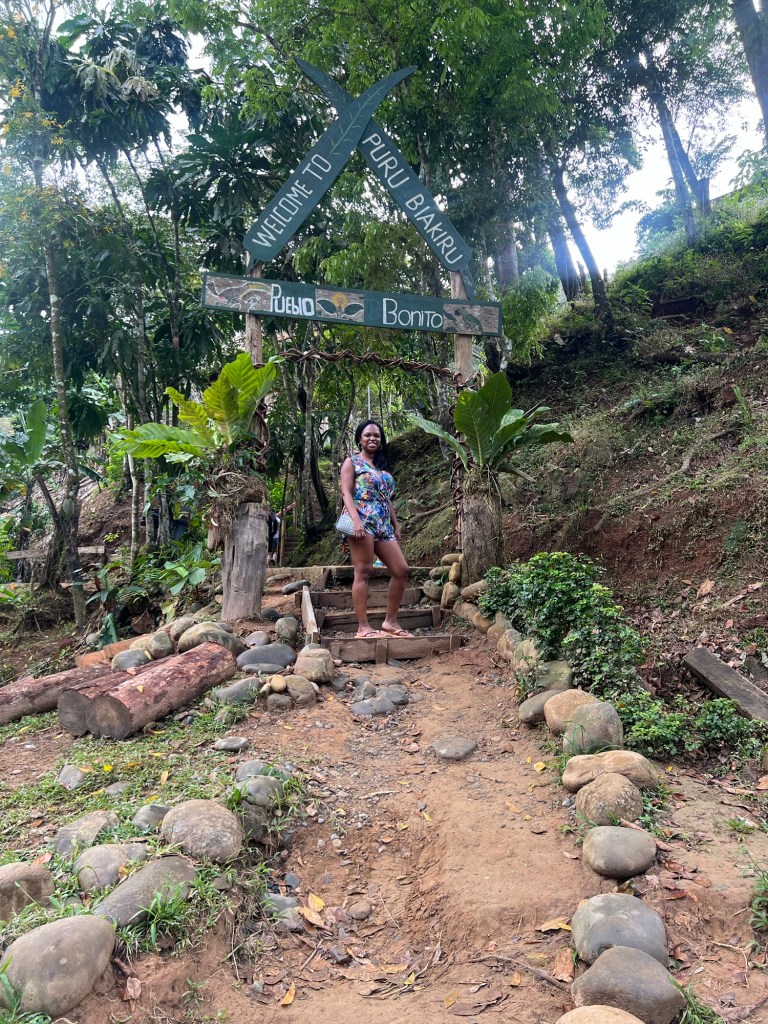
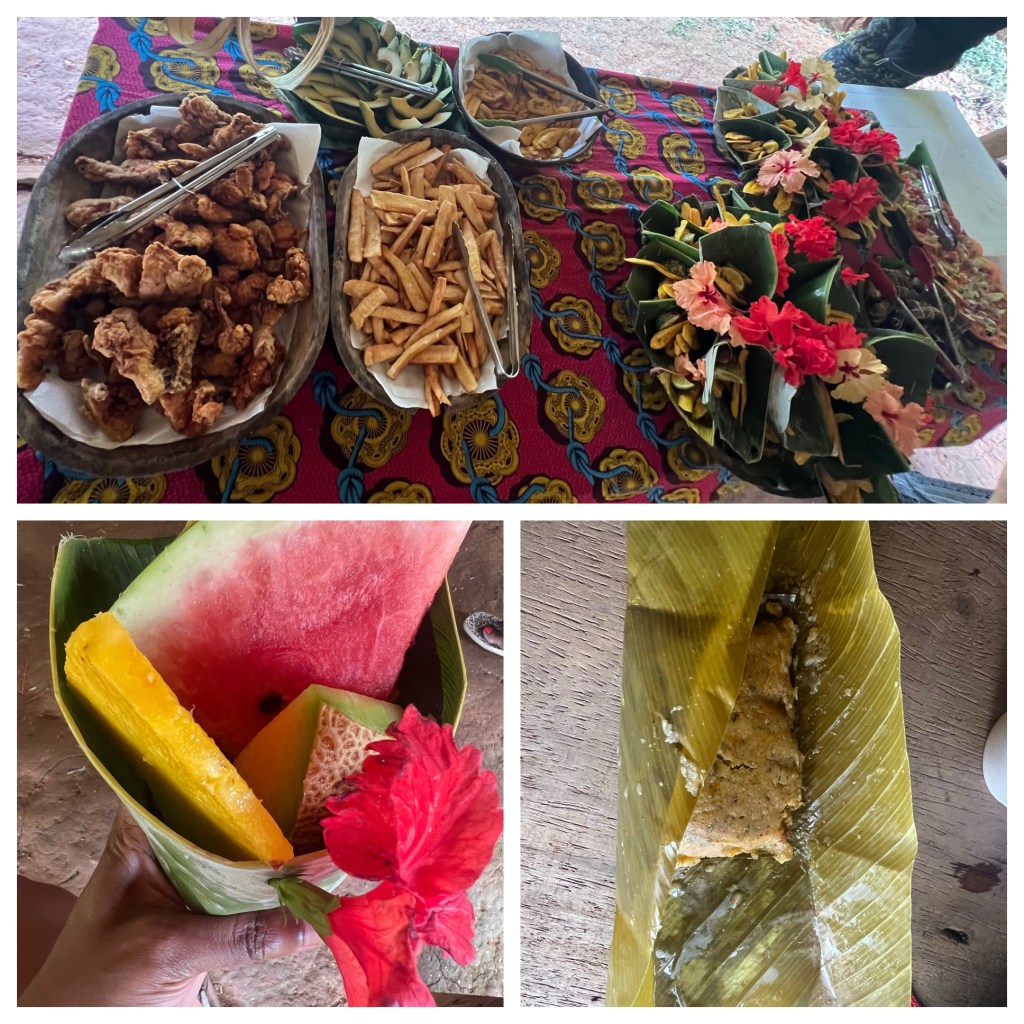
Lunch was freshly prepared and served on banana leaves. We had fish, fried chicken, savory tamales, fresh fruit, and homemade lemonade. The meal was simple but delicious.
After lunch, we watched a traditional performance and there was also time to browse handmade souvenirs — intricately woven baskets, carvings, and jewelry crafted by members of the community.
Before heading back, we jumped back into the canoe and rode to a nearby waterfall. We spent about 20 minutes there. The water was cold but incredibly refreshing after the humid morning.
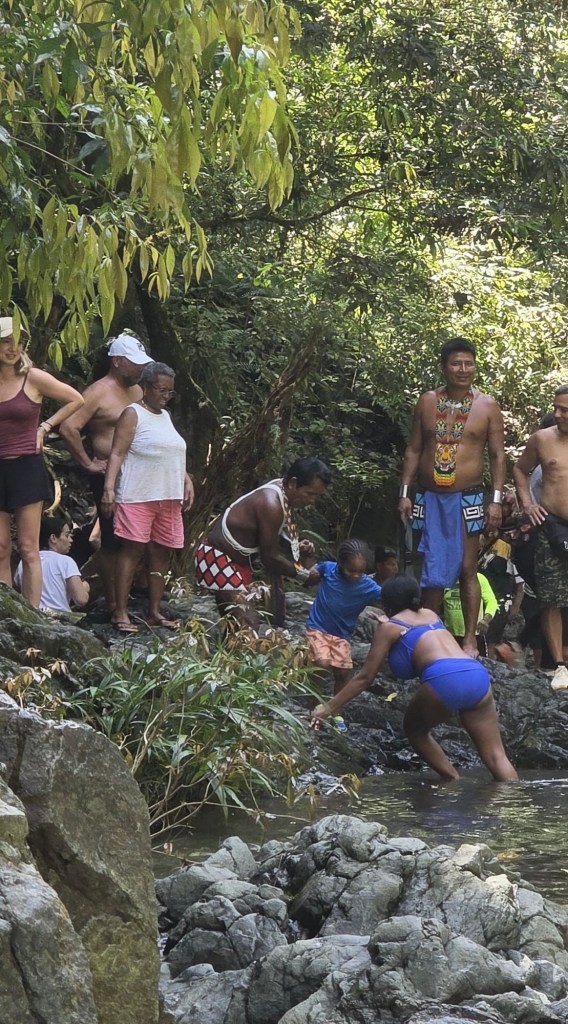
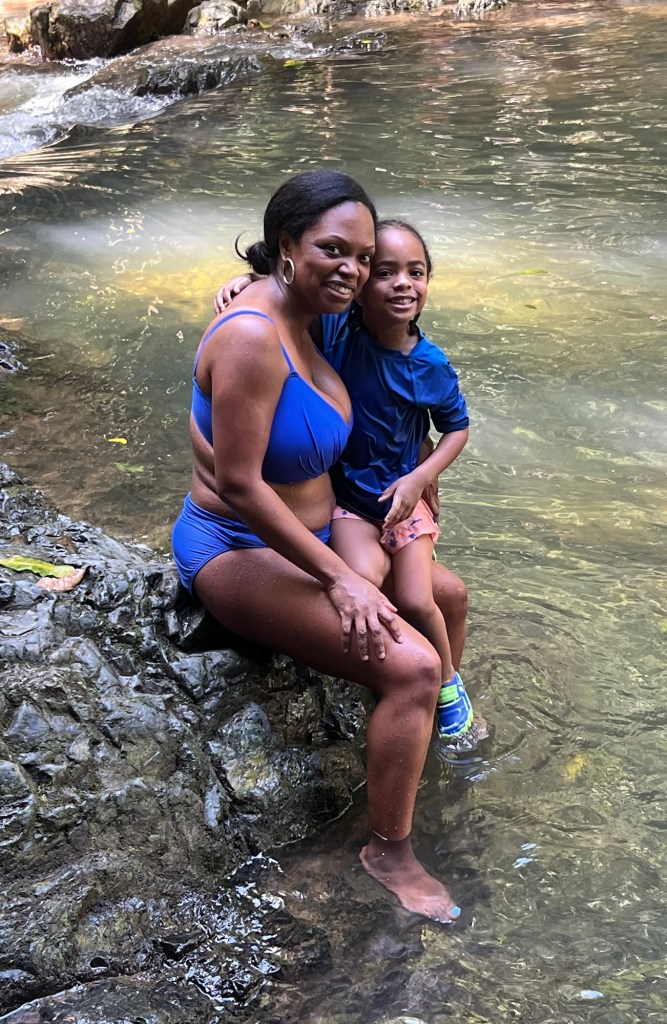
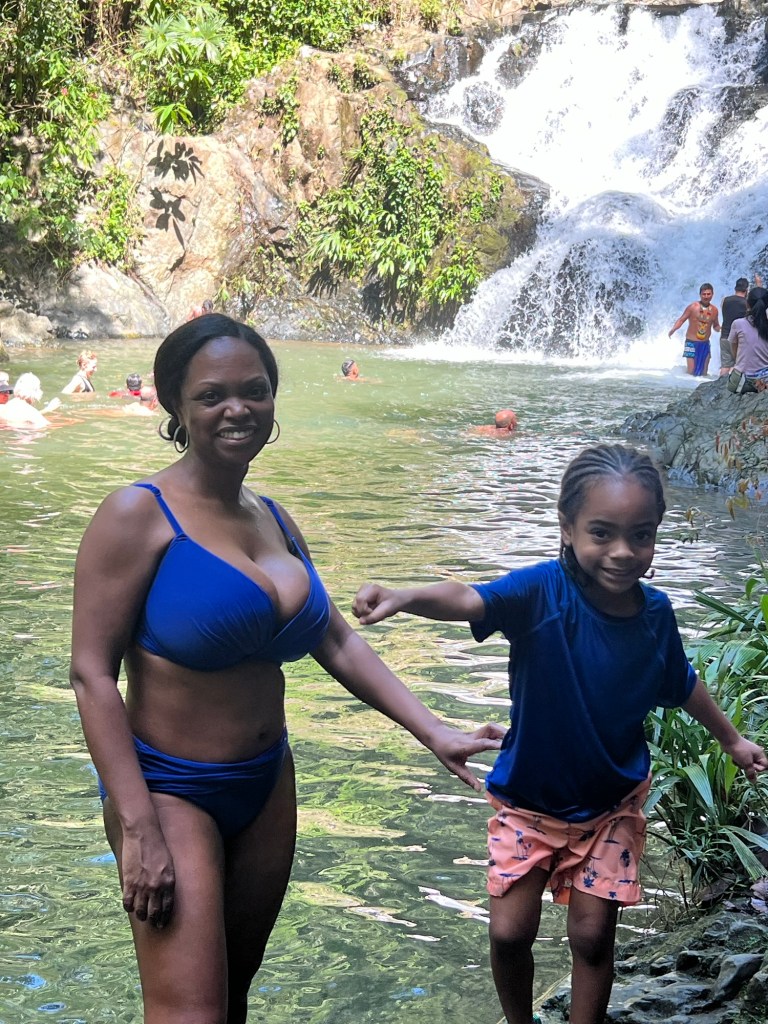
From there, we canoed back to where the van was parked and made the drive back to the hotel, arriving around 3:00 p.m. which was perfect since that still gave us time to relax at the hotel pool.
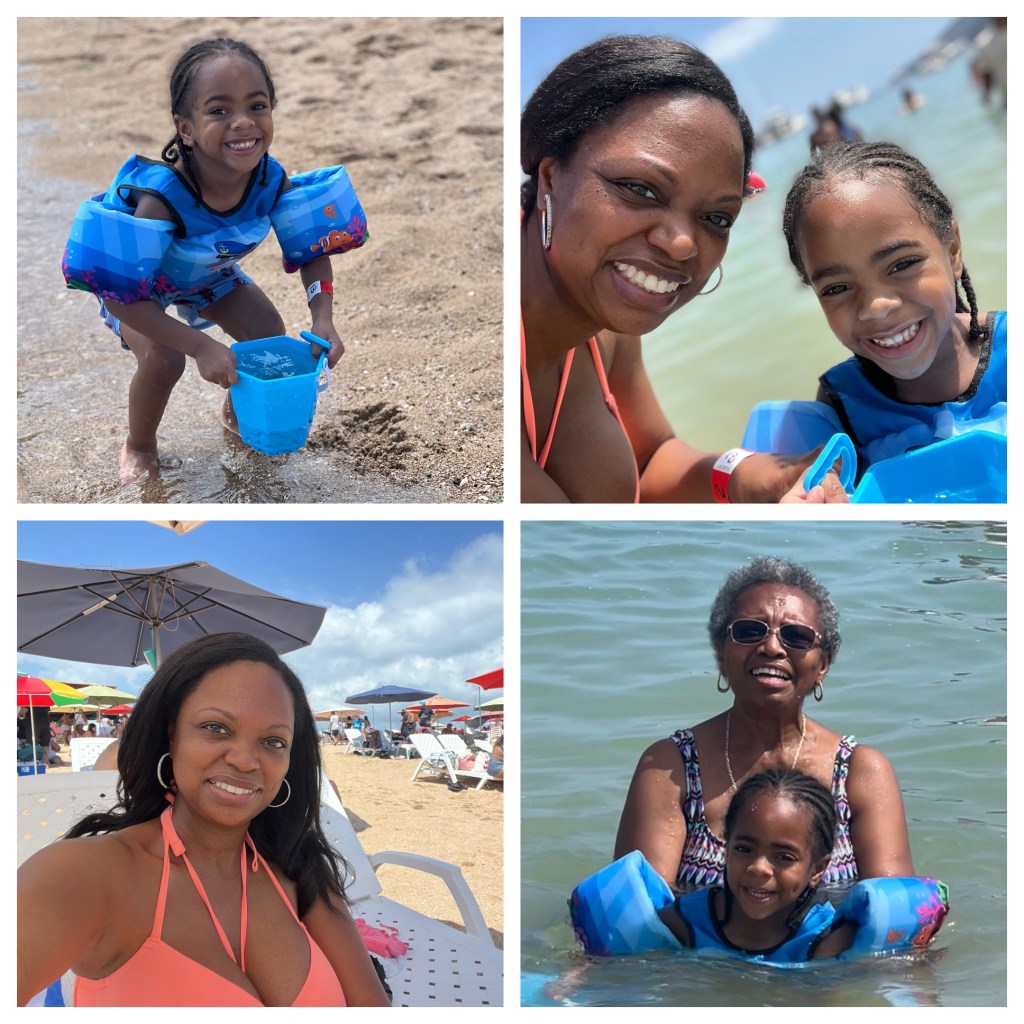
If you’re looking for an easy island escape from Panama City, Taboga Island was a great half-day trip for us to experience some “beach” without having to do take a separate flight to Bocas del Toro or spend 3 hours in a car getting to San Blas islands.
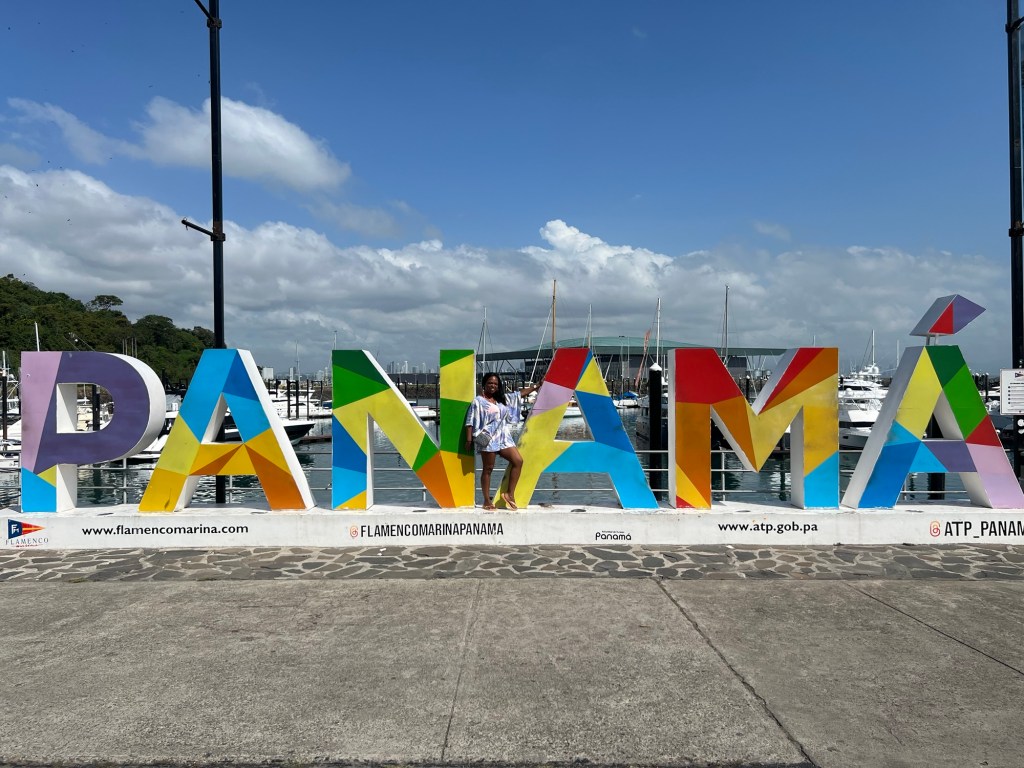
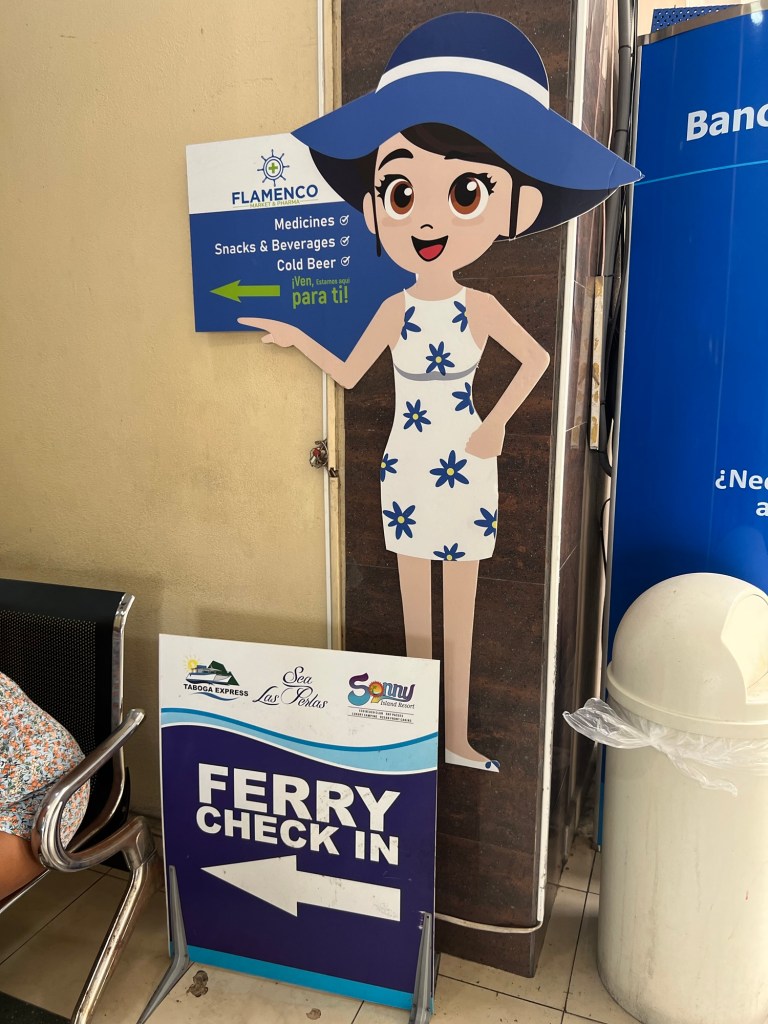
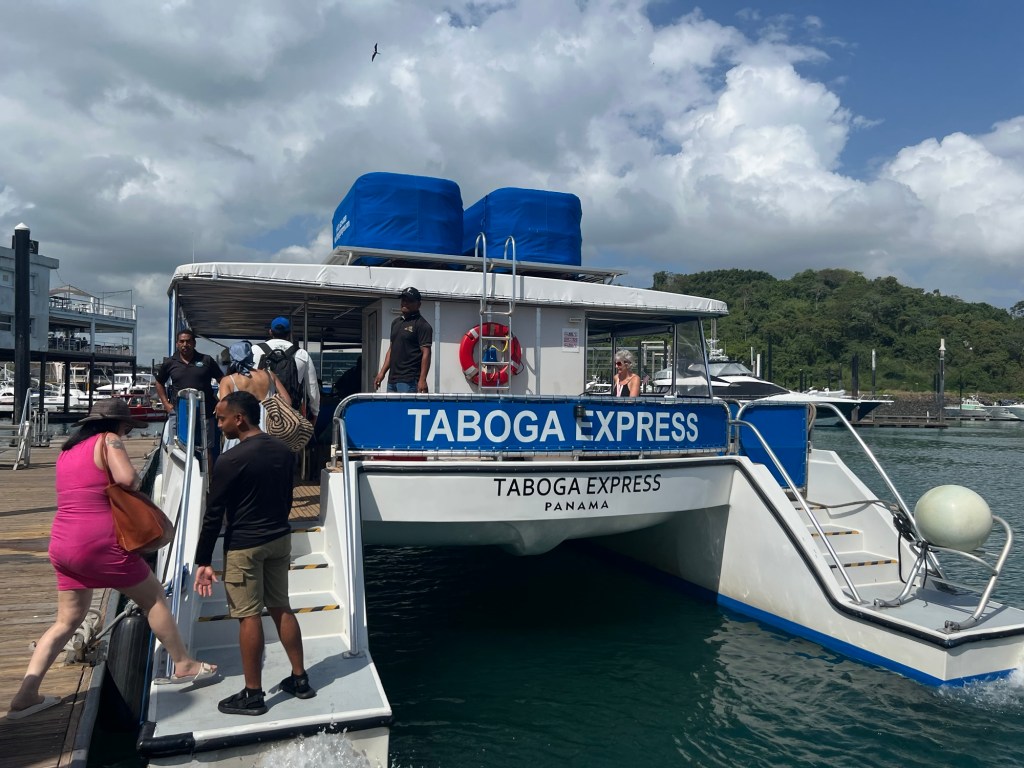
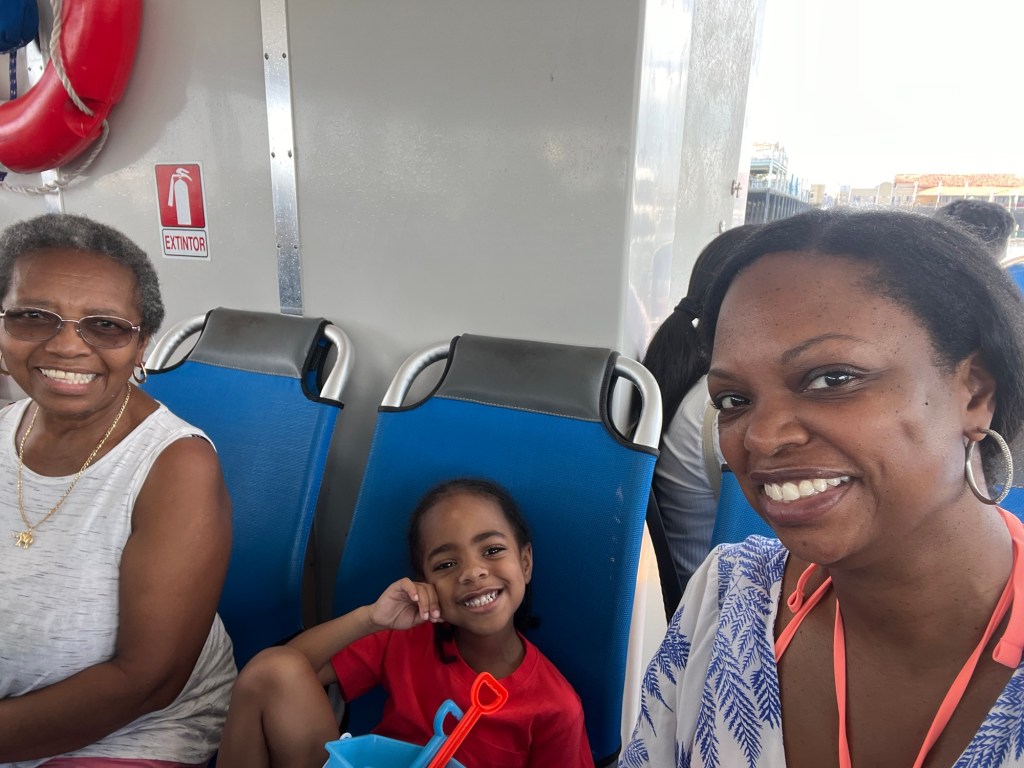
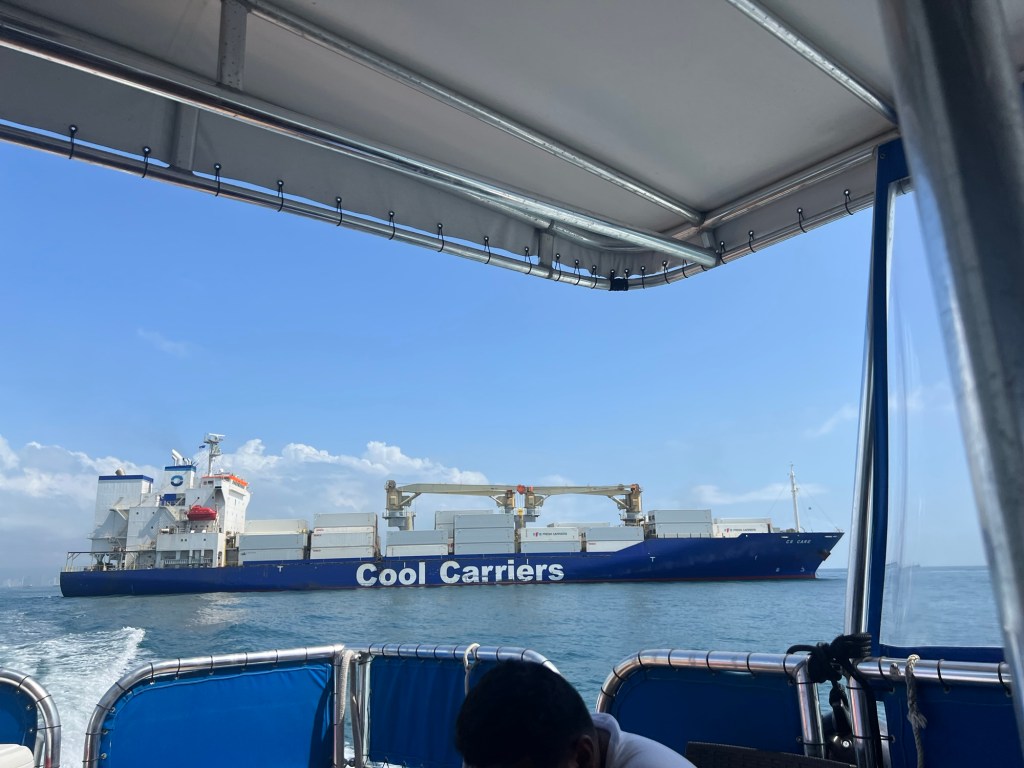
Right outside the marina, near the colorful Panama sign by the boats, we caught our ferry with Taboga Express. Tickets were $15 each way for adults and $9 for kids. Departures run on a set schedule, and we chose the 11:00 a.m. sailing. The ride itself took about 30 minutes. There is also some shops to buy beach toys and snacks if needed.
Once we docked, there was a quick bag check. Many people arrived prepared for a full beach day, coolers in tow. There was a bit of a line near the entrance, and that’s when we realized there’s a $1 per person island maintenance fee. We hadn’t seen anything about it beforehand, so it may be a newer initiative. It’s mostly a cash island, so it’s smart to bring small bills. There is reportedly an ATM somewhere on the island, but cash is definitely easier.
From the dock, we walked to the right along a lively stretch lined with small shops, souvenir stands, and snack shacks. It has that laid-back, slightly rustic beach-town vibe. Taboga is only about eight miles long and everything was situated close to the dock so it was just a short walk to the main beach where we immediately arranged for two chairs and an umbrella — $20 total.
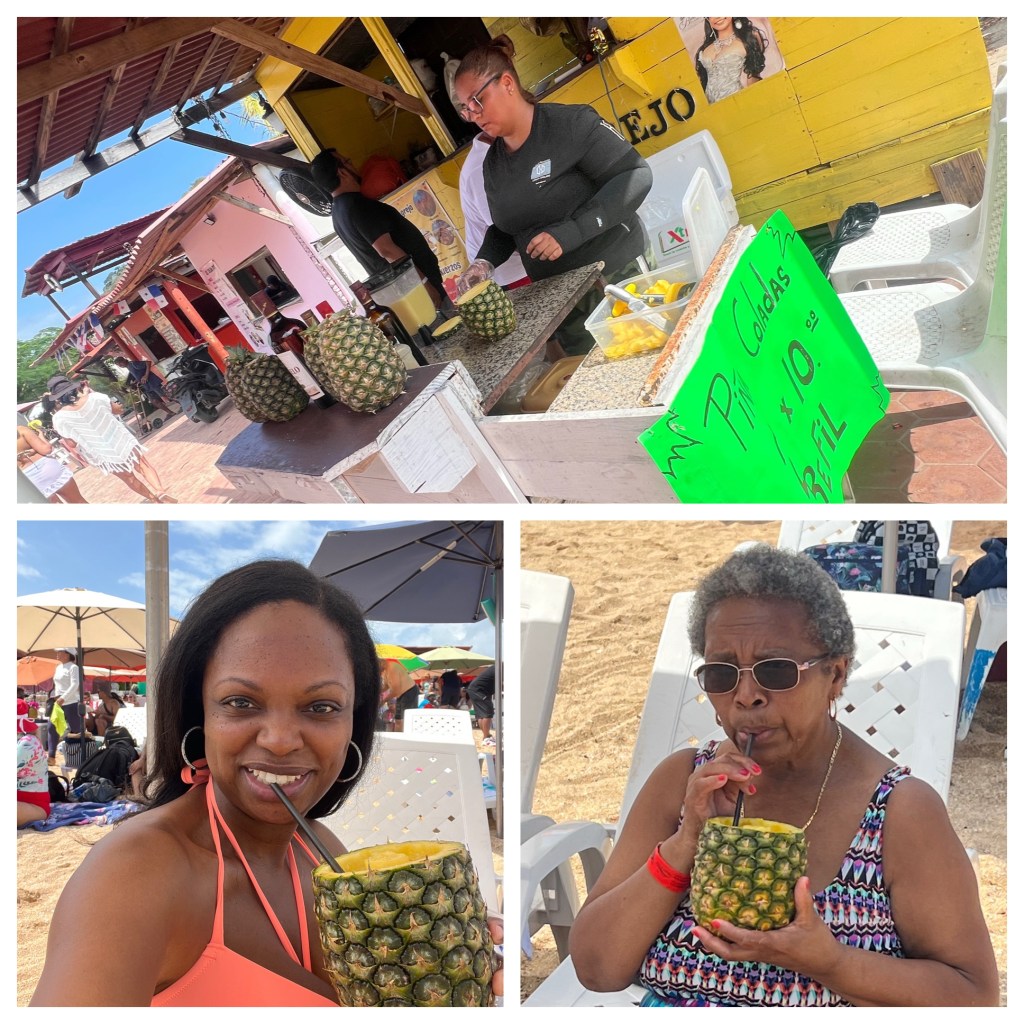
The water wasn’t the clearest we’ve ever seen (though I’ll admit, I can be a bit of a beach snob which is ironic, considering beaches aren’t really my thing), but we enjoyed a couple of relaxed hours in the sun. Getting drinks or food was easy since there were shops right behind the beach so I secured some piña coladas — two for $10 with free refills, which felt like a steal.
If you’re feeling more active, you can rent bikes or even ATVs to explore the island. There are also small hiking trails and viewpoints if you want panoramic ocean views.
We were scheduled for the 2:30 p.m. return ferry but ended up leaving closer to 2:15 p.m. on what appeared to be an Island Express boat, possibly affiliated with Taboga Express. The return trip was just as quick — about 30 minutes — and before we knew it, we were back in the city.
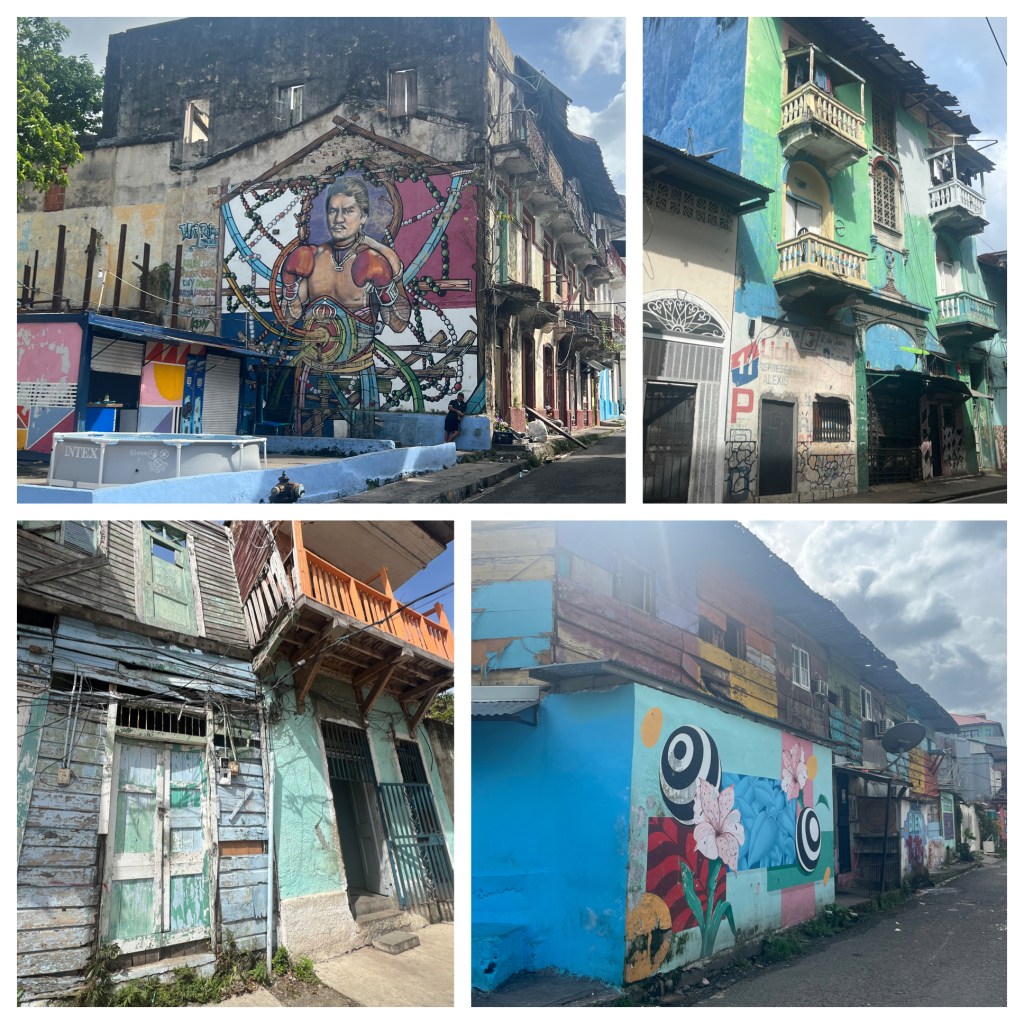
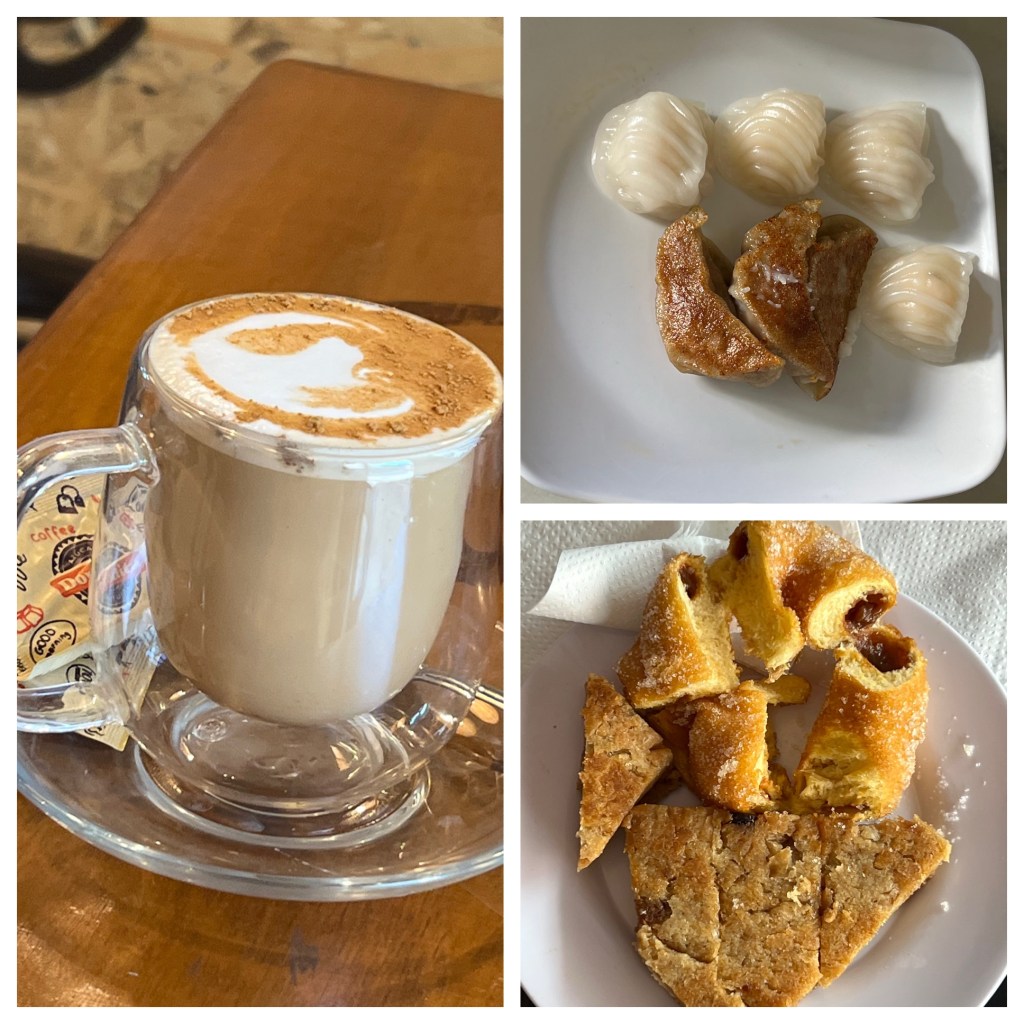
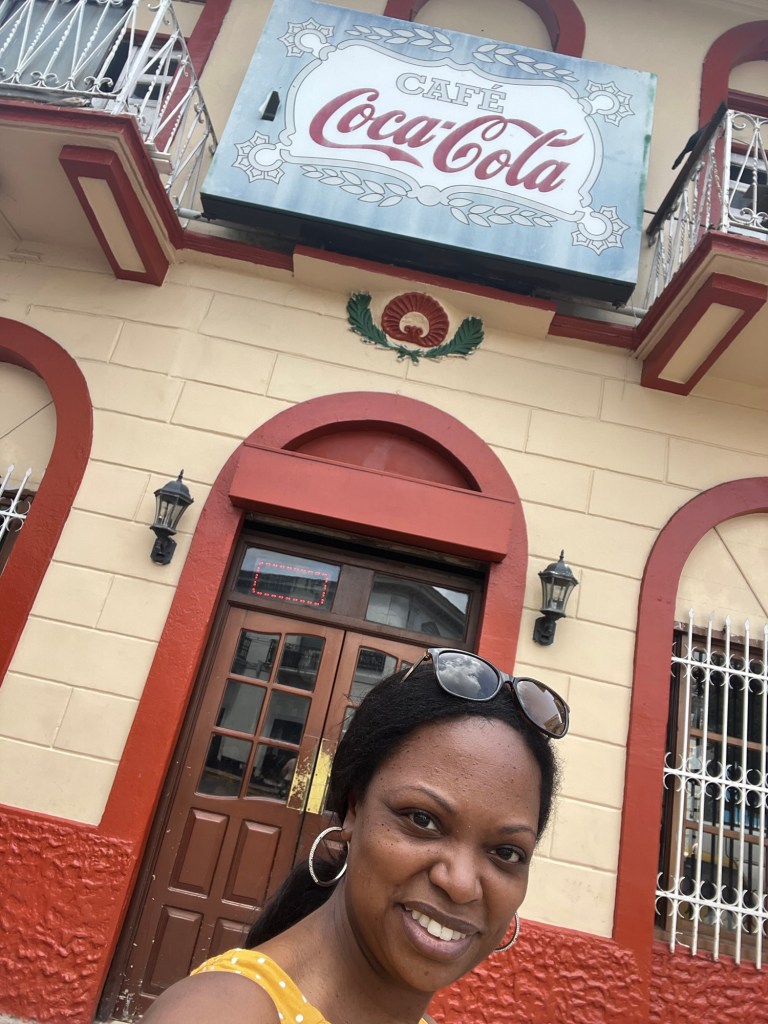
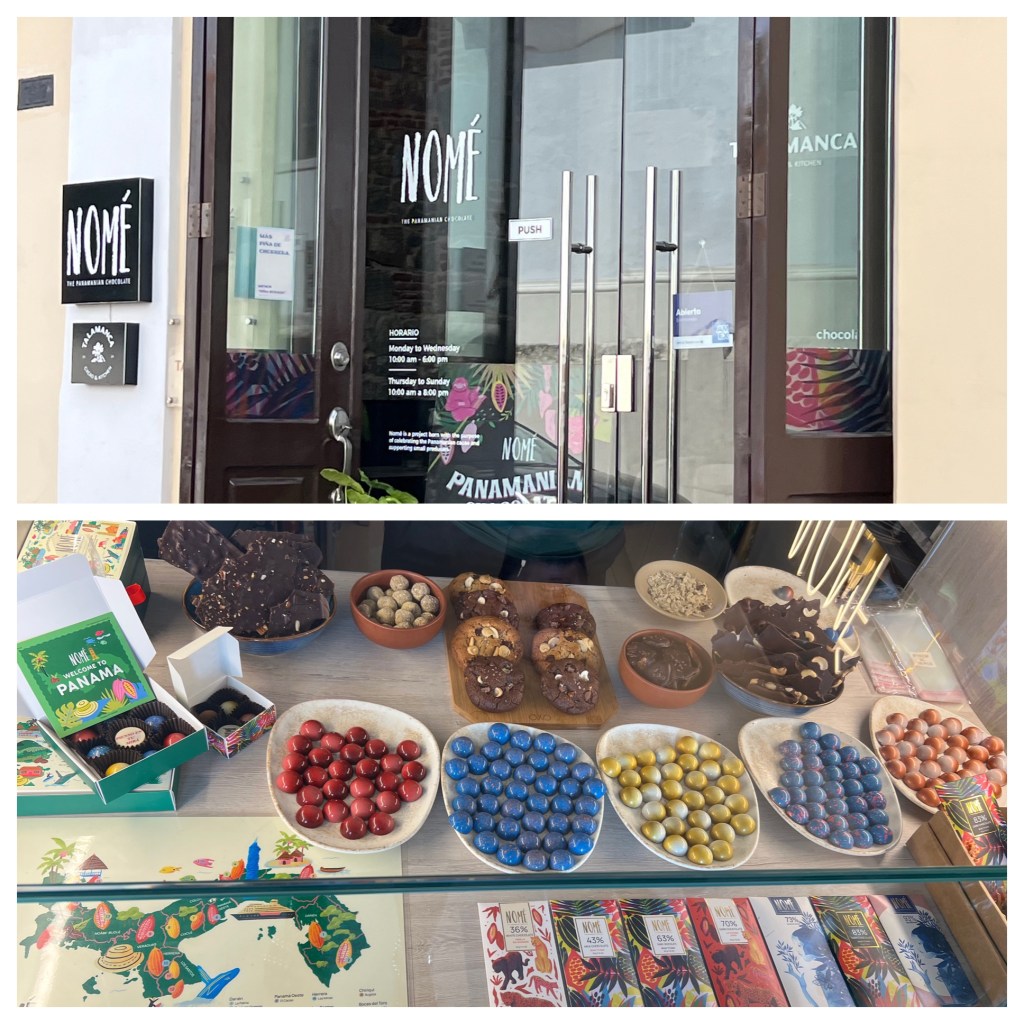
No trip to Panama is complete without a visit to Casco Viejo. We joined a guided tour of the old city, which ended up being just the two of us—perfect since I had an antsy four-year-old in tow! While it wasn’t officially a food tour, it definitely felt like one thanks to all the small bites we enjoyed along the way. As we wandered through the historic streets, we sampled traditional Panamanian coffee, surprisingly delicious fried chicken, handmade chocolate from Nomé, and sweet treats like bread pudding and doughnuts.
Beyond the food, what really stood out was seeing the visible transformation happening throughout the neighborhood. In many places, beautifully restored buildings stand right next to homes still in disrepair, highlighting the ongoing gentrification and the striking contrasts within the community. Our guide shared the rich history of Panama—from colonial times to modern-day developments—which added so much depth to the experience. I always appreciate tours that provide historical context; learning about a country’s past and present reminds me how interconnected we all are, no matter where we’re from.
All in all, Panama was a great 5-day escape that we all enjoyed. We didn’t have time to fit everything in but here are some other activities that were also on my radar:
- Gamboa Rainforest Reserve – typically includes a boat ride along the Panama Canal and into Gatun Lake, where you can spot monkeys, sloths, tropical birds, and other wildlife in their natural habitat. I was actually planning to do this tour for the animal interactions, but ended up changing my mind.
- Colón – located on the Caribbean side of the country, Colón is known for its strong Afro-Caribbean heritage and vibrant culture. The city has deep historical ties to the Panama Canal and the railroad, and you’ll find a unique blend of Caribbean rhythms, cuisine, and architecture. It’s a place to learn about Panama’s Afro-Panamanian history, visit nearby beaches and forts, and experience a different cultural side of the country.
- Bocas del Toro – famous for its crystal-clear water, overwater bungalows, colorful wooden houses, and relaxed island vibe. You can go snorkeling, surfing, boat-hopping between islands, or simply unwind on beautiful beaches like Starfish Beach and Red Frog Beach. Note that getting here from Panama City will require a short plane ride.
- San Blas Islands – a chain of more than 300 small islands with powdery white sand and turquoise water. The islands are governed by the Guna people, offering a unique opportunity to experience Indigenous culture while enjoying some of the most pristine beaches in the Caribbean. Most visits include boat tours, fresh-caught seafood, and time to swim or snorkel in unbelievably clear water. This is about a 3-hour car ride from Panama City.
- Amadour Causeway – While we didn’t get to spend as much time at the Amador Causeway as we would’ve liked due to the rain on the first day, I’ve heard and read it is a good time! It is the go-to spot for cycling, with dedicated bike lanes running the entire length of the road and plenty of places to rent bikes or even pedal carts You can also try paddle boarding in Panama Bay as well as go-karting and playgrounds on land. While there, a must-stop (where we were also supposed to go) is Mi Ranchito. Its large, conical thatched roof has become a landmark on the Causeway, and when we passed by, it was packed! And I can see why: lively atmosphere, authentic Panamanian cuisine, and stunning views across the bay.

 Toya's Travels